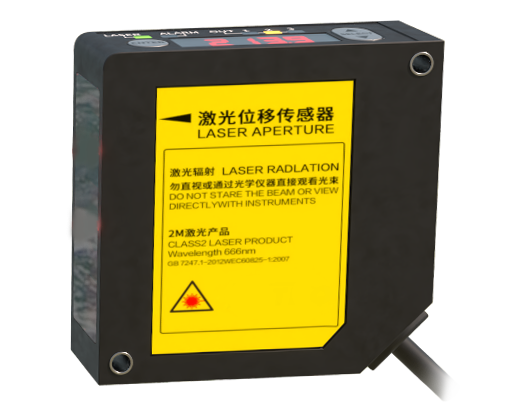
In the rapidly evolving landscape of industrial automation and precision measurement, optical sensors and laser sensors stand as pivotal technologies driving innovation and efficiency. These sensors, which utilize light to detect, measure, and analyze various physical parameters, have become indispensable across a multitude of sectors, from manufacturing and robotics to automotive and aerospace industries. This article delves into the fundamental principles, key applications, and emerging trends of these sophisticated sensing technologies.
At its core, an optical sensor is a device that converts light rays into electronic signals. It typically consists of a light source (often an LED or laser), a photodetector, and associated signal processing electronics. The operating principle revolves around the interaction of light with the target object. This interaction can involve reflection, refraction, absorption, or scattering. By analyzing changes in the light's properties—such as intensity, phase, wavelength, or polarization—the sensor can infer critical information about the target, including its presence, distance, dimensions, surface characteristics, and even chemical composition. Common types include photoelectric sensors, fiber optic sensors, and vision systems.
Laser sensors represent a specialized and highly precise subset of optical sensors. They employ coherent, monochromatic laser light, which offers significant advantages in terms of accuracy, resolution, and range. The most prevalent technology in industrial laser sensing is laser triangulation. In this method, a laser diode projects a focused spot or line onto the target surface. The reflected light is captured by a position-sensitive detector (like a CCD or CMOS array) at a known angle. As the target's distance changes, the position of the reflected spot on the detector shifts. Through trigonometric calculation, the sensor precisely determines the distance or profile of the object. Another critical technology is Time-of-Flight (ToF), where the sensor measures the time it takes for a laser pulse to travel to the target and back, calculating distance based on the speed of light. Laser interferometers, which measure minute displacements by analyzing interference patterns, offer nanometer-level precision.
The applications of these sensors are vast and transformative. In manufacturing, optical and laser sensors are the backbone of quality control. They perform non-contact measurements of component dimensions, thickness, and contour with micron-level accuracy, far surpassing mechanical probes. On assembly lines, photoelectric sensors reliably detect the presence, position, and orientation of parts, ensuring smooth robotic handling and pick-and-place operations. Laser profilometers scan surfaces to detect defects like scratches, dents, or warping in real-time. In the automotive industry, laser sensors are crucial for advanced driver-assistance systems (ADAS), including LiDAR for autonomous vehicle navigation, and are used in crash test analysis and weld seam inspection. Within logistics, laser scanners enable high-speed barcode reading and 3D dimensioning of packages for automated sorting.
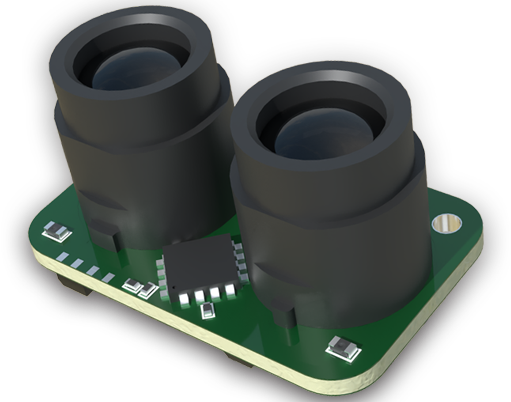
Furthermore, the integration of these sensors with the Industrial Internet of Things (IIoT) and Industry 4.0 frameworks is a dominant trend. Smart sensors now come equipped with embedded processors and communication protocols (like IO-Link, OPC UA, or Ethernet/IP), providing not just raw data but actionable insights. They facilitate predictive maintenance by monitoring equipment vibration or alignment, alerting operators before a failure occurs. The fusion of laser scanning data with artificial intelligence and machine vision algorithms is unlocking new capabilities in robotic guidance, allowing robots to adapt to unstructured environments and perform complex bin-picking tasks.
Looking ahead, the future of optical and laser sensing is marked by miniaturization, enhanced intelligence, and multi-spectral capabilities. The development of MEMS-based LiDAR is making high-resolution 3D sensing more compact and affordable. Advances in computational sensing and single-photon avalanche diode (SPAD) technology are pushing the boundaries of sensitivity and range. There is also growing interest in using different wavelengths, such as short-wave infrared (SWIR), to see through certain materials or operate in challenging environmental conditions like fog or dust.
In conclusion, optical sensors and laser sensors are far more than mere components; they are enablers of precision, automation, and digital transformation. Their ability to provide accurate, reliable, and non-contact measurement solutions continues to solve complex industrial challenges. As technology progresses, these sensors will become even more integrated, intelligent, and essential, solidifying their role as the eyes of modern automated systems, driving productivity and innovation to unprecedented levels.