In the realm of industrial automation and precision measurement, the 5V laser sensor stands as a cornerstone technology. Operating at a low voltage of 5 volts DC, these sensors offer a compelling blend of accuracy, reliability, and seamless integration, making them indispensable across diverse sectors from electronics assembly to robotic guidance. Unlike higher-voltage counterparts, the 5V specification aligns perfectly with the power standards of modern digital logic circuits and microcontrollers, simplifying system design and reducing the need for complex voltage regulation.
The core principle of a 5V laser sensor involves emitting a focused, coherent laser beam towards a target. The sensor then detects the reflected light using a photoelectric receiver, such as a position-sensitive device (PSD) or a CMOS/CCD array. By analyzing the properties of the returned beam—such as its time-of-flight, triangulation angle, or spot position—the sensor calculates precise measurements of distance, displacement, height, or presence. The 5V power supply typically drives both the low-power laser diode and the onboard signal processing circuitry. This integrated design ensures stable operation with minimal electrical noise, which is critical for maintaining micron-level measurement accuracy.
Key advantages of utilizing 5V laser sensors are numerous. First and foremost is their exceptional precision. Capable of detecting minute changes in position, often down to the micrometer range, they enable tasks like wafer alignment in semiconductor fabrication or thickness inspection of delicate materials. Second is their high response speed. With measurement rates frequently exceeding several kilohertz, they can monitor fast-moving objects on production lines without lag. Third, their compact form factor allows for installation in space-constrained environments. Furthermore, the 5V operation enhances safety and compatibility. It falls within safe extra-low voltage (SELV) ranges, reducing risks in operational environments, and interfaces directly with programmable logic controllers (PLCs), single-board computers like Raspberry Pi, and data acquisition systems without intermediary level shifters.
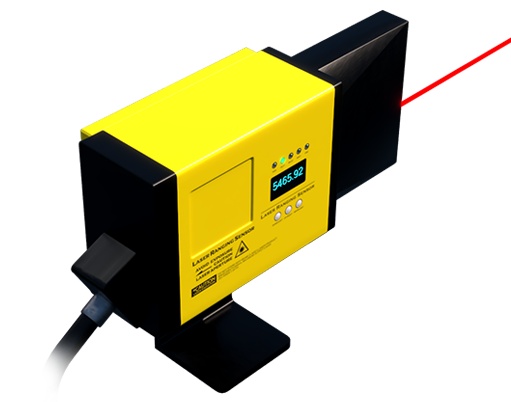
The application spectrum for 5V laser sensors is vast and growing. In automated manufacturing, they are pivotal for precise object detection, fill-level control, and robotic pick-and-place operations. The 3D printing industry relies on them for bed leveling and print head calibration. Within consumer electronics, they facilitate quality control checks for component placement on PCBs. Emerging fields such as autonomous mobile robots (AMRs) use these sensors for navigation and obstacle avoidance, while laboratory automation employs them for precise liquid handling and sample positioning. Their robustness against ambient light interference, achieved through modulated laser signals and optical filters, ensures dependable performance even in challenging lighting conditions.
Selecting the appropriate 5V laser sensor requires careful consideration of several parameters. The measuring range must suit the application, from short-range, high-precision models to those capable of sensing over several meters. Resolution and linearity define the sensor's accuracy across its entire range. The output interface is another critical factor; options include analog voltage/current, digital protocols like IO-Link or RS-232, and direct switching outputs (NPN/PNP). Environmental ratings for ingress protection (IP codes) and temperature tolerance are essential for operation in dusty, humid, or thermally variable settings. Lastly, the type of sensing principle—such as triangulation for high precision at close range or time-of-flight for longer distances—must align with the task's physical requirements.
Integration into a control system is typically straightforward. The 5V supply, often sourced directly from the controller, powers the sensor. The output signal is then fed back to the control unit for real-time decision-making. Many modern sensors come with intelligent features like teach-in functions for easy calibration, programmable switching points, and built-in diagnostics, which streamline setup and maintenance. Ensuring stable mounting and alignment, as well as considering the target surface's reflectivity and color (which can affect signal strength), are vital practical steps for optimal performance.
Looking ahead, the evolution of 5V laser sensors is intertwined with trends in Industry 4.0 and the Internet of Things (IoT). Future iterations will likely feature enhanced connectivity, lower power consumption, and smarter onboard processing capabilities, such as edge computing for preliminary data analysis. Integration with AI algorithms for predictive maintenance and adaptive control is also on the horizon. As systems demand greater precision, miniaturization, and energy efficiency, the 5V laser sensor will continue to be a fundamental, evolving component, driving innovation and efficiency in automated solutions worldwide. Its role in bridging the physical and digital worlds with exacting accuracy remains unquestionably vital.