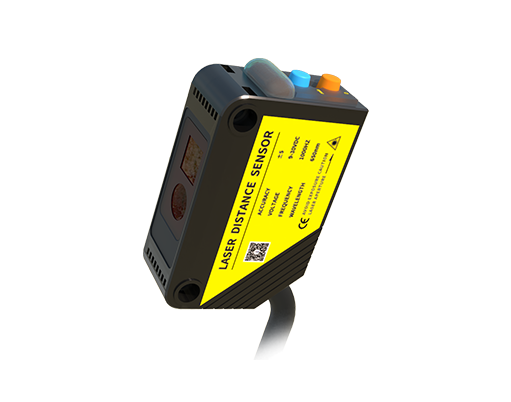
In the realm of industrial automation and precision measurement, the demand for reliable, accurate, and robust sensing solutions is paramount. Among the plethora of technologies available, fiber optic laser distance sensors have emerged as a critical tool for engineers tackling challenging measurement tasks. Unlike conventional laser sensors that project a beam through free space, these devices utilize optical fibers to deliver laser light to the target and collect the reflected signal. This fundamental architectural difference unlocks a suite of advantages, making them indispensable in modern industrial settings.
The core operating principle typically relies on time-of-flight or phase-shift measurement techniques. A laser diode generates a coherent light beam, which is coupled into a transmitting optical fiber. This fiber acts as a flexible light guide, directing the beam to the measurement point. Upon striking the target, the light is reflected back and captured by a receiving fiber (or sometimes the same fiber in a reflective configuration). The sensor's electronics then analyze the properties of the returned light—specifically the time delay or phase shift relative to the emitted signal—to calculate the precise distance to the target. This method ensures high accuracy, often in the sub-micron to millimeter range, depending on the sensor model and measurement distance.
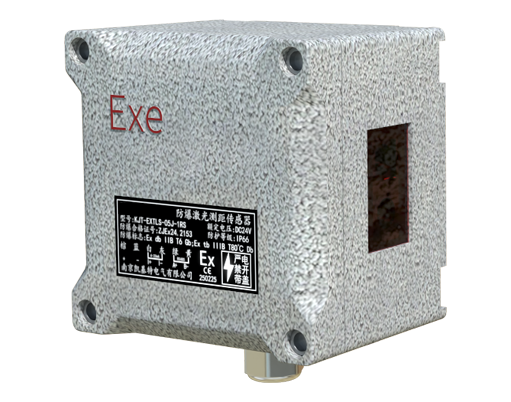
The integration of optical fibers bestows several compelling benefits. First and foremost is exceptional environmental resilience. The sensing head, containing only the fiber ends, can be extremely small, passive, and immune to electromagnetic interference (EMI), intense radio frequency (RF) noise, high voltages, and corrosive atmospheres. This allows deployment in environments where electronic sensors would fail, such as inside high-voltage switchgear, near welding arcs, or in explosive (Ex) zones with proper certification. Secondly, the flexibility of the fibers enables measurements in confined, hard-to-reach spaces—inside machinery, through small apertures, or around obstacles—where a direct line-of-sight for a traditional sensor is impossible. The electronic processing unit can be remotely located in a benign control cabinet, simplifying maintenance and protection.
Applications for fiber optic laser distance sensors are vast and varied across industries. In semiconductor manufacturing, they are used for wafer alignment, chip positioning, and monitoring etch depths with nanometer-level precision, all while being unaffected by cleanroom conditions. The automotive sector employs them for gap and flush measurement on assembly lines, brake disc thickness monitoring, and robotic guidance. In heavy industry, they measure roll eccentricity in steel mills, monitor turbine blade vibration, and control the thickness of hot rolled products. Furthermore, their non-contact nature makes them ideal for measuring delicate, soft, or liquid surfaces without imparting any force.
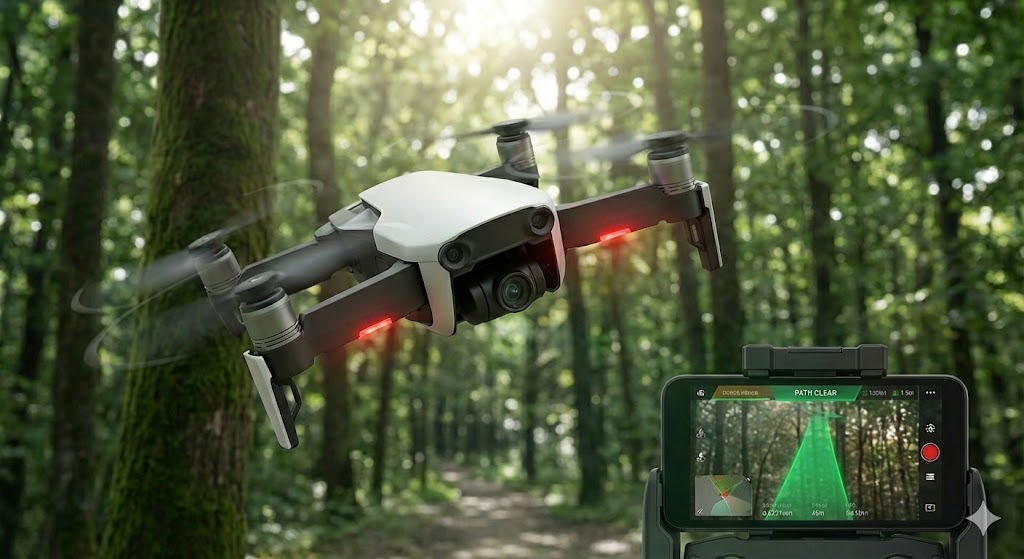
Selecting the appropriate fiber optic laser distance sensor requires careful consideration of several technical parameters. Key specifications include measuring range, stand-off distance, resolution, repeatability, and linearity. The spot size, determined by the fiber core diameter and any attached lenses, affects spatial resolution and suitability for small targets. The type of fiber (single-mode for long-range, high-precision; multi-mode for shorter ranges and higher coupling efficiency) and connector must be chosen for the application. Response time or sampling rate is critical for dynamic measurements like vibration analysis. Environmental factors such as allowable temperature range for the probe head, resistance to chemicals, and required ingress protection (IP) rating must align with the installation site. Finally, output interfaces (analog voltage/current, digital RS-422, Ethernet, PROFIBUS, etc.) must integrate seamlessly with the existing control system.
Installation and alignment, while generally straightforward, demand attention. The fiber optic cables must be handled with care to avoid sharp bends that cause attenuation or breakage. Proper mounting ensures stability and minimizes the effects of vibration on the measurement. Regular maintenance primarily involves keeping the optical surfaces clean from dust, oil, or debris that could scatter or absorb the laser light, thus ensuring consistent performance.
Looking ahead, advancements in laser diode technology, digital signal processing, and integrated photonics continue to push the boundaries. Future trends point toward even smaller form factors, higher measurement speeds, enhanced connectivity for Industry 4.0 frameworks, and smarter sensors with embedded diagnostics. For the industrial engineer, mastering the capabilities and implementation of fiber optic laser distance sensors is no longer a niche skill but a fundamental competency for designing resilient, precise, and efficient automated systems. Their unique ability to deliver precision in punishing environments solidifies their role as a cornerstone technology in the ongoing evolution of industrial measurement and control.