In the realm of industrial automation, the demand for accuracy, reliability, and efficiency has never been higher. At the heart of countless automated systems lies a critical component: the high-precision proximity sensor. These sophisticated devices are engineered to detect the presence or absence of objects within a specified range without any physical contact, enabling seamless and precise control in manufacturing, robotics, and process industries.
High-precision proximity sensors operate on various principles, primarily inductive, capacitive, and magnetic. Inductive sensors are the workhorses for detecting metallic objects. They generate an electromagnetic field and sense changes caused by a metallic target entering this field. Their precision lies in their ability to detect even minute displacements, often with repeatability in the micrometer range. This makes them indispensable in applications like CNC machine tool positioning, robotic arm end-effector alignment, and high-speed assembly line part verification.
Capacitive proximity sensors, on the other hand, can detect both metallic and non-metallic materials, including liquids, plastics, and glass. They function by measuring changes in capacitance between the sensor and the target object. Their high precision is crucial in industries such as food and beverage, where they monitor fill levels in containers with extreme accuracy, or in semiconductor manufacturing, where they detect the presence of delicate wafers without risk of contamination or damage.
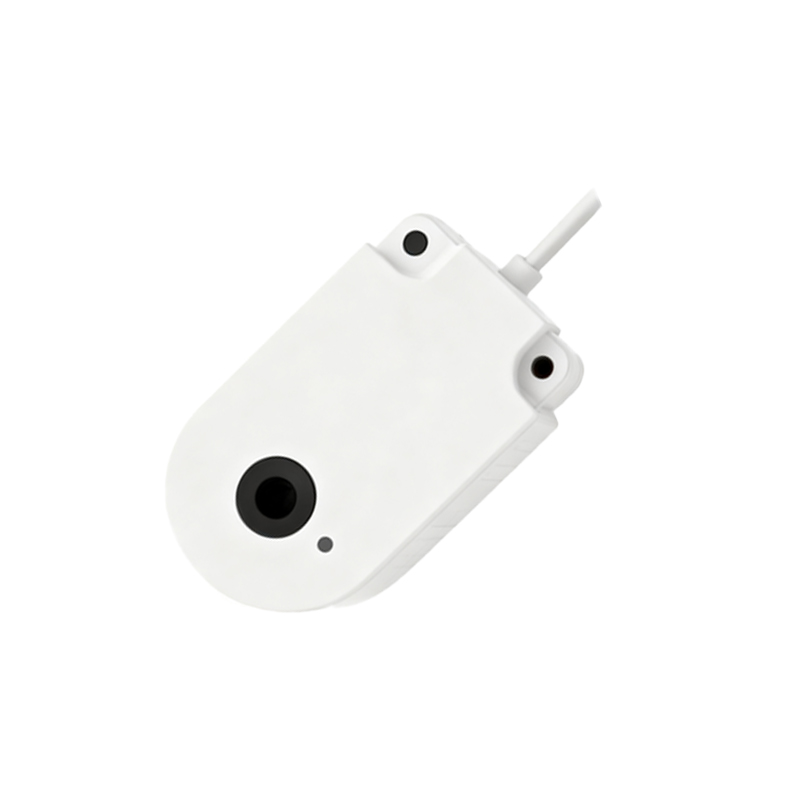
Magnetic proximity sensors, often utilizing Hall-effect or reed switch technology, are specifically designed for sensing permanent magnets. They offer exceptional precision in detecting the position of moving parts in harsh environments, such as in hydraulic cylinders or under extreme temperatures where other sensor types might fail.
The defining characteristic of a high-precision sensor is its exceptional repeatability and minimal hysteresis. Repeatability refers to the sensor's ability to consistently detect an object at the exact same point, trip after trip. Hysteresis is the difference between the switch-on point (when the target approaches) and the switch-off point (when the target recedes). High-precision models are designed with minimal hysteresis, ensuring that the operational point is nearly identical in both directions, which is vital for precise positioning and control loops.
Key performance metrics include sensing distance, response frequency, and environmental robustness. Modern high-precision sensors offer standardized sensing distances (e.g., 2mm, 5mm, 10mm) with tight tolerances. Their response frequency can reach into the kilohertz range, allowing them to detect objects on ultra-fast production lines. Furthermore, they are built to withstand industrial challenges: IP67 and IP69K ratings for dust and water ingress, resistance to oils, coolants, and mechanical vibration, and operation across wide temperature ranges.
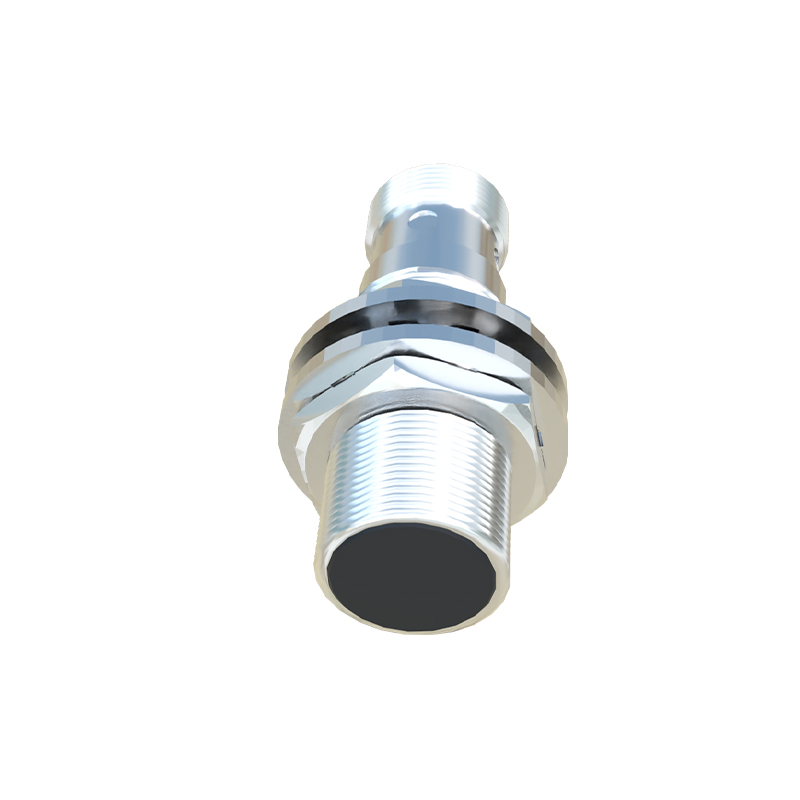
Integration into Industry 4.0 and IoT frameworks is now a standard expectation. Advanced sensors come equipped with IO-Link communication, a point-to-point serial connection that goes beyond simple switching. IO-Link enables parameter setting, real-time process data monitoring (like signal strength or temperature), and advanced diagnostics directly from the controller. This digital intelligence allows for predictive maintenance, reducing downtime by alerting operators to potential issues like sensor contamination or gradual performance drift before a failure occurs.
Applications are vast and critical. In automotive manufacturing, they ensure robotic welders are perfectly positioned. In packaging machinery, they guarantee precise cut-off points for sealing films. In material handling, they provide exact positioning for automated guided vehicles (AGVs). The evolution towards miniaturization has also opened doors in electronics assembly, where tiny sensors verify component placement on printed circuit boards.
Selecting the right high-precision proximity sensor requires careful analysis of the application: target material, required sensing distance, environmental conditions, electrical output requirements (PNP/NPN, analog, or digital), and mounting constraints. Consulting technical datasheets for specifications like nominal sensing distance (Sn), assured operating distance (Sa), and temperature drift coefficients is essential for optimal performance.
In conclusion, high-precision proximity sensors are far more than simple switches. They are intelligent, robust, and precise data acquisition points that form the sensory nervous system of modern industrial automation. Their continuous advancement in accuracy, speed, and connectivity is directly fueling progress in smart manufacturing, enabling higher quality, greater flexibility, and unprecedented levels of operational efficiency. As industries push the boundaries of precision, these sensors will remain at the forefront, reliably bridging the gap between the physical and digital worlds of production.