In the rapidly evolving landscape of industrial automation and precision measurement, optical sensing technologies have emerged as cornerstone solutions. Among these, laser sensors and fiber optic sensors represent two of the most powerful and versatile categories. While often mentioned in the same breath due to their shared reliance on light, their principles, architectures, and optimal applications differ significantly. This guide delves into the technical intricacies, comparative advantages, and real-world implementations of both technologies.
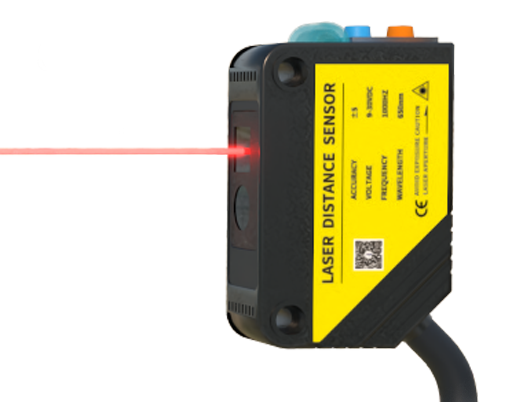
Laser sensors operate by emitting a highly focused, coherent, and monochromatic beam of light—the laser. The fundamental working principle typically involves triangulation, time-of-flight (ToF), or interferometry. In a common triangulation-based displacement sensor, the laser diode projects a spot onto the target surface. The reflected light is focused onto a position-sensitive detector (PSD) or a CMOS/CCD array. Any change in the target's distance causes the reflected spot to shift position on the detector, allowing for precise distance calculation. Laser sensors excel in applications requiring non-contact, high-speed, and high-accuracy measurements. Key industries include automotive manufacturing for gap and flush inspection, electronics for component placement verification, and logistics for dimensioning and profiling. Their strengths lie in their long working ranges (from millimeters to several meters), exceptional resolution (down to the sub-micron level for specialized models), and ability to measure a wide variety of surfaces. However, they can be sensitive to environmental factors like ambient light, dust, and the target's surface characteristics (color, reflectivity, texture).
Fiber optic sensors, in contrast, use optical fibers as the sensing element or as a conduit for light to and from a remote sensor head. The core technology often involves modulating light properties—intensity, phase, wavelength, or polarization—in response to an external measurand like strain, temperature, pressure, or vibration. There are two primary types: intrinsic and extrinsic. Intrinsic sensors use the fiber itself as the sensor, where environmental changes alter the fiber's properties. Extrinsic sensors use the fiber merely to transmit light to an external sensing mechanism. A prominent example is the Fiber Bragg Grating (FBG) sensor. An FBG is a periodic variation of the refractive index inscribed into the fiber core. It acts as a wavelength-specific reflector. When the grating is subjected to strain or temperature changes, the reflected wavelength shifts, providing a highly precise and absolute measurement. The paramount advantage of fiber optic sensors is their exceptional resilience in harsh environments. They are inherently immune to electromagnetic interference (EMI), electrically passive, explosion-proof, and capable of operating in extreme temperatures and corrosive atmospheres. This makes them ideal for structural health monitoring in civil engineering (bridges, dams), downhole sensing in oil and gas, condition monitoring in high-voltage transformers, and distributed sensing along pipelines or power cables. They also enable multiplexing, where dozens of sensors can be arrayed along a single fiber line, reducing cabling complexity.

Choosing between a laser sensor and a fiber optic sensor hinges on the specific application requirements. For tasks demanding precise dimensional measurement, profiling, or presence detection of discrete objects in controlled or semi-controlled environments, laser sensors are often the superior choice. Their point-and-shoot simplicity, fast response times, and ease of integration into machine vision systems are major benefits. Conversely, for monitoring physical parameters (strain, temperature, pressure) in environments characterized by extreme EMI, high temperatures, explosive risks, or where distributed sensing over long distances (kilometers) is needed, fiber optic sensors are unrivaled. Their small size and flexibility also allow for embedding into composite materials or structures for smart monitoring.
The future trajectory of these technologies points toward greater integration and intelligence. Laser sensors are becoming smarter with embedded processors for real-time data analysis and connectivity via Industrial IoT protocols. Advancements in VCSEL (Vertical-Cavity Surface-Emitting Laser) arrays are enabling robust 3D sensing. In the fiber optic domain, the development of more sensitive gratings, advanced distributed acoustic sensing (DAS) techniques, and integration with AI for predictive analytics are expanding their capabilities. In many advanced systems, these technologies are not competitors but collaborators. For instance, a fiber optic sensor network might monitor the structural integrity of a large industrial press, while laser scanners ensure the precision of the parts being manufactured by it.
In conclusion, both laser and fiber optic sensors are indispensable tools in the modern engineer's toolkit. Laser sensors provide the eyes for precise, localized spatial measurement, driving quality and automation on the factory floor. Fiber optic sensors act as the nervous system for infrastructure and harsh-environment assets, providing critical data on health and performance. Understanding their distinct operational paradigms enables engineers to select the optimal technology, thereby enhancing system reliability, safety, and efficiency across a vast spectrum of industrial challenges.