Selecting the appropriate proximity sensor model is a critical decision in industrial automation and control systems. With various technologies, specifications, and environmental factors to consider, engineers must navigate a complex landscape to ensure optimal performance, reliability, and cost-effectiveness. This guide provides a comprehensive overview of key considerations for choosing the right proximity sensor.
First, understand the fundamental sensing technologies. Inductive proximity sensors are ideal for detecting metallic objects, utilizing an electromagnetic field to sense ferrous and non-ferrous metals. They are robust, resistant to environmental contaminants like dust and oil, and commonly used in manufacturing for position detection or part counting. Capacitive sensors, on the other hand, can detect both metallic and non-metallic materials, including liquids, plastics, and wood, by measuring changes in capacitance. They are suitable for level detection or material handling applications where diverse materials are present. Ultrasonic sensors use sound waves to detect objects, offering longer sensing ranges and the ability to sense through certain materials, making them useful in challenging environments like packaging or automotive assembly. Photoelectric sensors employ light beams to detect objects, with variants such as through-beam, retro-reflective, and diffuse reflective types, providing versatility for precise detection over varying distances.
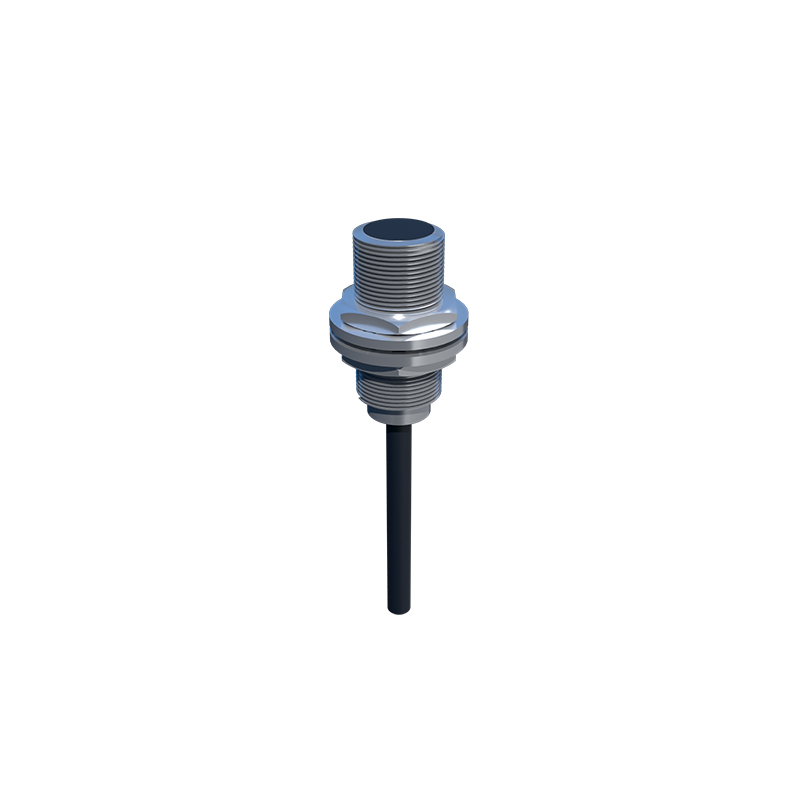
Next, evaluate key technical specifications. Sensing range is paramount; it defines the maximum distance at which the sensor can reliably detect an object. Ensure the chosen model's range accommodates your application's requirements with a safety margin. Consider the sensor's output type: digital outputs like NPN or PNP transistors are common for switching applications, while analog outputs (e.g., 4-20 mA or 0-10 V) provide continuous measurement data for process control. Response time, or the speed at which the sensor reacts to an object, is crucial for high-speed applications such as conveyor systems or robotics. Additionally, assess environmental factors: temperature ratings, ingress protection (IP) ratings for dust and water resistance, and resistance to chemicals or vibrations can impact sensor longevity. For harsh industrial settings, models with high IP ratings (e.g., IP67 or IP69K) and robust housings (e.g., stainless steel) are recommended.
Application-specific requirements further narrow down choices. In automotive manufacturing, inductive sensors might be preferred for metal part detection due to their durability. In food processing, capacitive or ultrasonic sensors with hygienic designs (easy to clean, corrosion-resistant) are often necessary to meet safety standards. Consider object characteristics: size, shape, material, and surface properties (e.g., reflective or dark surfaces) can affect sensor performance. For example, photoelectric sensors may struggle with highly reflective materials, requiring polarized filters. Mounting constraints and electrical compatibility with existing control systems (e.g., PLCs) also play a role; ensure the sensor's housing size, connection type (e.g., M12 connector), and voltage supply (e.g., 10-30 V DC) align with your setup.
Cost and lifecycle considerations should not be overlooked. While initial purchase price is a factor, total cost of ownership includes maintenance, replacement frequency, and compatibility with future upgrades. Opt for reputable brands that offer technical support, documentation, and warranty. In summary, selecting the right proximity sensor involves a balanced analysis of technology, specifications, environment, and application needs. By methodically assessing these aspects, engineers can enhance system efficiency and reduce downtime, ultimately driving operational success in diverse industrial scenarios.