In the realm of industrial automation and control systems, proximity switch sensors are indispensable components that enable non-contact detection of objects. These sensors play a critical role in enhancing efficiency, safety, and precision across various applications, from manufacturing lines to robotics. However, not all proximity sensors are created equal. Understanding the key differences between them is essential for selecting the right type for specific operational needs. This article delves into the distinct characteristics, working principles, and applications of the main types of proximity switch sensors: inductive, capacitive, ultrasonic, and photoelectric sensors.
Inductive proximity sensors are widely used for detecting metallic objects. They operate based on the principle of electromagnetic induction. When a metallic target enters the sensor's electromagnetic field, it induces eddy currents, causing a change in oscillation amplitude. This change triggers the sensor's output switch. Inductive sensors are known for their robustness, high switching frequency, and resistance to environmental factors like dust, oil, or moisture. They are ideal for applications involving metal detection in harsh industrial environments, such as in automotive assembly or metal machining. However, their limitation lies in their inability to detect non-metallic materials.
Capacitive proximity sensors, on the other hand, can detect both metallic and non-metallic objects, including liquids, plastics, and wood. These sensors function by measuring changes in capacitance. The sensor generates an electrostatic field, and when an object enters this field, it alters the capacitance, prompting the sensor to activate. Capacitive sensors are versatile and suitable for level detection, material handling, and presence sensing of diverse materials. They are particularly useful in industries like packaging, food processing, and chemical manufacturing. However, they may be sensitive to environmental changes, such as humidity or temperature fluctuations, requiring careful calibration.
Ultrasonic proximity sensors utilize sound waves to detect objects. They emit high-frequency ultrasonic pulses and measure the time taken for the echo to return after hitting an object. This time-of-flight principle allows for precise distance measurement and detection of various materials, regardless of color, transparency, or surface texture. Ultrasonic sensors excel in applications involving liquid level control, object positioning, and obstacle detection in automated guided vehicles (AGVs). They are less affected by dust, light, or smoke compared to optical sensors, but their performance can be influenced by air turbulence or temperature variations.
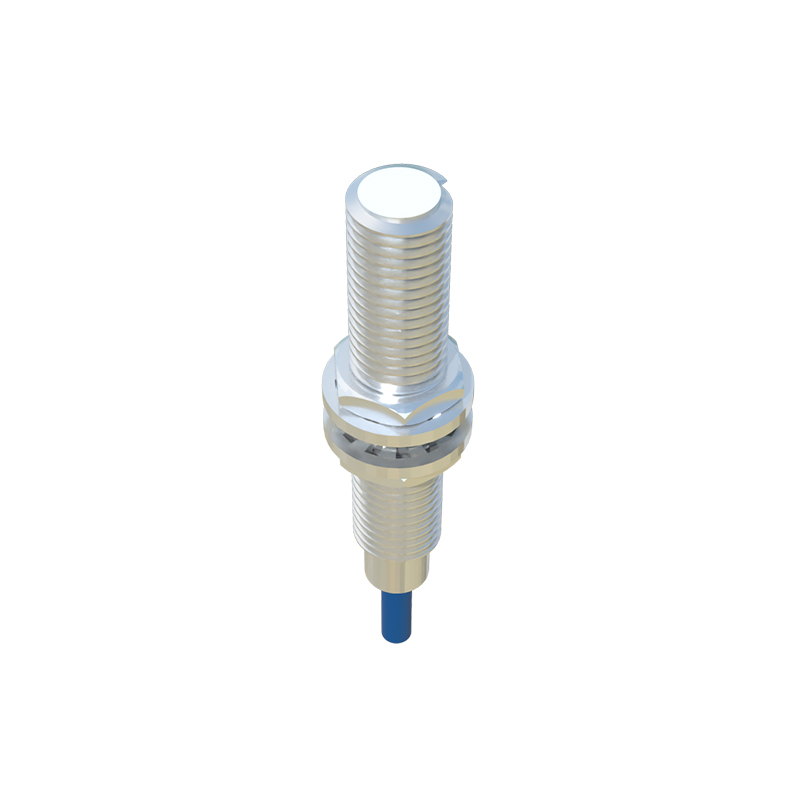
Photoelectric proximity sensors rely on light beams to detect objects. They consist of a light emitter (usually LED or laser) and a receiver. When an object interrupts or reflects the light beam, the sensor triggers an output. Photoelectric sensors are categorized into through-beam, retro-reflective, and diffuse-reflective types, each offering unique advantages. Through-beam sensors provide long-range detection and high accuracy, while diffuse-reflective sensors are compact and easy to install. These sensors are commonly used in packaging, printing, and electronics industries for tasks like counting, sorting, and edge detection. However, they can be affected by ambient light, dirt, or the color of the target object.
When choosing a proximity switch sensor, factors such as sensing range, material composition of the target, environmental conditions, response time, and cost must be considered. Inductive sensors are cost-effective for metal detection in tough settings, while capacitive sensors offer flexibility for non-metallic materials. Ultrasonic sensors provide reliable distance-based detection, and photoelectric sensors deliver high-speed performance for precise optical applications. By understanding these differences, engineers and technicians can optimize system performance, reduce downtime, and ensure operational safety. In summary, the selection of a proximity sensor should align with specific industrial requirements, balancing technical specifications with practical constraints to achieve optimal automation outcomes.