Small proximity sensors are essential components in modern automation and control systems, widely used for object detection, positioning, and counting without physical contact. Their compact design and reliable performance make them ideal for applications in robotics, automotive manufacturing, packaging machinery, and consumer electronics. This article delves into the structural composition of small proximity sensors, explaining how each part contributes to their functionality.
The core of a small proximity sensor typically consists of four main structural elements: the sensing element, oscillator circuit, signal processing unit, and output stage. The sensing element, often a coil or capacitive plate, generates an electromagnetic or electrostatic field. When a target object enters this field, it causes a change in the oscillation characteristics, which is detected by the sensor. The oscillator circuit, usually built with transistors or integrated circuits, produces a high-frequency signal that drives the sensing element. This circuit is finely tuned to ensure stability and sensitivity, allowing the sensor to detect objects at precise distances.
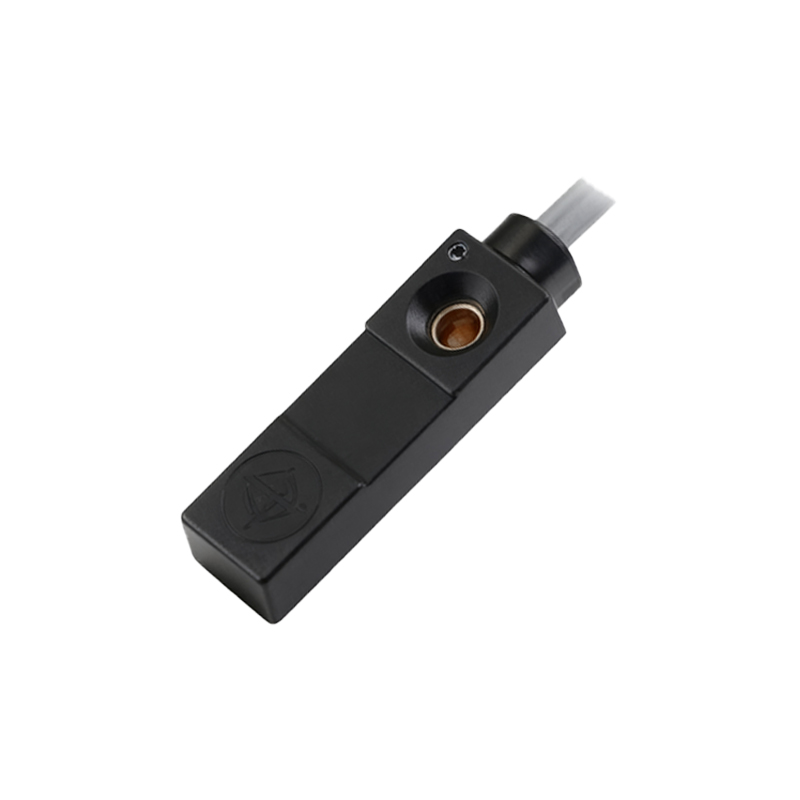
The signal processing unit, which includes amplifiers, comparators, and filters, converts the raw signal from the oscillator into a usable form. It amplifies weak signals, filters out noise, and compares the signal to a threshold to determine the presence or absence of an object. This unit is critical for enhancing the sensor's accuracy and reliability, especially in environments with electrical interference or varying temperatures. The output stage provides the final signal, which can be in the form of a digital switch (e.g., NPN or PNP transistor), analog voltage, or current loop, depending on the sensor type. This output interfaces with controllers like PLCs or microprocessors to trigger actions in automated systems.
Materials used in small proximity sensors include plastics for housings, copper or ferrite for coils, and silicon for integrated circuits. The housing is designed to protect internal components from dust, moisture, and mechanical damage, often meeting IP67 or higher ratings for industrial use. Advanced sensors may incorporate additional features like temperature compensation, LED indicators, and adjustable sensing ranges. Understanding these structural details helps engineers select the right sensor for specific applications, ensuring optimal performance in diverse operational conditions.
In summary, the effectiveness of small proximity sensors stems from their well-integrated structure, combining electromagnetic principles with electronic circuitry. As technology evolves, trends like miniaturization, enhanced sensitivity, and IoT connectivity are driving innovations in sensor design, making them even more versatile for future automation challenges.