Proximity sensors utilizing permanent magnets as sensing targets represent a fundamental and widely applied technology in industrial automation and control systems. The core principle revolves around detecting the presence or absence of a magnetic field, typically from a permanent magnet, and converting this detection into a reliable electrical signal. This article delves into the operational mechanics, common sensor types, and key application considerations for magnet-sensing proximity devices.
The fundamental operating principle is based on the interaction between a sensor's internal magnetic field and the external field generated by a permanent magnet target. Unlike inductive sensors that detect conductive metals by generating an eddy current damping effect, or capacitive sensors that sense changes in capacitance, magnet-sensitive proximity sensors are specifically designed to respond to magnetic flux. The most common technology employed is the Reed Switch or, in more modern solid-state versions, Hall Effect or Magneto-Resistive sensors.
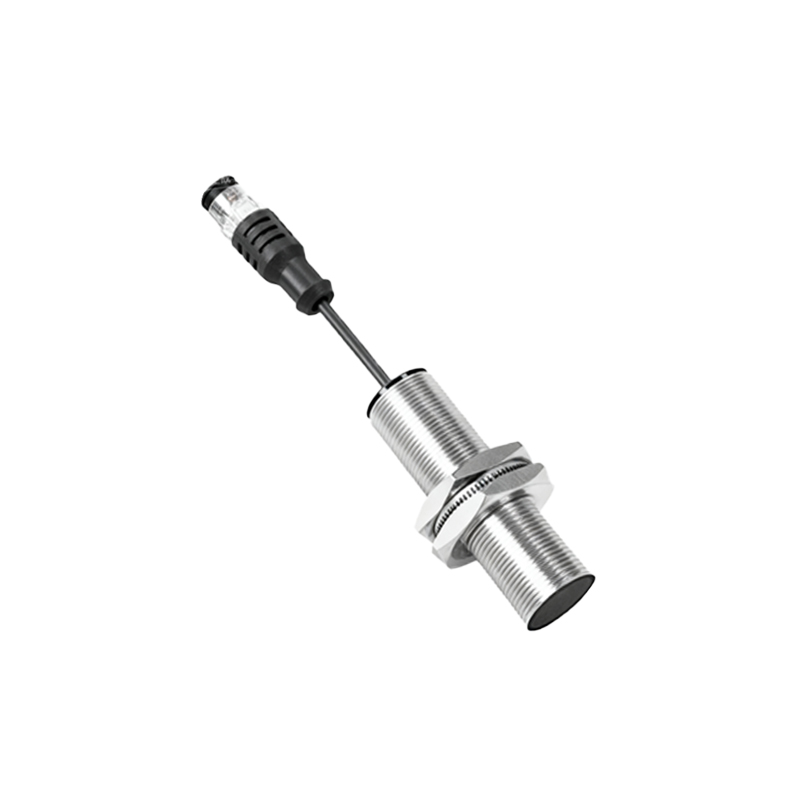
A Reed Switch consists of two ferromagnetic, flexible metal reeds sealed within a glass envelope filled with inert gas. The reeds serve as both magnetic flux concentrators and electrical contacts. When a permanent magnet approaches the sensor, its magnetic field causes the two reels to magnetize and attract each other, making physical contact and closing the electrical circuit. When the magnet is removed, the reels' spring force separates them, opening the circuit. This simple "on/off" action provides a robust switching signal.
Hall Effect sensors represent a solid-state, non-contact alternative. They operate on the principle that when a current-carrying conductor is placed in a magnetic field perpendicular to the current flow, a voltage difference (the Hall voltage) is generated across the conductor. An integrated circuit within the sensor measures this voltage. When the magnetic flux density from an approaching permanent magnet exceeds a predefined threshold, the sensor's output state changes, signaling the magnet's presence. Hall Effect sensors offer advantages like higher switching frequencies, virtually infinite operational life (no moving parts), and the ability to sense both the presence and strength of a magnetic field.
Magneto-Resistive (MR) sensors exploit the change in electrical resistance of certain materials when subjected to a magnetic field. They are highly sensitive and can detect very small changes in magnetic field direction and strength, making them suitable for precise position sensing alongside simple presence detection.
The permanent magnet used as the target is a critical component. Key magnet characteristics affecting sensor performance include material (e.g., Alnico, Ferrite, or Rare-Earth like Neodymium), magnetic field strength (Gauss level), polarization, and physical size. The sensor must be selected to match the magnet's field strength at the required sensing distance. The sensing distance, or operating point, is defined as the distance at which the sensor reliably switches when the magnet approaches along the designated axis. A release point, where the sensor switches back, is also specified, creating a hysteresis zone that prevents signal chatter during slow-moving or vibrating applications.
Installation and alignment are paramount. The sensor and magnet must be oriented correctly according to the sensor's data sheet—typically with opposite poles facing each other (e.g., sensor's south pole sensing the magnet's north pole). Misalignment can drastically reduce the effective sensing distance. Environmental factors such as strong external magnetic fields, high temperatures (which can demagnetize certain magnets), and mechanical vibrations must also be considered during system design.
Typical industrial applications are numerous. They are extensively used for position feedback in pneumatic and hydraulic cylinders, where a magnet is embedded in the piston. As the piston moves, the sensor detects the magnet at the end of the stroke, providing a limit switch signal. Other applications include door/window status detection in security systems, rotary speed sensing (by detecting a magnet on a rotating shaft), and non-contact end-of-travel detection in linear actuators and conveyors.
In summary, the principle of proximity sensors sensing magnets is an elegant fusion of magnetics and electronics, providing a reliable, wear-free, and often hermetically sealed solution for position detection. The choice between Reed, Hall Effect, or MR technologies depends on the specific requirements for speed, precision, cost, and environmental robustness. Understanding the interplay between the sensor's characteristics and the magnet's properties is essential for designing effective and dependable sensing systems in any automated environment.