In the rapidly evolving landscape of industrial automation and precision engineering, linear proximity sensors have become indispensable components. These non-contact devices detect the presence, absence, or position of metallic objects with high accuracy and reliability, forming the backbone of countless applications from machine tool positioning to robotic assembly lines. The market for these sensors is driven by a cohort of specialized companies, each contributing to technological advancement through relentless innovation, rigorous quality standards, and deep application expertise.
Leading the charge are established global giants like Sick AG, Pepperl+Fuchs, and Balluff GmbH. These companies are renowned not just for their extensive product portfolios but for their systemic approach to sensing solutions. Sick AG, for instance, has pioneered advancements in analog and digital output sensors, offering models with exceptional temperature stability and noise immunity for harsh environments. Their focus on IO-Link compatibility integrates sensors seamlessly into Industry 4.0 frameworks, providing valuable diagnostic and parameterization data beyond simple switching signals. Similarly, Pepperl+Fuchs has set benchmarks with its patented inductive and capacitive technologies, producing sensors with incredibly small form factors and high switching frequencies, essential for high-speed packaging and electronics manufacturing.
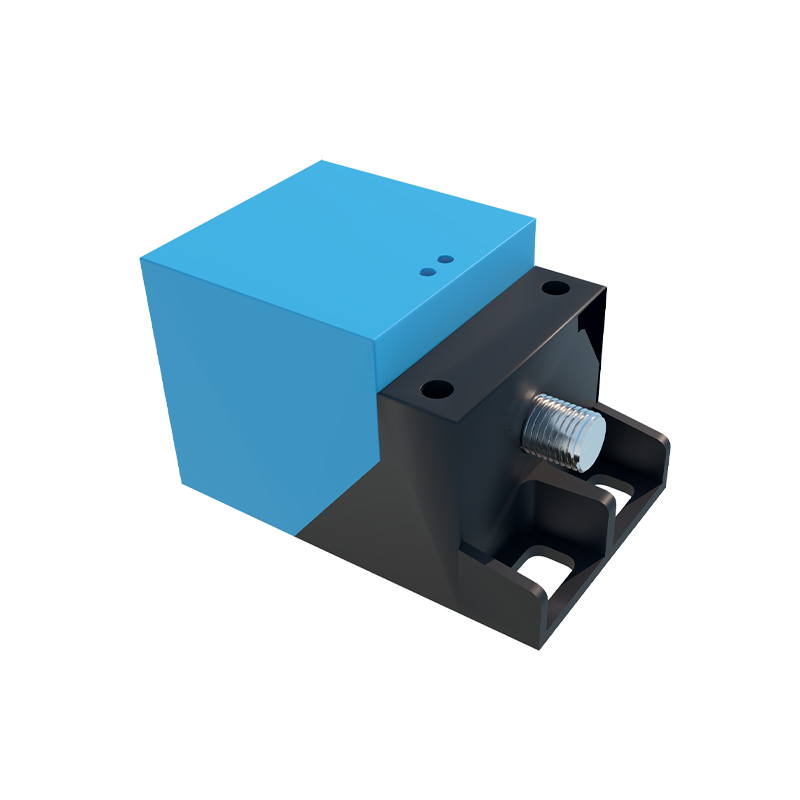
However, innovation is not the sole domain of the largest players. A significant trend is the rise of specialized manufacturers like Turck and ifm electronic, who excel in solving specific industry challenges. Turck's expertise in producing extremely robust sensors with high ingress protection (IP67/IP69K) ratings makes them a preferred choice for washdown applications in food and beverage or pharmaceutical industries. Ifm electronic, on the other hand, has made significant strides in user-friendly design, with sensors featuring intuitive setup indicators and advanced diagnostics that reduce machine downtime. Their development of factor-1 sensors—devices where the sensing range equals the housing size—exemplifies the industry's push toward miniaturization without performance compromise.
The technological core of these companies' offerings lies in the refinement of sensing principles. Inductive sensors remain the most common for detecting ferrous and non-ferrous metals, with leaders continuously improving their range, linearity, and resistance to electromagnetic interference. Capacitive sensors, capable of detecting non-metallic materials like plastics, glass, and liquids, have seen advancements in sensitivity adjustment and shielding to prevent false triggers. Furthermore, companies like Keyence and Banner Engineering have pushed the boundaries with laser-based and ultrasonic linear sensors, providing sub-micron resolution for ultra-precise measurement tasks in semiconductor fabrication and precision metrology.
The competitive landscape is fiercely shaped by several key factors. First is precision and repeatability. Top-tier companies invest heavily in R&D to minimize hysteresis and temperature drift, ensuring consistent performance over the sensor's lifetime. Second is durability. Industrial environments are punishing, with exposure to vibration, coolant, metal chips, and extreme temperatures. Leading manufacturers subject their products to exhaustive testing, often exceeding standard specifications to guarantee longevity. Third is connectivity and intelligence. The modern sensor is a data node. Companies are integrating smart features like condition monitoring, predictive maintenance alerts, and easy integration into industrial Ethernet networks (Profinet, EtherNet/IP) and IIoT platforms.
Another critical aspect is application-specific engineering. A linear proximity sensor for hydraulic cylinder position feedback in mobile equipment has vastly different requirements—such as resistance to shock and wide operating voltage ranges—than one used in a cleanroom PCB drilling machine. Successful companies maintain deep engineering teams that work directly with OEMs and end-users to develop customized variants, specialized housings, or unique electrical outputs to fit exact needs. This collaborative approach transforms a standard component into a critical, value-adding part of the customer's machine.
Looking forward, the trajectory for linear proximity sensor companies is clear: smarter, smaller, and more integrated. The convergence of sensing and networking will continue, with more intelligence embedded at the edge. We can expect further miniaturization enabling new applications in compact robotics and medical devices. Additionally, the demand for high-precision analog output sensors with advanced diagnostics will grow as industries seek finer process control and data transparency. Companies that master the blend of robust hardware, intelligent software, and seamless connectivity will define the next generation of non-contact sensing, solidifying their role as essential partners in the world's march toward advanced automation and digital manufacturing.