In the rapidly evolving landscape of industrial automation, proximity sensors have become indispensable components for ensuring precision, safety, and efficiency. As technology advances, new types of proximity sensors—such as those utilizing advanced inductive, capacitive, ultrasonic, and even IO-Link enabled variants—are entering the market. A common question among engineers, procurement specialists, and project managers is: "How much do these new proximity sensors cost?" The answer is not a simple figure, as price is influenced by a complex matrix of factors including sensor type, sensing range, output configuration, housing material, environmental ratings, brand, and integration capabilities.
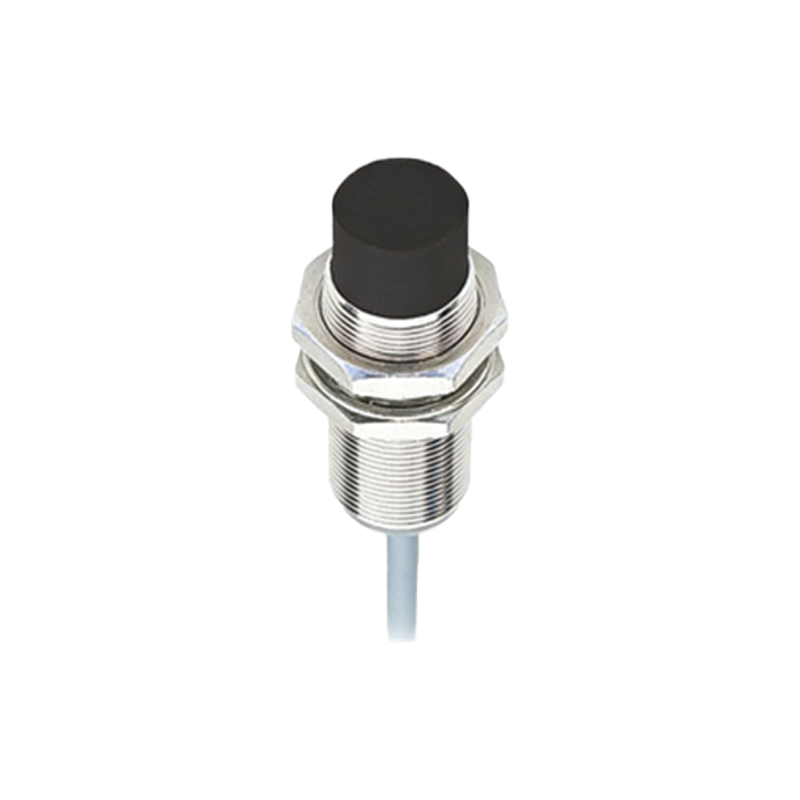
Generally, the price spectrum for new proximity sensors is broad. Basic, standard-range inductive sensors for common metal detection might start as low as $15 to $30 per unit for economical brands or high-volume orders. These are typically M12 or M18 threaded cylindrical sensors with standard PNP or NPN outputs. However, when you step into more specialized territory, costs rise significantly. For instance, capacitive sensors designed for detecting non-metallic materials like liquids, plastics, or wood often range from $40 to $80. Ultrasonic sensors, offering longer ranges and capable of detecting various objects regardless of color or material, can command prices from $80 to $200 or more, depending on their sensing distance and analog/output programmability.
One of the most impactful trends is the integration of smart features and industrial communication protocols. New sensors equipped with IO-Link functionality, which enables parameter setting, condition monitoring, and seamless data exchange with PLCs, carry a premium. An IO-Link inductive sensor can easily cost 30% to 50% more than its standard counterpart, placing it in the $50 to $120 range. Similarly, sensors built for extreme conditions—featuring high IP ratings (IP67, IP69K), resistance to chemicals, wide temperature tolerances, or stainless-steel housings for washdown environments—incur higher manufacturing costs, which are reflected in their prices. Brand reputation is another critical determinant. Established global leaders like Siemens, Omron, Pepperl+Fuchs, and Balluff are positioned at the higher end of the price range, justified by their proven reliability, extensive technical support, and global supply chains. Their new, feature-rich sensor models can range from $70 to over $300. In contrast, competitive offerings from other reputable manufacturers or specialized suppliers may provide similar specifications at a 20-30% lower cost, presenting a value-based alternative.
Beyond the unit price, the Total Cost of Ownership (TCO) is a crucial consideration for any industrial application. A slightly higher initial investment in a robust, accurate, and reliable sensor can prevent costly downtime, maintenance, and replacement in the long run. Furthermore, bulk purchasing, framework agreements with distributors, and selecting the exact specifications needed for the application (avoiding over-specification) are effective strategies for cost optimization. The market for new proximity sensors is dynamic, with prices also fluctuating based on raw material costs, global supply chain logistics, and regional demand.
In conclusion, while a basic new proximity sensor might be acquired for under $30, the average investment for a quality, application-suited sensor in an industrial setting typically falls between $50 and $150. For high-performance, long-range, or intelligently connected sensors, professionals should budget from $150 to $400 per unit. The key is to conduct a thorough technical evaluation, balancing performance requirements, environmental challenges, and lifecycle costs to select the sensor that delivers optimal value, rather than simply opting for the lowest sticker price. Engaging with technical datasheets and consulting with trusted suppliers for specific project quotes remains the most reliable method for precise pricing.