In modern industrial automation, the demand for reliable and precise object detection continues to drive innovations in sensor technology. Among the various solutions available, cylindrical proximity sensors have established themselves as a cornerstone for non-contact detection tasks. However, traditional single-sided detection methods often face limitations in complex applications where objects may approach from multiple directions or require verification from opposite sides. This is where double-sided detection using cylindrical proximity sensors emerges as a transformative approach, offering enhanced flexibility, redundancy, and accuracy in automated systems.
Cylindrical proximity sensors, typically housed in robust metallic or polymer casings, operate on principles such as inductive, capacitive, or magnetic sensing. Inductive sensors, for instance, generate an electromagnetic field to detect metallic objects without physical contact, making them ideal for harsh industrial environments. The cylindrical form factor provides durability and ease of installation in standard mounting setups. When configured for double-sided detection, two sensors are strategically positioned opposite each other, enabling simultaneous monitoring from both sides of a target area. This setup is particularly valuable in assembly lines, packaging machinery, and robotic systems where objects must be verified for presence, orientation, or integrity from multiple angles.
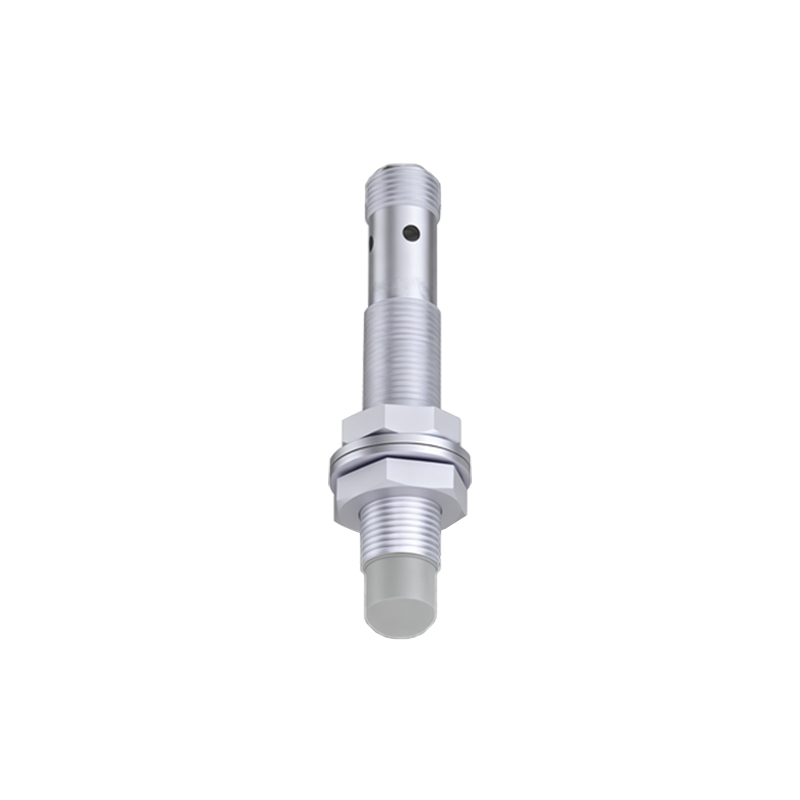
The implementation of double-sided detection involves careful consideration of sensor placement, sensing ranges, and environmental factors. For example, in a conveyor belt system, sensors mounted on either side can detect whether a product is properly centered or if it has passed through completely. This dual verification reduces the risk of false positives or missed detections that could lead to production errors. Additionally, in quality control processes, double-sided sensors can inspect components for features on both sides, such as checking for drilled holes or attached labels, ensuring comprehensive inspection without additional downtime.
One of the key advantages of this configuration is its ability to provide redundancy. In critical applications where sensor failure could result in costly downtime or safety hazards, having a backup detection point enhances system reliability. If one sensor malfunctions, the other can continue to operate, allowing for maintenance without halting production. Moreover, double-sided detection improves accuracy by compensating for variations in object size, material, or position. For instance, when detecting non-metallic objects with capacitive sensors, the dual setup can account for changes in environmental conditions like humidity or temperature that might affect single-sensor performance.
From a technical perspective, integrating double-sided cylindrical proximity sensors requires attention to wiring, synchronization, and signal processing. Sensors must be connected to programmable logic controllers (PLCs) or industrial computers with appropriate interfaces to handle simultaneous inputs. Advanced models feature adjustable sensing distances and output configurations (e.g., NPN or PNP), allowing customization for specific tasks. In practice, this might involve setting differential detection modes where the system triggers an action only when both sensors are activated in a predefined sequence, adding a layer of logic control for complex automation scenarios.
Industry applications abound, ranging from automotive manufacturing to food processing. In automotive lines, double-sided sensors verify the placement of engine parts or brake components from opposite sides, ensuring precise alignment before assembly. In packaging, they monitor the filling levels of containers by detecting lids or seals on both ends, preventing underfilled or unsealed products from proceeding. The robustness of cylindrical designs, often rated for IP67 or higher protection against dust and moisture, makes them suitable for these demanding environments.
Looking ahead, trends in Industry 4.0 and the Internet of Things (IoT) are further enhancing double-sided detection capabilities. Smart sensors with integrated diagnostics can communicate real-time data on performance and wear, enabling predictive maintenance. Wireless connectivity options reduce cabling complexity in multi-sensor setups. As automation systems evolve toward greater intelligence, the synergy between cylindrical proximity sensors and double-sided configurations will continue to push the boundaries of efficiency and precision.
In summary, double-sided detection using cylindrical proximity sensors represents a significant advancement in industrial sensing. By leveraging dual perspectives, industries achieve higher reliability, improved quality control, and adaptable automation solutions. Engineers and system designers should consider this approach when tackling challenges that demand robust, multi-angle detection in dynamic operational settings.