In the realm of industrial automation and electronic control systems, photoelectric sensors have long been pivotal components, enabling precise detection, positioning, and measurement across countless applications. As technology advances, a compelling question arises: How close can these sensors come to emulating the detection capabilities of the sun—nature's ultimate source of light and energy? This article delves into the principles, advancements, and limitations of photoelectric sensors in comparison to solar phenomena, exploring the intersection of engineering innovation and natural inspiration.
Photoelectric sensors operate by emitting light—typically from LEDs or laser diodes—and detecting changes in the reflected or transmitted light to sense objects or environmental conditions. Common types include through-beam, retro-reflective, and diffuse reflective sensors, each suited to specific industrial tasks. Their design focuses on reliability, response time, and adaptability to harsh environments, such as manufacturing floors or outdoor installations. In contrast, the sun functions as a colossal, broadband light source emitting across the electromagnetic spectrum, from ultraviolet to infrared. Its "detection" is passive, relying on natural interactions like absorption and reflection by celestial bodies, which humans harness through technologies like solar panels or optical telescopes.
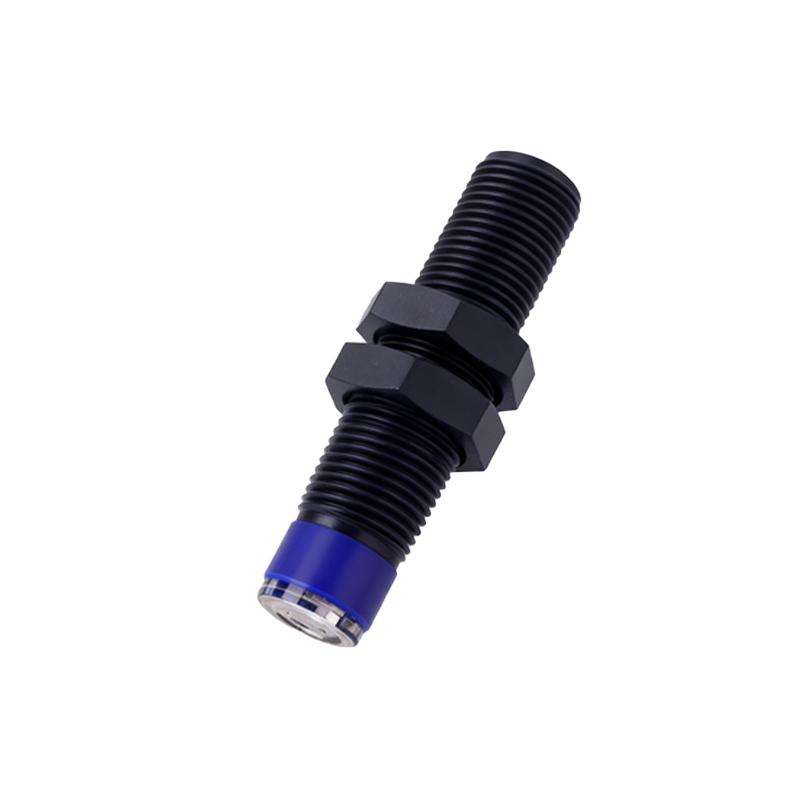
The quest to mimic the sun's detection prowess centers on several key areas. First, spectral range: Modern photoelectric sensors are expanding beyond visible light to incorporate UV and IR wavelengths, enhancing their ability to detect materials invisible to the human eye. For instance, IR sensors can penetrate certain obscurants like smoke or fog, akin to how sunlight filters through atmospheric layers. However, achieving the sun's full-spectrum emission in a compact, energy-efficient device remains a challenge due to power and heat dissipation constraints.
Second, sensitivity and dynamic range: The sun illuminates vast distances with consistent intensity, a feat replicated in high-end photoelectric sensors through advanced optics and signal processing. Innovations like background suppression technology allow sensors to ignore distant objects, focusing only on targets within a set range—similar to how sunlight's intensity diminishes with distance but remains detectable. Yet, sensors struggle with extreme dynamic scenarios, such as sudden glare or complete darkness, where the sun's constant presence offers inherent stability.
Third, adaptability and intelligence: The sun's light interacts seamlessly with diverse environments, from ocean surfaces to forest canopies. Photoelectric sensors are incorporating smart features like programmable logic, ambient light compensation, and IoT connectivity to adjust to varying conditions. For example, auto-tuning sensors can calibrate themselves based on ambient light levels, reducing false triggers. While this mirrors the sun's adaptive illumination in a controlled manner, it lacks the sun's omnipresent, self-sustaining nature.
In practical applications, photoelectric sensors excel in precision tasks where the sun's broad approach is impractical. In automotive assembly lines, they detect minute parts with millimeter accuracy; in agriculture, they monitor crop health using specific light wavelengths. Conversely, solar energy systems leverage the sun's broad spectrum for power generation, a complementary rather than competitive relationship. The gap lies in scalability: Photoelectric sensors are optimized for localized, high-accuracy detection, while the sun offers global, diffuse detection capabilities.
Looking ahead, emerging technologies like quantum dot sensors and biomimetic optics aim to bridge this divide. Researchers are developing sensors that mimic photosynthetic processes or solar radiation patterns, potentially enabling devices that "see" like the sun across multiple spectra. However, ethical and practical considerations, such as energy consumption and environmental impact, temper these ambitions. The sun operates on a cosmic scale, powered by nuclear fusion, whereas photoelectric sensors rely on electrical grids or batteries—a fundamental disparity in sustainability.
In conclusion, photoelectric sensors have made remarkable strides in emulating aspects of the sun's detection abilities, particularly in spectral diversity and adaptive intelligence. They serve as indispensable tools in modern industry, offering precision that natural systems cannot match. Yet, the sun remains an unparalleled model of efficiency and scale, inspiring ongoing innovation. As engineers, we continue to push boundaries, not to replace nature, but to harness its principles for human advancement. The journey toward sun-like sensors is less about replication and more about synergy—where technology and nature illuminate each other's potential.