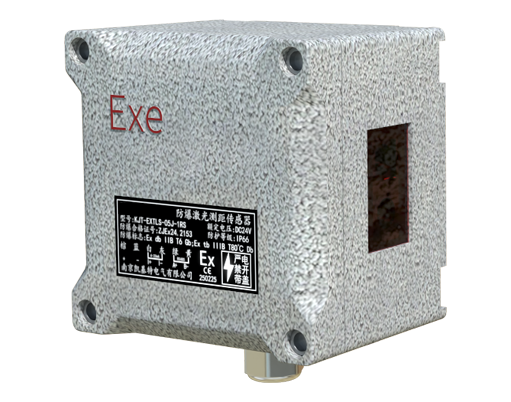
In the rapidly evolving landscape of autonomous vehicle technology, laser-based sensors have emerged as a cornerstone for perception and navigation. These systems, primarily Light Detection and Ranging (LiDAR) sensors, provide the high-resolution, three-dimensional environmental mapping essential for safe and reliable unmanned vehicle operation. Unlike traditional cameras or radar, LiDAR emits pulsed laser light to measure distances with exceptional accuracy, creating a precise point cloud representation of the surroundings in real-time.
The core engineering principle involves time-of-flight calculation. A laser diode emits a light pulse, which travels until it strikes an object and reflects back to a photodetector. By precisely measuring the round-trip time and knowing the speed of light, the sensor calculates the distance to that point. Modern automotive LiDAR units perform this millions of times per second across a wide field of view, typically using rotating or solid-state scanning mechanisms. The resulting data is a dynamic 3D map that allows the vehicle's central processing unit to identify and classify objects—such as other vehicles, pedestrians, curbs, and traffic signs—with high fidelity.
For engineers, the design and integration of these sensors present significant challenges. Key performance parameters include range, resolution, frame rate, and resilience to environmental conditions. Long-range LiDAR (capable of detecting objects over 200 meters away) is crucial for highway driving, while high angular resolution is necessary for distinguishing fine details in complex urban environments. Furthermore, sensor fusion is a critical practice; LiDAR data is rarely used in isolation. It is combined with inputs from complementary sensors like cameras, radar, and ultrasonic sensors through sophisticated algorithms. This sensor fusion creates a redundant and robust perception system, mitigating the limitations of any single technology. For instance, while LiDAR excels at geometric precision, cameras provide vital color and texture information for traffic light recognition, and radar performs well in adverse weather where laser scattering can occur.
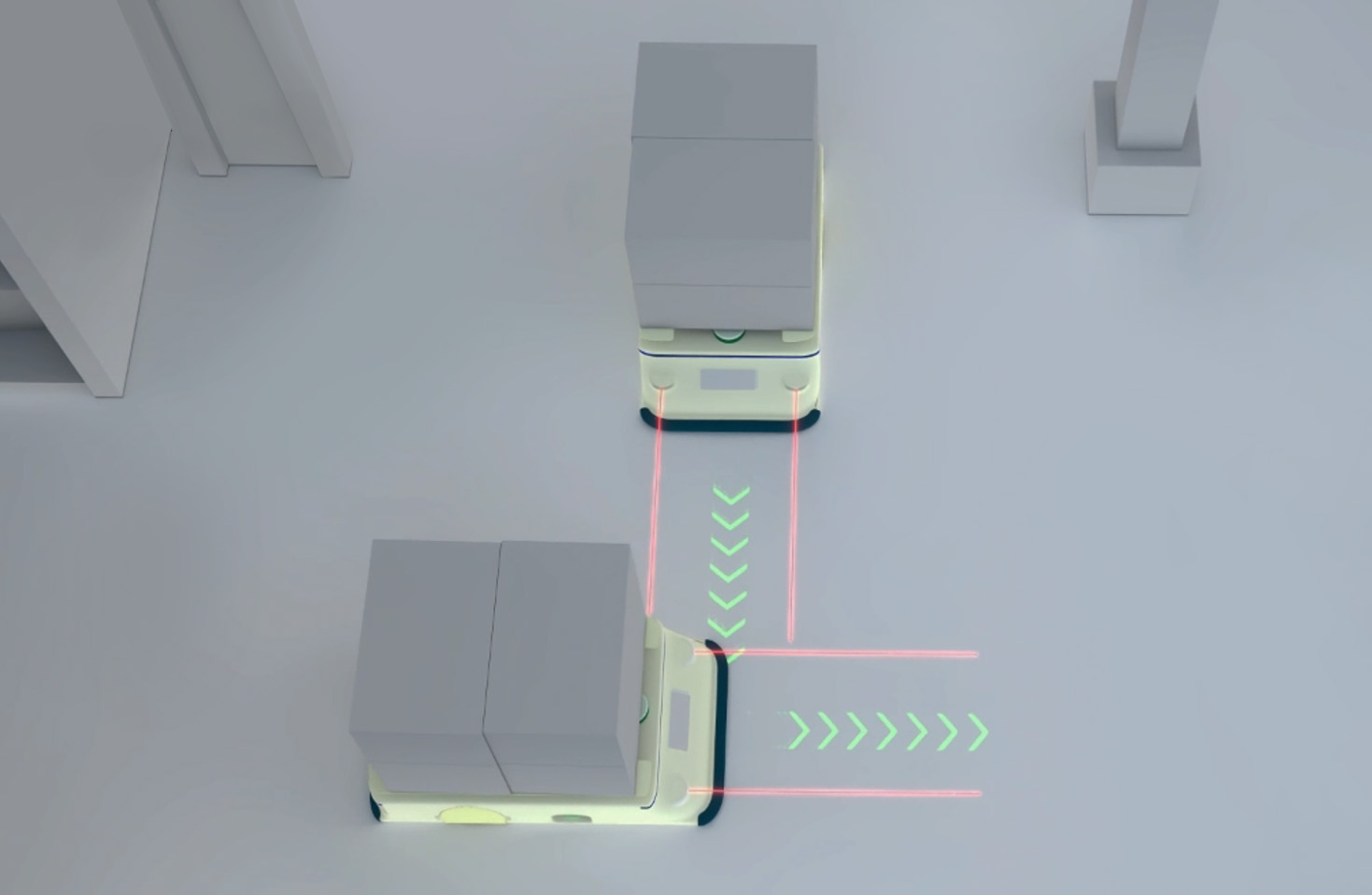
The industry is currently navigating a shift from bulky, mechanically rotating LiDAR systems to more compact, reliable, and cost-effective solid-state solutions. Solid-state LiDAR, with no moving parts, offers greater durability and the potential for seamless integration into vehicle body panels. This evolution is vital for scaling autonomous technology from prototypes to mass-produced consumer vehicles. Concurrently, advancements in signal processing and machine learning are enhancing object classification and predictive tracking directly at the sensor level, reducing latency and computational load on the main vehicle computer.
Looking ahead, the future of laser sensors in autonomous driving hinges on overcoming remaining hurdles. Performance in heavy rain, fog, and snow requires ongoing improvement in laser wavelength selection and noise-filtering algorithms. Standardization of data formats and communication protocols across different OEMs and sensor manufacturers is another area of active development to ensure interoperability. Moreover, as the level of autonomy increases, the demand for failsafe sensor architectures with built-in functional safety (aligned with standards like ISO 26262) becomes paramount. The engineering community continues to push the boundaries, developing next-generation technologies like Frequency-Modulated Continuous Wave (FMCW) LiDAR, which can directly measure velocity in addition to distance, adding a crucial vector dimension to perception data.
In conclusion, laser sensors are not merely components but the eyes of the autonomous vehicle. Their continuous refinement and integration represent a fundamental engineering endeavor, directly enabling the transition from assisted to fully autonomous driving. The precision, richness, and real-time nature of the data they provide form the bedrock upon which the algorithms of autonomy are built, steering us toward a future of safer and more efficient transportation.