Bidirectional laser sensors represent a significant leap forward in precision measurement and detection technology within the industrial automation and control sectors. Unlike conventional unidirectional sensors that emit a laser beam and detect its reflection from a single point, bidirectional sensors incorporate both transmission and reception capabilities in a more sophisticated, often integrated, manner. This allows for enhanced functionality, greater accuracy, and more complex application scenarios. At its core, the principle involves the coordinated use of a laser emitter and a receiver that can operate in tandem to measure distance, presence, or displacement by analyzing the properties of the emitted and received light beam, sometimes involving a separate reflector or a second sensor unit for complete bidirectional communication.
The operational mechanics are founded on time-of-flight (ToF), triangulation, or phase-shift measurement principles. In a typical setup for distance measurement, a laser diode emits a pulsed or modulated continuous-wave beam towards a target. A photodetector, either within the same housing (in a confocal configuration) or in a separate unit placed opposite, receives the reflected or directly transmitted light. By precisely calculating the time delay or phase difference between the emitted and received signals, the sensor can determine the distance to the target with sub-millimeter accuracy. The "bidirectional" aspect is most potent in applications requiring synchronization or mutual recognition between two points, such as in secure alignment systems or when measuring the position of an object from two opposing sides simultaneously.
Key advantages of bidirectional laser sensors over their unidirectional counterparts include improved signal integrity and noise immunity. By controlling both ends of the light path, the system can better compensate for environmental interferences like ambient light, dust, or vapor. Furthermore, they enable absolute position referencing. For instance, in high-precision machine tools, two bidirectional sensors working in concert can calibrate the exact position of a cutting head relative to the workpiece bed, eliminating cumulative errors. They also facilitate applications in safety curtains and light barriers where the break of a laser beam between an emitter and a separate receiver unit triggers an immediate safety halt.
The applications span numerous industries. In automotive manufacturing, they are indispensable for robotic welding and assembly, ensuring components are positioned with exacting tolerances. In the electronics sector, they guide pick-and-place machines for mounting microchips onto circuit boards. Logistics and warehousing utilize them in automated guided vehicles (AGVs) for navigation and pallet dimensioning. A growing application is in dimensional metrology, where multiple bidirectional sensors create a coordinated measurement network for 3D scanning of complex parts. Additionally, they are critical in infrastructure monitoring, such as detecting minute displacements in bridges or tunnels by establishing a stable measurement line between two fixed points.
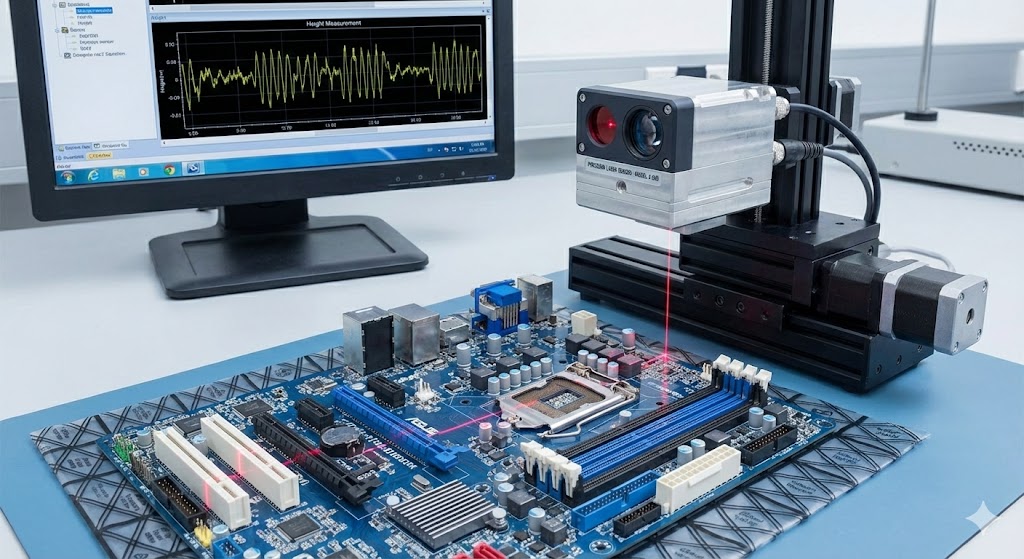
Recent technological advancements are pushing the boundaries of what bidirectional laser sensors can achieve. The integration of advanced microprocessors and digital signal processing (DSP) chips allows for real-time data analysis and adaptive filtering. The development of blue and violet laser diodes offers advantages in certain materials processing and detection scenarios due to their shorter wavelength and finer focus. Furthermore, the miniaturization of components has led to more compact sensor designs that can be deployed in space-constrained environments. The emergence of Industrial Internet of Things (IIoT) compatibility is another major trend, with sensors now featuring Ethernet, PROFINET, or IO-Link interfaces for seamless integration into smart factory networks, enabling predictive maintenance and centralized data analytics.

Selecting the appropriate bidirectional laser sensor requires careful consideration of several parameters. The required measuring range and resolution are paramount. Environmental factors such as temperature extremes, potential exposure to coolants or oils (requiring specific IP ratings), and the presence of vibration must be accounted for. The type of target surface—highly reflective, matte, transparent, or dark—can significantly affect performance and may necessitate sensors with automatic gain control or background suppression features. Finally, the output signal type (analog voltage/current, digital switch, or serial data) must be compatible with the existing control system.
In conclusion, bidirectional laser sensors are sophisticated instruments that offer unparalleled precision and reliability for demanding industrial applications. Their ability to provide controlled, two-way optical communication makes them a cornerstone of modern automation, quality control, and safety systems. As technology continues to evolve towards greater connectivity, intelligence, and miniaturization, these sensors will undoubtedly play an even more pivotal role in shaping the future of smart manufacturing and beyond. Engineers and system integrators must stay abreast of these developments to leverage the full potential of this transformative technology.
