Photoelectric proximity sensors are indispensable components in modern industrial automation, offering non-contact detection capabilities for a wide range of applications. Their design revolves around the fundamental principle of emitting a light beam—typically infrared, visible red, or laser—and detecting changes in the received light intensity or time-of-flight to determine the presence, absence, or distance of an object. The core design architecture comprises three main elements: the emitter, the receiver, and the signal processing circuitry.
The emitter, usually a light-emitting diode (LED) or a laser diode, generates the optical signal. Key design parameters include wavelength selection, which affects sensing range and immunity to ambient light interference. Infrared (850-940 nm) is common for its invisibility and good performance, while specialized applications may use visible red for easier alignment or laser for precise, long-range detection. The optical design of the emitter lens focuses the light into a defined beam pattern, crucial for determining the sensor's sensing window and minimizing stray light.
Opposite the emitter, the photodetector (receiver)—a phototransistor, photodiode, or in advanced sensors, a position-sensitive device (PSD) or CMOS array—converts the reflected or interrupted light into an electrical current. The receiver's sensitivity, response time, and spectral response must be carefully matched to the emitter's characteristics. Optical filters are often integrated to block unwanted ambient light, such as from factory lighting, enhancing signal-to-noise ratio.
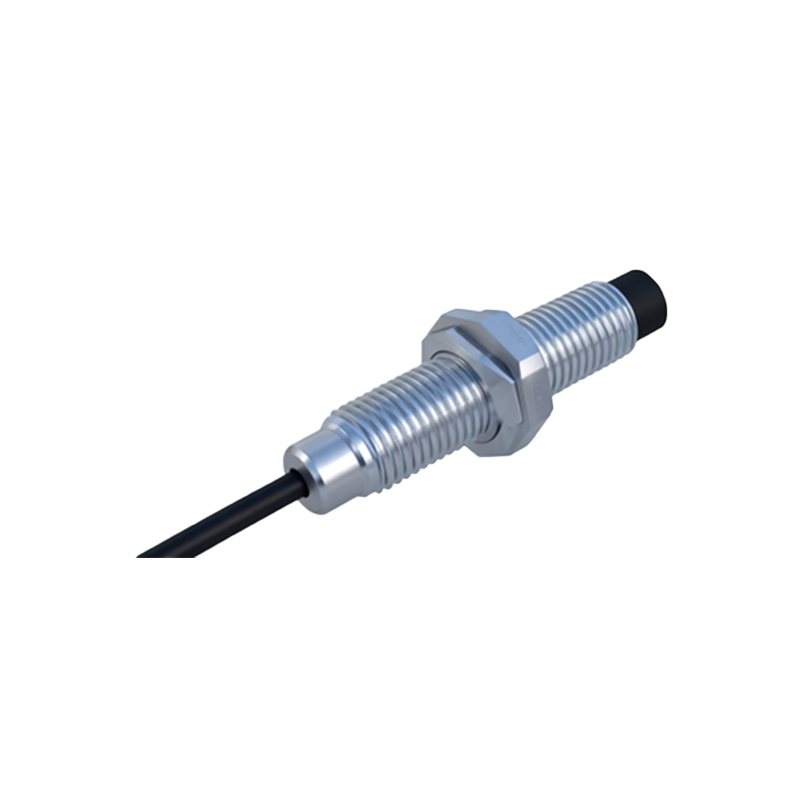
The heart of the sensor is its electronic control unit. This circuitry modulates the emitted light at a specific frequency (e.g., a pulsed signal). The receiver circuit is then tuned to demodulate only signals at this frequency, effectively rejecting constant ambient light and other asynchronous optical noise. This modulated operation is critical for stable performance in challenging industrial environments. For analog output sensors measuring distance, the circuitry processes the received signal strength or, in time-of-flight (ToF) designs, calculates the phase shift or direct time delay between emitted and received pulses. The final output is typically a switched digital signal (PNP/NPN) or a proportional analog signal (0-10V, 4-20mA).
Several design configurations exist, each with distinct advantages. The through-beam (or opposed) mode, with separate emitter and receiver units, offers the longest sensing range and highest reliability, as it detects the direct interruption of the beam. The retro-reflective mode uses a single housing and a reflector, suitable for medium ranges. The diffuse (or proximity) mode, where the sensor houses both emitter and receiver and detects light reflected directly from the target, is the most compact and common for short-range detection. Recent advancements incorporate background suppression technology in diffuse sensors, using triangulation principles to detect objects only within a defined "window," ignoring more distant surfaces.
Critical application considerations heavily influence the design selection. Sensing range is paramount and depends on target size, color, reflectivity, and surface texture. A highly reflective white object will be detected at a much greater distance than a matte black one. The sensor must be rated for the appropriate environmental conditions, including operating temperature, humidity, and resistance to dust, water, or chemicals (often indicated by IP or NEMA ratings). Electrical characteristics like supply voltage, output type, and connection method must match the control system. Response time, often in the microsecond range, determines suitability for high-speed production lines. Finally, physical mounting constraints and the need for adjustable sensing thresholds or teach-in functions are practical design integration factors.
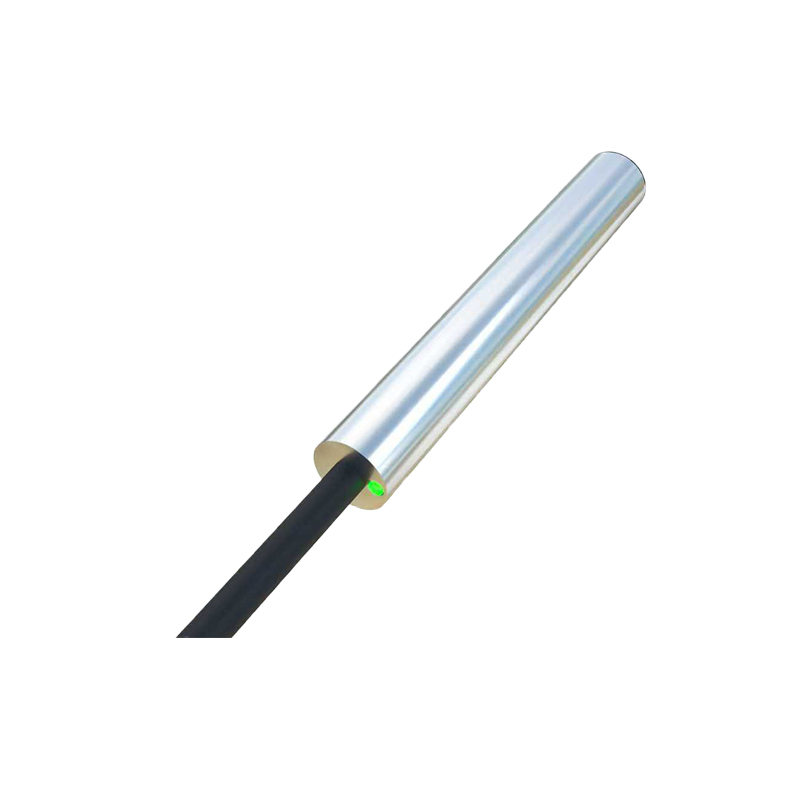
In summary, designing an effective photoelectric proximity sensor requires a holistic approach balancing optical engineering, electronic design, and a deep understanding of the application's physical and environmental demands. The trend continues toward miniaturization, increased intelligence with IO-Link communication for parameter setting and diagnostics, and enhanced performance in sensing difficult targets, ensuring these sensors remain a cornerstone of industrial sensing technology.