In the rapidly evolving landscape of industrial automation, laser sensors stand as pivotal components, enabling precision, reliability, and efficiency across myriad applications. This comprehensive guide delves into 54 distinct types of laser sensors, categorized by their operational principles, measurement functions, and specific use cases. Understanding these varieties is crucial for engineers and system integrators to select the optimal sensor for their automation needs.
The first major category is Distance Measurement Laser Sensors. These sensors determine the interval between the sensor head and a target object. Key types include:
1. Time-of-Flight (ToF) Laser Sensors: Calculate distance based on the time taken for a laser pulse to reflect back. Ideal for long-range applications like vehicle detection or bulk material level monitoring.
2. Triangulation Laser Sensors: Use a laser point, a receiver lens, and a position-sensitive detector (PSD) or CMOS array. They offer high precision for short to medium ranges, commonly used in thickness gauging and profile measurement.

3. Confocal Chromatic Sensors: Utilize white light or multi-wavelength lasers, measuring distance via spectral analysis of reflected light. Excellent for measuring transparent or highly reflective surfaces.
4. Laser Interferometers: Provide nanometer-level accuracy by analyzing interference patterns of laser beams, essential in semiconductor manufacturing and precision metrology.
5. Phase-Shift Measurement Sensors: Modulate the laser beam's intensity and measure the phase shift of the returning signal, suitable for medium-precision, high-speed applications.
The second core group is Displacement and Position Sensing Laser Sensors. These focus on detecting minute changes in position or presence.
6. Laser Micrometer Sensors: Measure outer dimensions, thickness, or diameter of objects with micron-level accuracy using parallel laser beams.
7. Laser Edge Detection Sensors: Precisely locate the edges of materials for alignment in printing, cutting, or web guiding systems.
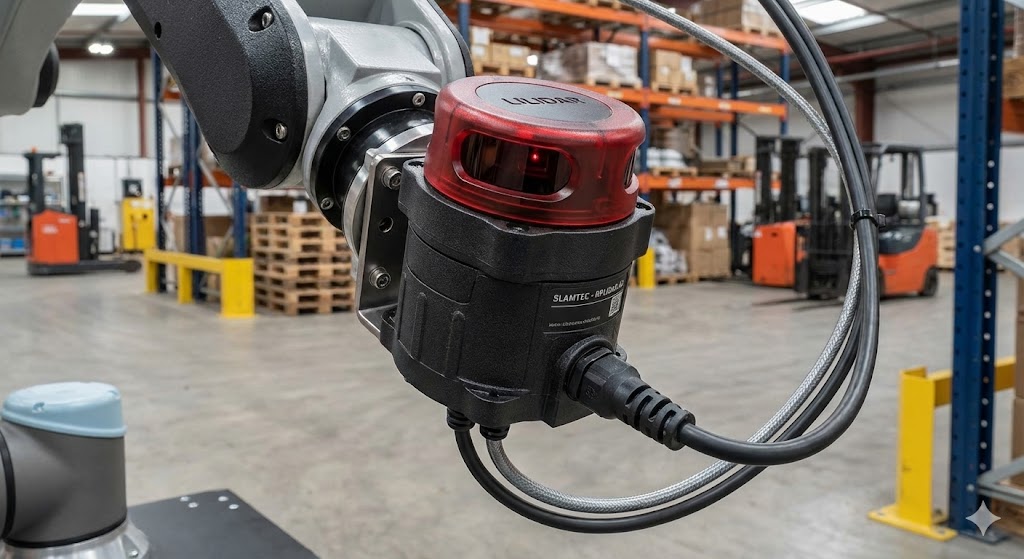
8. Laser Profilers/Scanners: Use a scanning mirror to sweep a laser line across an object, capturing 2D or 3D profiles for inspection and reverse engineering.
9. Laser Gap & Flush Sensors: Specifically designed to measure the gap or flushness between two parts, such as in automotive panel assembly.
10. Laser Mark Position Sensors: Detect the presence and position of marks, codes, or fiducials on products for process control.
Speed and Velocity Measurement Laser Sensors form another critical category, utilizing the Doppler effect.
11. Laser Doppler Vibrometers (LDV): Measure velocity and displacement of vibrating surfaces without contact, vital in NVH testing and structural analysis.
12. Laser Surface Velocimeters: Determine the speed of moving surfaces like paper, metal strips, or textiles by analyzing scattered laser light.
Presence/Absence and Object Detection Laser Sensors are ubiquitous in factory automation for control and safety.
13. Through-Beam Laser Sensors: Consist of separate transmitter and receiver units; detection occurs when the beam is interrupted. Used for precise object detection over long distances.
14. Retro-Reflective Laser Sensors: Employ a reflector; the sensor detects an object that breaks the beam between the sensor head and the reflector.
15. Diffuse-Reflective Laser Sensors: The transmitter and receiver are in one housing, detecting objects based on the reflection from the target itself. Variants include:
* Background Suppression (BGS) Sensors: Ignore reflections from distant backgrounds.
* Fixed-Field Sensors: Define a precise sensing range.
* Adjustable-Field Sensors: Allow user-defined sensing windows.
16. Laser Contrast Sensors: Detect differences in color, contrast, or luminance on surfaces, perfect for label detection or print inspection.
17. Luminescence Sensors: Activate when they detect luminescent marks, often used in security or sorting applications.
Specialized Function Laser Sensors address niche but essential industrial tasks.
18. Laser Welding Seam Trackers: Guide welding torrors along joints by monitoring the groove geometry in real-time.
19. Laser Caliper Sensors: Non-contact measurement of object dimensions using multiple laser beams.
20. Laser Particle Size Analyzers: Use laser diffraction to determine particle size distribution in powders or suspensions.
21. Laser Bar Code Scanners: Decode 1D and 2D codes at high speeds for logistics and inventory management.
22. Laser Safety Scanners (Area Guards): Create invisible protective fields around hazardous machinery, triggering a stop if breached.
23. Laser Level Sensors: Monitor the fill level of liquids or solids in tanks or silos from the top.
24. Laser Surface Inspection Sensors: Detect defects like scratches, pits, or contamination on polished surfaces.
25. Laser Thickness Gauges: Precisely measure material thickness, often using dual opposing sensor heads.
26. Laser Autofocus Sensors: Used in microscopy and machine vision to maintain perfect focus on uneven surfaces.
27. Laser Glucose Sensors: A medical application using spectroscopic techniques for non-invasive monitoring.
28. Laser Dust Monitors: Measure particulate matter concentration in air by light scattering.
29. Laser Flow Sensors: Measure fluid flow rates using laser Doppler anemometry.
30. Laser Tachometers: Measure rotational speed by reflecting a beam off a rotating marker.
31. Laser Thermometers (Pyrometers): Determine temperature by analyzing the infrared radiation from a surface, with a laser for targeting.
32. Laser Speckle Sensors: Analyze speckle patterns for displacement, vibration, or surface roughness measurement.
33. Laser Photoelectric Sensors with Analog Output: Provide a continuous signal proportional to distance or reflectivity.
34. Laser Photoelectric Sensors with Digital IO: Simple on/off switching based on a detected threshold.
35. Fiber-Optic Laser Sensors: Use fiber cables to deliver laser light to hard-to-reach or hazardous environments.
36. UV Laser Sensors: Utilize ultraviolet wavelengths for detecting specific materials or inducing fluorescence.
37. Green Laser Sensors: Use a 532nm wavelength for better visibility and performance on certain organic materials.
38. Blue Laser Sensors: Shorter wavelength (e.g., 405nm) provides finer resolution for microscopic inspection.
39. IR Laser Sensors: Infrared lasers are used for covert detection or in environments with ambient light interference.
40. Red Laser Sensors: The most common visible laser diodes, used for alignment and standard detection.
41. Class 1 Laser Sensors: Fully enclosed, inherently safe systems with no accessible laser radiation during normal operation.
42. Class 2 Laser Sensors: Low-power visible lasers where eye protection is afforded by the blink reflex.
43. Ruggedized/Harsh Environment Laser Sensors: Built with robust housings (IP67/IP69K) for washdown, extreme temperatures, or heavy vibration.
44. High-Speed Laser Sensors: Designed with fast response times for detecting objects on high-speed production lines.
45. Miniature Laser Sensors: Compact form factors for installation in space-constrained locations.
46. Long-Range Laser Sensors: Capable of detection over tens