In the rapidly evolving landscape of automation, robotics, and smart manufacturing, Laser SLAM (Simultaneous Localization and Mapping) sensors have emerged as a cornerstone technology. These sophisticated devices enable machines to perceive their environment, construct a map in real-time, and locate themselves within that map without prior knowledge or external references like GPS. This capability is fundamental for autonomous navigation, whether for mobile robots in warehouses, automated guided vehicles (AGVs) in factories, or even autonomous cleaning and service robots.
At its core, a Laser SLAM sensor is a LiDAR (Light Detection and Ranging) system integrated with advanced SLAM algorithms. The hardware component, typically a 2D or 3D LiDAR, emits laser pulses and measures the time it takes for the light to reflect back from surrounding objects. This creates a precise point cloud—a set of data points in space representing the environment's contours. The real magic, however, lies in the software. SLAM algorithms, such as Gmapping, Cartographer, or LOAM, process this continuous stream of distance data. They perform a complex dual task: incrementally building a consistent map while simultaneously estimating the sensor's (and thus the vehicle's) position and orientation (pose) within that nascent map. This is a challenging "chicken-and-egg" problem; an accurate map is needed for precise localization, and precise localization is required to build an accurate map. Modern algorithms solve this through probabilistic techniques, scan matching, and loop closure detection, which corrects accumulated errors when the sensor revisits a known location.
The applications of Laser SLAM sensors are vast and transformative. In industrial logistics, they are the eyes of AMRs (Autonomous Mobile Robots) that transport materials across dynamic factory floors, safely navigating around obstacles and human workers. In the burgeoning field of service robotics, robotic vacuum cleaners and lawn mowers use cost-effective 2D LiDAR SLAM to efficiently cover entire areas. For surveying and inspection, 3D SLAM systems mounted on drones or handheld devices can rapidly generate detailed as-built models of construction sites, plants, or pipelines. Furthermore, in automotive development, high-fidelity 3D SLAM sensors are crucial for testing and validating autonomous vehicle perception systems in real-world scenarios.
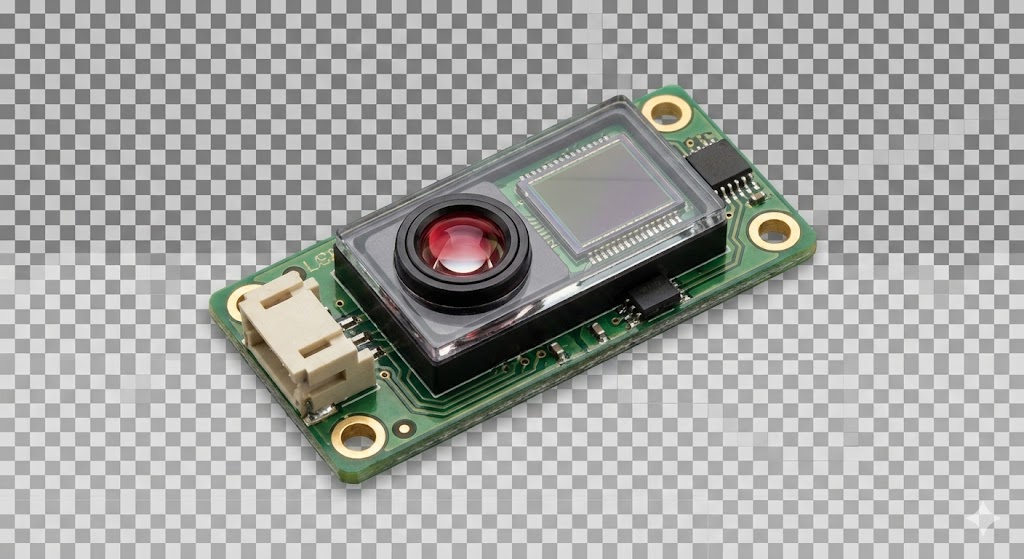
When selecting a Laser SLAM sensor, engineers must consider several key specifications. Measurement range and field of view define the operational envelope. Angular resolution determines the density of data points and the level of environmental detail. Scan frequency impacts how quickly the sensor can update the map and pose, which is critical for high-speed navigation. Accuracy and repeatability are paramount for reliable operation. Environmental robustness—resistance to dust, moisture, vibration, and varying light conditions—is essential for harsh industrial settings. Finally, the computational efficiency of the embedded or associated SLAM software stack directly affects system performance and integration complexity.
The future of Laser SLAM sensor technology points toward greater integration, intelligence, and miniaturization. The convergence with other sensing modalities like cameras (visual-inertial SLAM), inertial measurement units (IMUs), and odometry in sensor fusion architectures is creating more robust and resilient systems. These multi-sensor setups compensate for the limitations of any single technology, such as LiDAR's difficulty with feature-less corridors or glass surfaces. On the algorithmic front, the integration of deep learning is enhancing object recognition within SLAM maps, allowing robots not just to see geometry but to understand semantic meaning—differentiating between a pallet, a wall, and a person. Furthermore, the development of solid-state LiDAR promises more compact, durable, and potentially lower-cost sensors, which will accelerate adoption across even more applications.
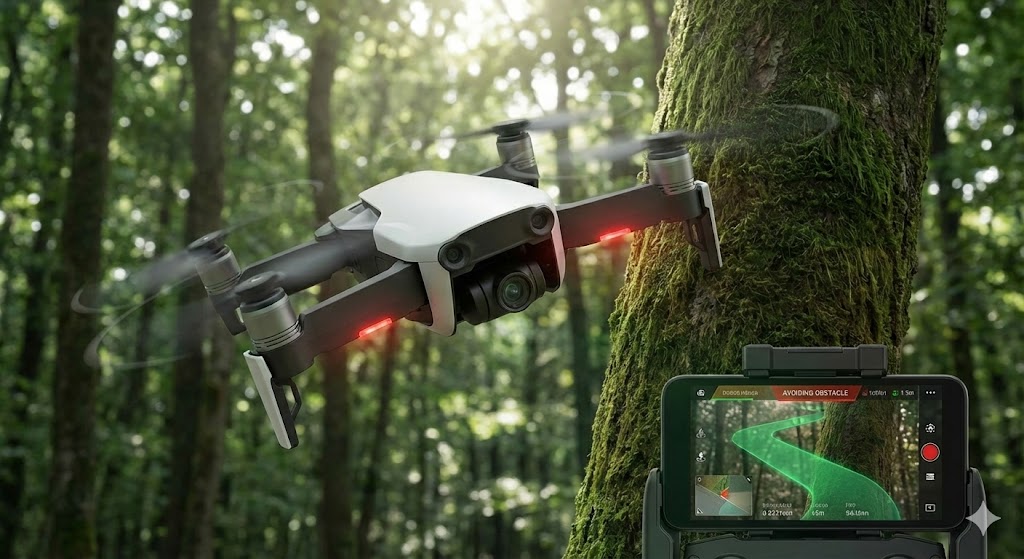
In conclusion, Laser SLAM sensors represent a critical enabling technology for autonomy. By providing real-time, accurate spatial awareness, they form the perceptual foundation upon which intelligent mobile systems are built. As the technology continues to advance in terms of performance, robustness, and affordability, its role in shaping the future of automated industries and smart environments will only become more profound. For engineers and system integrators, a deep understanding of the principles, trade-offs, and trends associated with Laser SLAM is indispensable for designing the next generation of autonomous solutions.