In the dynamic landscape of industrial automation and precision measurement, high-throughput laser sensors have emerged as a cornerstone technology, driving unprecedented levels of efficiency, accuracy, and reliability. These sophisticated devices, leveraging advanced laser triangulation, time-of-flight (ToF), or confocal measurement principles, are engineered to perform rapid, non-contact inspections at speeds and resolutions that traditional contact probes or vision systems cannot match. Their core function is to capture vast amounts of dimensional and surface data in real-time, making them indispensable for in-line quality control, robotic guidance, and process monitoring across diverse sectors.
The operational principle of a high-throughput laser sensor typically involves projecting a focused laser line or dot onto a target surface. A high-speed CMOS or CCD camera, positioned at a known angle, captures the reflection. By analyzing the displacement of the laser line or spot on the camera's sensor—a method known as laser triangulation—the system can calculate the exact distance to the object with micron-level precision. For even faster long-range measurements, ToF sensors calculate distance by measuring the round-trip time of a laser pulse. This capability allows for the scanning of thousands, or even millions, of data points per second, creating detailed 3D profiles of objects moving on high-speed production lines.
The applications are vast and transformative. In automotive manufacturing, these sensors perform critical 100% inspection of weld seams, verifying gap and flush dimensions on car bodies with relentless speed, ensuring structural integrity and aesthetic perfection. In electronics assembly, they measure the coplanarity and lead height of microchips and connectors on printed circuit boards (PCBs), preventing costly soldering defects. The pharmaceutical industry relies on them for verifying fill levels in vials and inspecting blister pack integrity at production rates that can exceed tens of thousands of units per hour. Furthermore, in logistics and warehousing, high-throughput laser scanners enable rapid parcel dimensioning and volume calculation for optimized storage and shipping.

The advantages over conventional methods are compelling. The non-contact nature eliminates mechanical wear, prevents damage to delicate parts, and allows inspection of hot, soft, or otherwise inaccessible surfaces. The high data acquisition rate enables real-time statistical process control (SPC), allowing manufacturers to identify and correct process deviations instantaneously, dramatically reducing scrap and rework. This leads to significant cost savings and enhanced overall equipment effectiveness (OEE). Integration with industrial networks like EtherCAT, PROFINET, or Ethernet/IP is seamless, feeding critical measurement data directly into PLCs and Manufacturing Execution Systems (MES) for closed-loop control and traceability.
However, deploying high-throughput laser sensors requires careful engineering consideration. Environmental factors such as ambient light, surface reflectivity (from highly reflective metals to dark, absorbent materials), and vibration can impact performance. Modern sensors combat these challenges with integrated algorithms for ambient light suppression, automatic exposure control, and sophisticated filtering. The choice between a line laser for profiling or a single-point sensor for precise spot measurement depends entirely on the specific application requirement—be it measuring thickness, detecting presence, or conducting full 3D contour analysis.
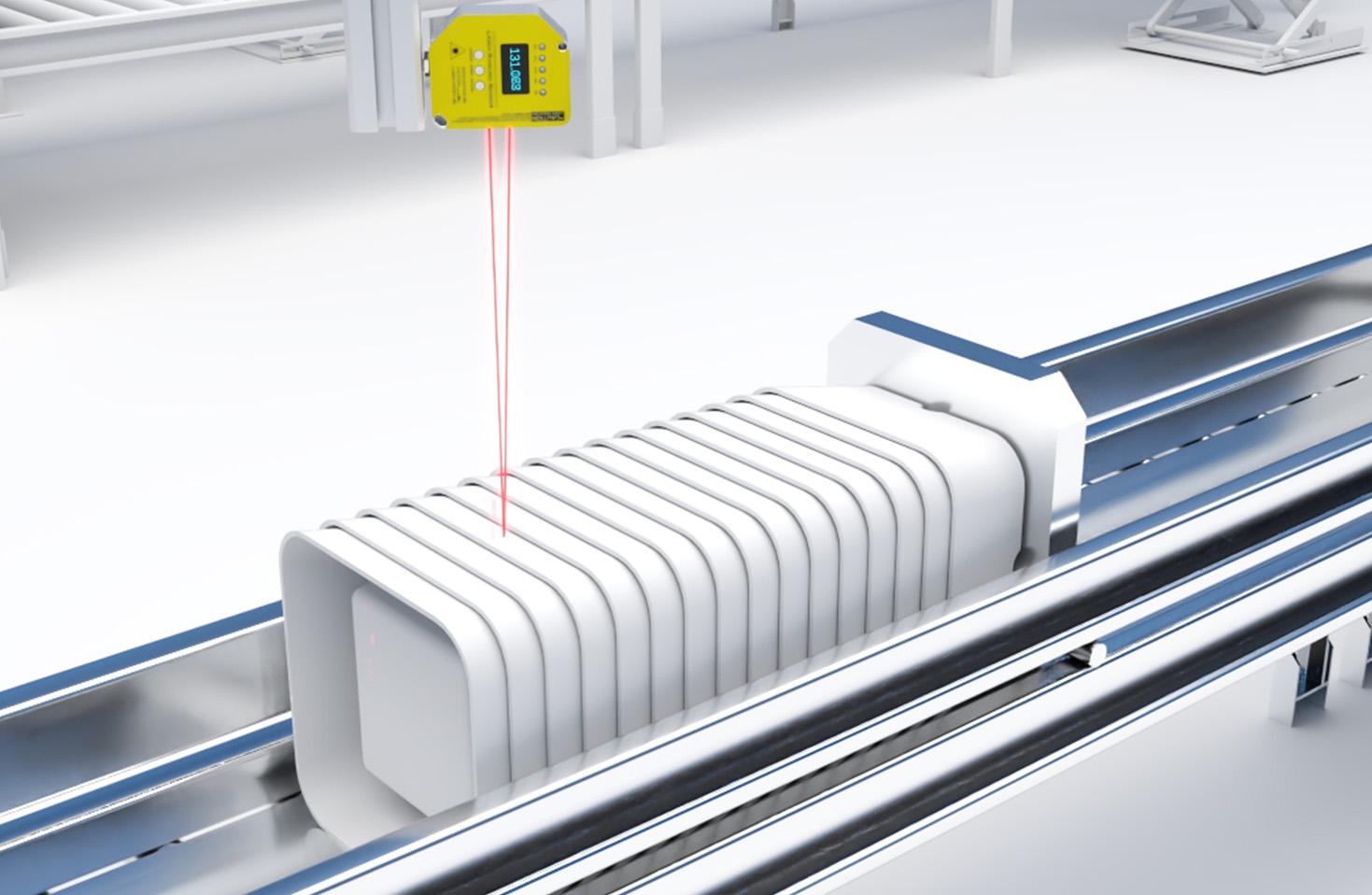
Looking ahead, the convergence of high-throughput laser sensing with artificial intelligence and edge computing is setting the stage for the next leap forward. Smart sensors with embedded AI capabilities can now not only capture data but also classify defects, predict maintenance needs, and make autonomous pass/fail decisions without upstream computer processing. This evolution towards intelligent perception is crucial for the realization of adaptive, self-optimizing smart factories.
In conclusion, high-throughput laser sensors are far more than mere measurement tools; they are the eyes of the modern automated factory. By delivering relentless, precise, and actionable data, they empower industries to achieve new zeniths of quality, throughput, and operational intelligence. As production demands continue to escalate towards greater speed and complexity, the role of these sensors will only become more central, solidifying their status as a fundamental enabler of advanced manufacturing and Industry 4.0 initiatives.