In the realm of industrial automation and control systems, proximity sensors stand as fundamental components, enabling machines to "sense" the presence or absence of objects without physical contact. These non-contact detection devices are pivotal for enhancing efficiency, ensuring safety, and enabling sophisticated automation sequences. Their operation is based on the principle of detecting changes in a field or the return of a signal, making them indispensable in environments where reliability, speed, and durability are paramount.
The most prevalent types of proximity sensors can be categorized by their underlying technology: inductive, capacitive, ultrasonic, and photoelectric. Each type possesses distinct characteristics tailored for specific applications and materials.
Inductive proximity sensors are the workhorses of metal detection. They generate an electromagnetic field. When a metallic object enters this field, it induces eddy currents within the target, causing a change in the sensor's oscillation amplitude. This change is detected, triggering an output signal. These sensors are exceptionally robust, ideal for harsh industrial environments involving oil, coolants, or dust. They are commonly used for detecting metal parts on assembly lines, monitoring rotational speed by sensing gear teeth, or as end-position detectors in cylinders.

Capacitive proximity sensors, on the other hand, can detect both metallic and non-metallic materials—such as plastics, glass, wood, and liquids. They function by generating an electrostatic field. Any object that enters this field alters the capacitance of the sensor's circuit. This sensitivity to a wide range of materials makes them versatile for applications like level detection in tanks (for liquids or granules), detecting filled packages on a conveyor, or presence sensing of non-metallic objects.
Ultrasonic sensors operate by emitting high-frequency sound waves and evaluating the reflected echo. They measure the time interval between sending the signal and receiving the echo to determine the distance to an object. This technology is excellent for precise distance measurement and level sensing, regardless of the object's color, transparency, or material (though surface texture can affect performance). Typical uses include monitoring liquid levels in opaque containers, controlling loop tension in web processes, and detecting stacked materials.
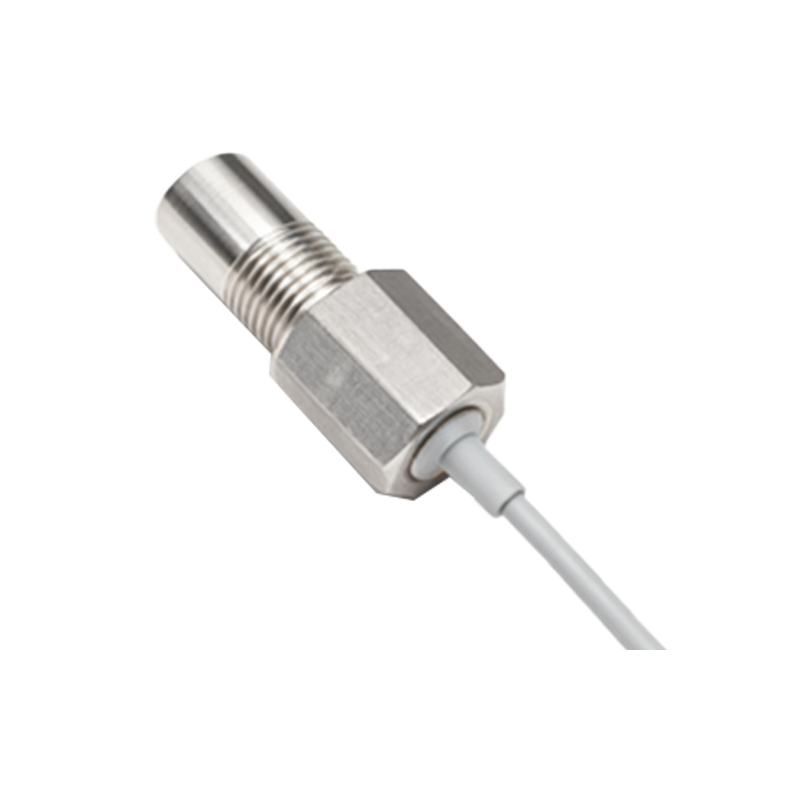
Photoelectric sensors utilize a light beam, typically infrared, visible red, or laser. The three main operating modes are through-beam, retro-reflective, and diffuse reflective. Through-beam models, with separate emitter and receiver units, offer the longest sensing ranges and highest reliability. Retro-reflective types use a reflector to bounce the beam back to a receiver housed with the emitter. Diffuse sensors rely on light reflecting directly off the target itself. Photoelectric sensors are highly flexible, used for detecting small objects, color marking, contrast detection, and clear object sensing.
Selecting the appropriate proximity sensor requires a careful analysis of several key parameters. First, consider the target material: metal objects lean towards inductive sensors, while diverse materials require capacitive or ultrasonic. The required sensing distance is critical; ensure the sensor's specified range accommodates the application with a safety margin. Environmental factors like temperature extremes, presence of washdown chemicals, dust, or vibrations dictate the needed ingress protection (IP) rating and housing material (e.g., stainless steel for corrosive areas). The output type (e.g., NPN/PNP transistor, analog, IO-Link) must be compatible with the controller (PLC). Finally, the physical form factor—barrel-style, rectangular, or ring-shaped—must fit the mechanical installation constraints.
Modern advancements continue to push the boundaries of proximity sensing. Sensors with IO-Link digital communication provide not just a simple switch signal but detailed diagnostic data, parameterization capabilities, and condition monitoring insights, facilitating predictive maintenance. Furthermore, the miniaturization of sensors allows for integration into increasingly compact machinery without sacrificing performance.
In conclusion, proximity sensors are the silent sentinels of automation. A deep understanding of their operating principles, types, and selection criteria is essential for any engineer or technician designing, maintaining, or optimizing automated systems. The correct sensor choice directly impacts system uptime, product quality, and operational safety, making it a critical decision in the design and implementation of any industrial control solution.