In the realm of industrial automation, machine vision, and precision measurement, laser sensors are indispensable tools. Their ability to provide accurate, non-contact detection and measurement has revolutionized countless processes. However, with the power of concentrated light comes inherent risk. To mitigate these risks and ensure safe operation in workplaces globally, laser products are rigorously classified into distinct "classes" based on their potential to cause harm. Understanding these laser sensor classes is not merely a regulatory formality; it is a fundamental aspect of responsible engineering, system design, and operational safety.
The foundation of this classification system is the international standard IEC 60825-1, "Safety of laser products." This standard, widely adopted with regional variations (like the FDA regulations in the United States under 21 CFR Part 1040.10), categorizes lasers and laser-containing equipment based on the Accessible Emission Limit (AEL). The AEL defines the maximum permissible level of laser radiation to which human access is possible under normal operation. The classification considers factors such as wavelength, output power, pulse characteristics, and the potential for eye or skin damage.
The most common classes encountered in industrial sensor applications are Class 1, Class 2, Class 3R, and Class 3B. Class 4 lasers are generally not used in standard sensor packages due to their high hazard level.
Class 1 Lasers: This is the safest classification. A Class 1 laser is considered safe under all conditions of normal use. It may contain a higher-powered laser inside an interlocked enclosure, but the system is designed so that no hazardous radiation is accessible during operation. Many complex laser measurement systems, such as certain types of laser micrometers or profile scanners, are classified as Class 1 products because the laser beam is fully enclosed during its operational path. They represent the ideal choice for applications where untrained personnel may be present.
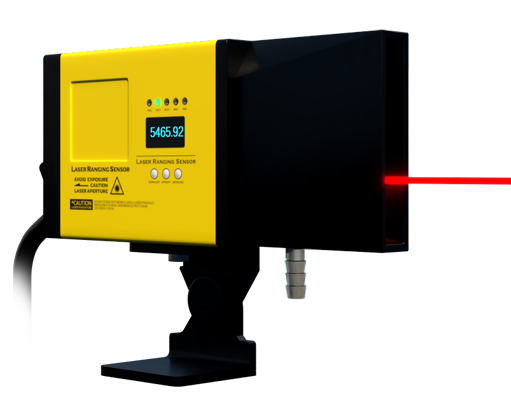
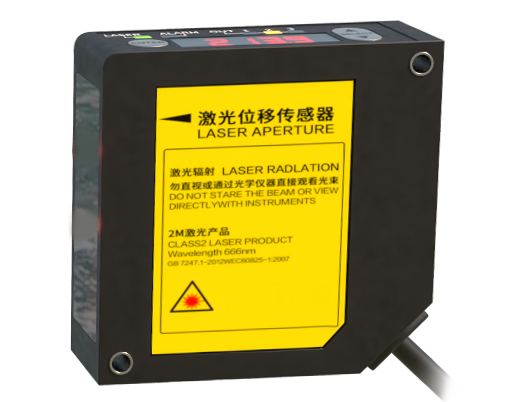
Class 2 Lasers: Applicable only to visible-light lasers (wavelengths from 400 to 700 nm). Class 2 lasers are low-power devices where the natural human aversion response—the blink reflex—is assumed to provide adequate protection against a static beam. The output power is limited to 1 mW. Many simple laser photoelectric sensors used for object detection, often with a visible red dot for easy alignment, fall into this category. A warning label is required, but they are generally considered safe for incidental exposure.
Class 3R Lasers: The "R" stands for "reduced requirements" or "relaxed." This class includes lasers with accessible emission levels up to five times the AEL for Class 2 (for visible light) or five times the AEL for Class 1 (for invisible lasers). While the risk of injury from brief exposure is low, direct viewing of the beam, especially with optical instruments, can be hazardous. Some more powerful visible alignment lasers or certain rangefinders may be Class 3R. Engineering and administrative controls are recommended.
Class 3B Lasers: Lasers in this class can cause immediate eye injury upon direct viewing of the beam or its specular (mirror-like) reflection. Diffuse reflections are usually not hazardous. Output power for continuous-wave visible lasers typically ranges from 5 mW to 500 mW. Certain high-performance laser sensors used for long-range measurement, vibration analysis, or specialized triangulation may be Class 3B. Their use mandates strict safety measures: warning labels, key-controlled operation, beam path termination, and the use of protective eyewear for anyone in the controlled area.
Class 4 Lasers: These are high-power lasers (often above 500 mW for continuous visible beams) that can cause severe eye and skin injuries, pose a fire hazard, and generate hazardous plasma radiation. They are rarely, if ever, found in standard industrial "sensor" packages but are used in laser cutting, welding, and marking systems.
For engineers and system integrators, selecting the appropriate laser sensor class involves a risk assessment. Key considerations include the installation environment (open area vs. enclosed machine), the possibility of beam exposure to personnel, the need for alignment or maintenance procedures, and compliance with local occupational health and safety regulations. Always prioritize Class 1 designs where possible through engineering controls like enclosures and interlocks.
Mandatory product labeling is a critical component of the safety system. Every laser product must display a warning label stating its class. For Class 2 and higher, a distinctive triangular "caution" or "danger" symbol with a pictogram of a laser beam is required. The label must also include the wavelength, maximum output power, and laser classification.
In conclusion, laser sensor classification is a precise science designed to manage risk. By thoroughly understanding the distinctions between Class 1, 2, 3R, and 3B lasers, professionals can make informed decisions, implement necessary safeguards, and ensure that the tremendous benefits of laser sensor technology are harnessed safely and effectively. Always consult the manufacturer's documentation and relevant safety standards for the specific product in use.