In the realm of industrial automation and control systems, proximity switches are ubiquitous components. A common question that arises among engineers, technicians, and procurement specialists is: "Do proximity switches have sensors?" The answer is not a simple yes or no, but rather a nuanced explanation of the technology itself. Fundamentally, a proximity switch is a type of sensor. The term "switch" refers to its output function—it provides a discrete on/off signal—while its core operational principle is based on sensing technology. Therefore, it is more accurate to state that a proximity switch is a self-contained sensor device designed for non-contact detection.
To understand this, we must delve into the working principles. Proximity switches detect the presence or absence of a target object without physical contact. They achieve this through various sensing technologies, each with its own "sensing" element. The most common types include inductive, capacitive, ultrasonic, and photoelectric proximity switches.
Inductive proximity switches are the workhorses for detecting metallic objects. Their key internal component is a coil wound around a ferrite core, which forms part of an oscillator circuit. When an alternating current passes through this coil, it generates an oscillating electromagnetic field at the sensing face. When a conductive metal target enters this field, eddy currents are induced on the target's surface. These eddy currents draw energy from the oscillator, causing a reduction in the oscillation amplitude. An internal evaluation circuit monitors this change and triggers a solid-state output switch (like a transistor) to change state. Here, the coil and oscillator circuit constitute the primary "sensor" element.
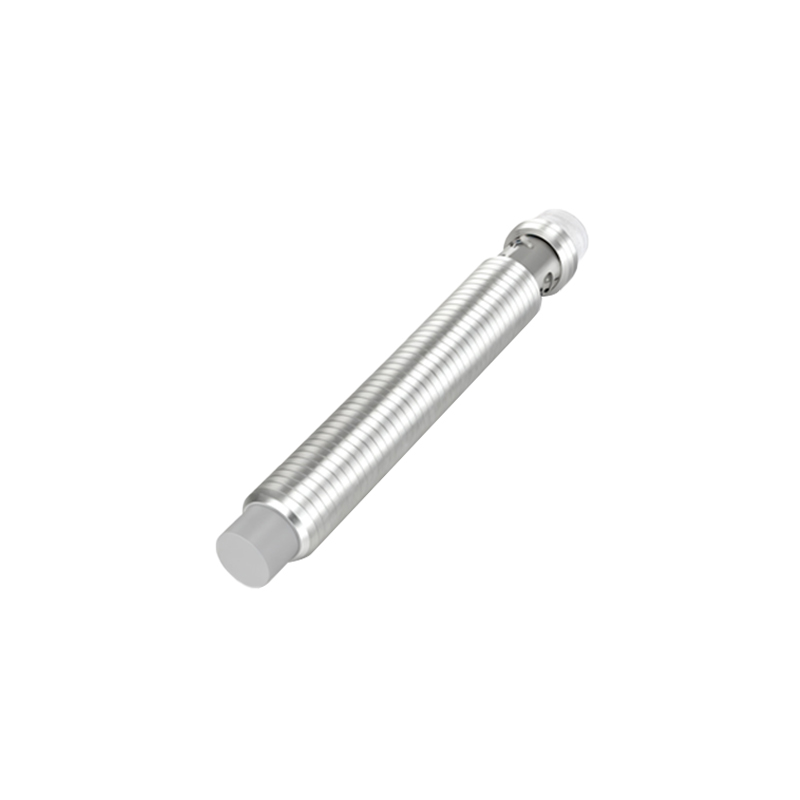
Capacitive proximity switches can detect both metallic and non-metallic materials (plastics, wood, liquids, etc.). They operate by generating an electrostatic field. The sensing face acts as one plate of a capacitor, with the target object acting as the other plate. As the target approaches, the capacitance between the sensor plate and the target increases. An internal circuit measures this change in capacitance. Once it exceeds a predefined threshold, the output switches. In this case, the sensing electrode and the associated circuitry form the capacitive sensing element.
Ultrasonic proximity switches emit high-frequency sound waves and measure the time it takes for the echo to return. The core sensor here is a piezoelectric transducer that converts electrical energy into sound waves and vice versa. Photoelectric switches use a light emitter (usually an LED) and a receiver (phototransistor or photodiode). The interruption or reflection of the light beam is detected, constituting the sensing action.
Thus, the "sensor" is an integral, inseparable part of the proximity switch assembly. It is not a separate component you can detach; it is embedded within the housing. The device integrates the sensing element, signal conditioning electronics, and output switching mechanism into a single unit. This integration is key to their reliability and ease of use in harsh industrial environments—resistant to dust, moisture, and mechanical wear that would plague mechanical limit switches.
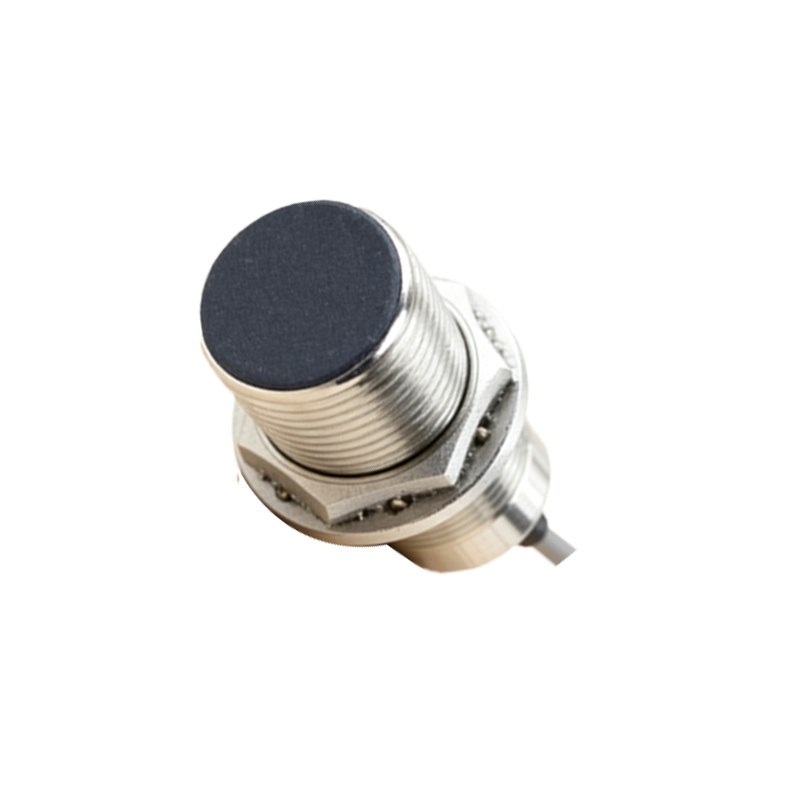
When specifying a proximity switch, you are inherently selecting a sensor with a specific detection technology. Key parameters like sensing distance, target material, switching frequency, and output type (PNP/NPN, NO/NC) all depend on the underlying sensing principle. For instance, an inductive sensor's range is influenced by the target metal type (factor 1 for steel, less for aluminum or copper).
In summary, asking if a proximity switch has a sensor is akin to asking if a car has an engine. The sensor is the fundamental, defining component that enables its proximity detection capability. The device is a sensor that switches. This understanding is crucial for proper selection, application, and troubleshooting in control systems. Whether ensuring precise positioning on an assembly line, counting objects on a conveyor, or providing safety interlocks, the proximity switch performs its duty through its embedded sensing technology, delivering a robust and reliable switching signal based on the presence of an object within its field of detection.