In the realm of industrial automation, robotics, and precision manufacturing, high-precision proximity sensors are indispensable components. These devices detect the presence, absence, or position of an object without physical contact, offering reliability, longevity, and critical accuracy for complex systems. Understanding their underlying principles is essential for optimal selection and application. This article delves into the core operating theories, key technologies, and performance-defining characteristics of these sophisticated sensors.
The fundamental principle of a proximity sensor is based on the disturbance or change in a local field or beam. The primary technologies employed are inductive, capacitive, and photoelectric, each suited to specific material types and environmental conditions.
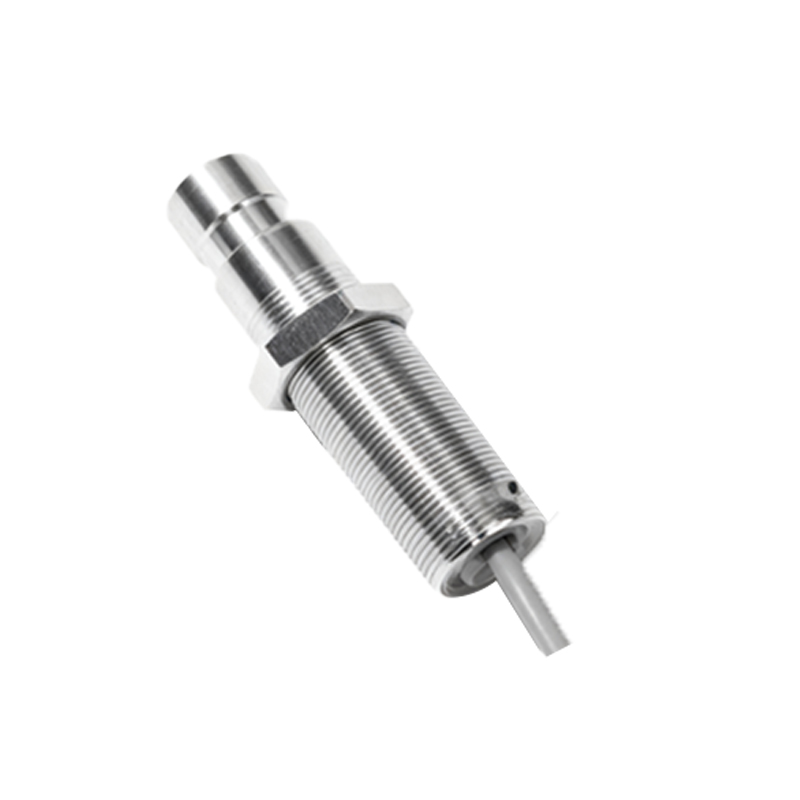
Inductive proximity sensors are the workhorses for detecting metallic objects. Their operation hinges on electromagnetic induction. The sensor's active face contains a coil that is part of an oscillator circuit, generating a high-frequency alternating electromagnetic field. When a conductive metal target enters this field, eddy currents are induced on the target's surface. These eddy currents draw energy from the oscillator, causing a measurable change in its amplitude or frequency. An internal evaluation circuit detects this change and triggers a solid-state output switch. The sensing range, typically up to 60mm, depends on the coil size, oscillator frequency, and the target's material properties (ferrous metals like iron and steel offer longer ranges than non-ferrous metals like aluminum or copper due to higher permeability and conductivity effects). Key advantages include robustness against dirt, dust, and moisture, and insensitivity to non-metallic objects.
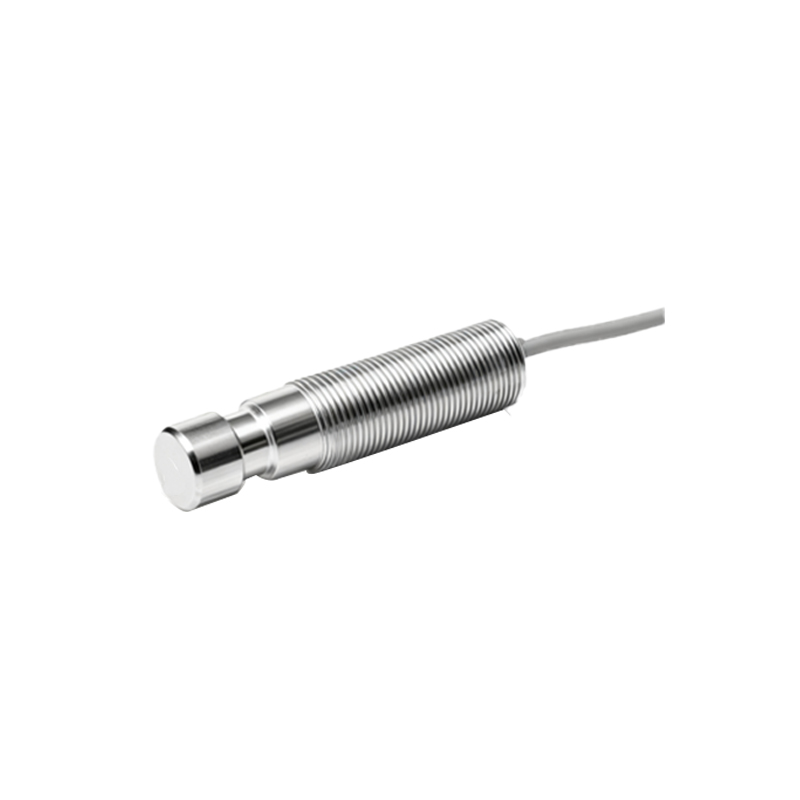
Capacitive proximity sensors can detect both metallic and non-metallic materials, including liquids, plastics, glass, and wood. They function by measuring changes in capacitance. The sensor face acts as one plate of a capacitor, with the target object acting as the other plate, and the intervening space as the dielectric. An internal oscillator circuit is tuned so that it only oscillates when the capacitance exceeds a certain threshold. As a target approaches, the capacitance between the sensor and the target increases. When it reaches the trigger level, it alters the oscillator's state, which is processed to change the output. These sensors are ideal for level detection in tanks or detecting materials through non-metallic container walls. However, they can be influenced by environmental factors like humidity or temperature that affect dielectric constant.
Photoelectric sensors, while often categorized separately, are a crucial class for high-precision, long-range detection. They operate by emitting a beam of light (visible red, infrared, or laser) and detecting changes in the received light. The three main modes are through-beam, retro-reflective, and diffuse (proximity) mode. For high-precision positioning, the diffuse mode with background suppression or precise laser triangulation is paramount. Background suppression models use triangulation within the sensor head to only detect objects within a precise, defined distance, ignoring surfaces beyond that set point. Laser triangulation sensors project a laser spot onto the target; the reflected light strikes a position-sensitive detector (PSD or CMOS array). The spot's position on the detector shifts proportionally to the target's distance, allowing for micron-level resolution in displacement measurement.
The term "high-precision" elevates these basic principles with advanced engineering. Precision is quantified by parameters like repeatability, hysteresis, temperature stability, and linearity (for analog outputs). Repeatability refers to the sensor's ability to consistently detect an object at the exact same point under unchanged conditions, often within microns. Hysteresis is the difference between the switch-on point as the target approaches and the switch-off point as it recedes; a small, stable hysteresis is vital for precise control loops. High-precision sensors incorporate temperature compensation circuits to minimize drift across operating ranges. For analog output sensors (e.g., 4-20mA, 0-10V), excellent linearity between distance and output signal is critical.
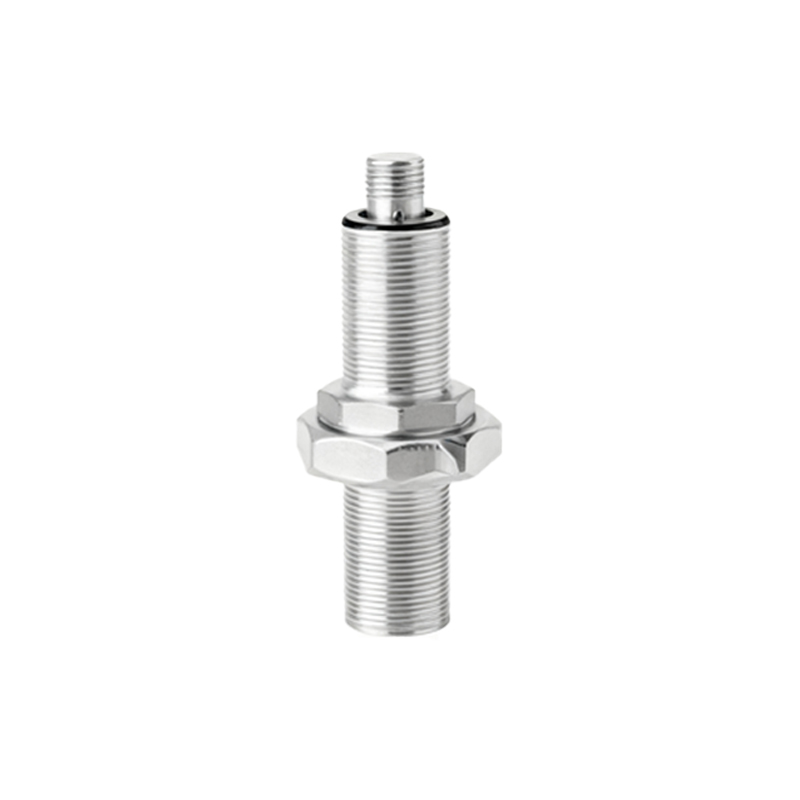
Material selection, shielding, and housing design are equally important. Shielded (flush-mountable) inductive sensors have a focused field, allowing installation flush with metal surfaces without triggering them. Non-shielded types offer longer ranges. High-grade housings from stainless steel or PBT plastic ensure protection against coolant, chips, and mechanical impact. The choice of sensing technology must align with the application: inductive for metals in harsh environments, capacitive for diverse materials or level control, and photoelectric/laser for extreme precision, clean environments, or long ranges.
In conclusion, high-precision proximity sensors are not mere switches but sophisticated transducers. Their performance stems from a deep integration of electromagnetic or optical theory, precision analog circuit design, and robust mechanical engineering. Selecting the right sensor requires a clear understanding of the target material, required precision metrics, environmental challenges, and the specific role within the larger control system. As automation demands ever-greater accuracy and speed, the evolution of these sensors continues, pushing the boundaries of resolution, speed