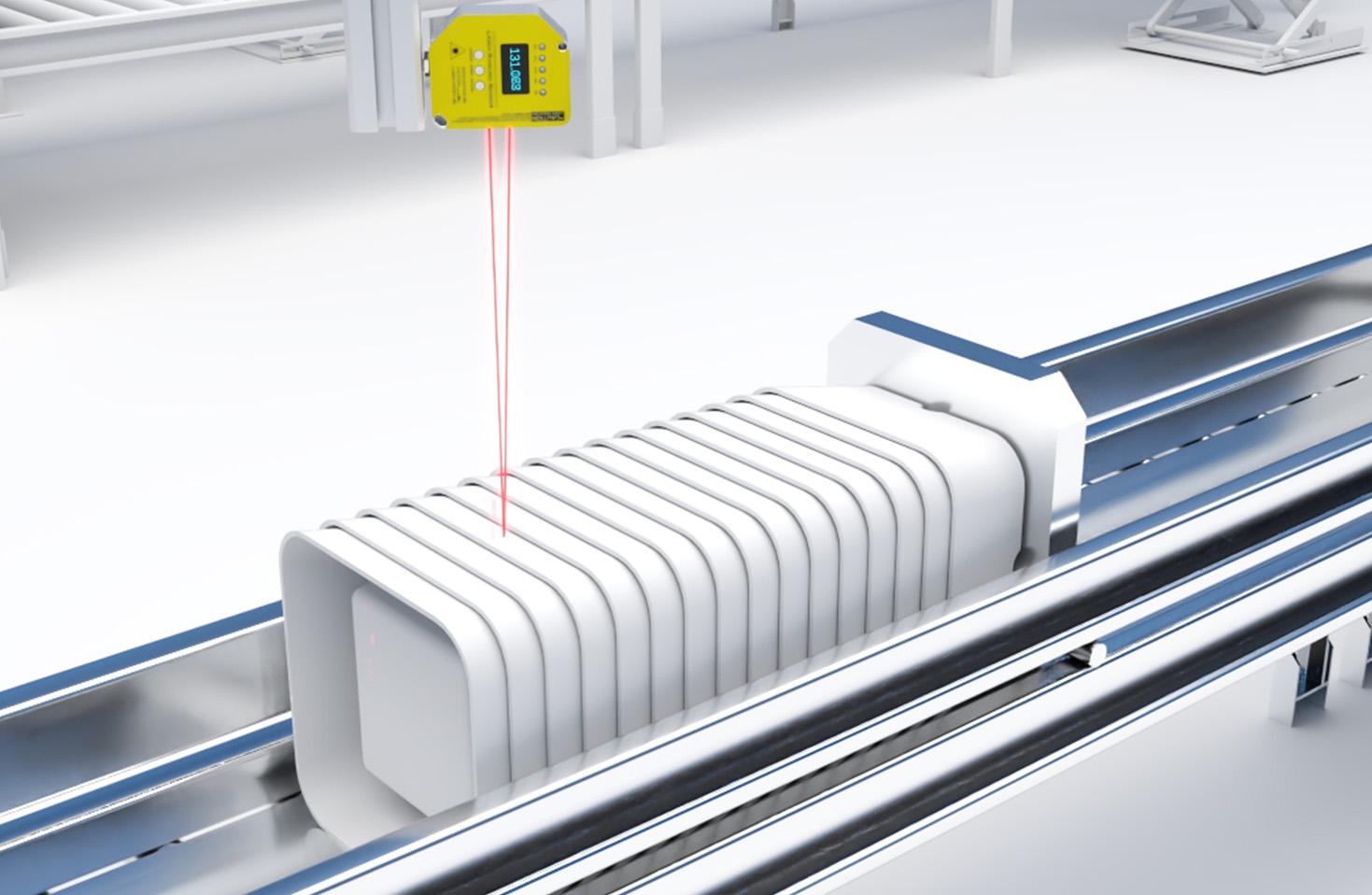
In the rapidly evolving landscape of industrial automation and precision measurement, laser image sensors have emerged as a cornerstone technology. These sophisticated devices combine the principles of laser illumination with advanced imaging techniques to capture highly accurate, detailed, and reliable data about objects and environments. Unlike conventional vision sensors that rely on ambient or structured light, laser image sensors project a controlled laser beam—often a line, dot, or pattern—onto a target. The sensor's camera then captures the reflection or distortion of this laser pattern. By analyzing this interaction, typically through triangulation or time-of-flight calculations, the sensor can extract precise three-dimensional information, including depth, profile, contour, and surface characteristics, with exceptional speed and accuracy.
The core working principle of most laser image sensors is laser triangulation. In a typical setup, a laser diode emits a beam that is focused into a line or dot and projected onto the target object. A high-resolution CMOS or CCD image sensor, positioned at a known angle to the laser emitter, captures the location of the laser line on the object's surface. When the object's distance or height changes, the position of the laser line shifts on the image sensor's plane. Using precise geometric calculations and calibrated parameters, the sensor's onboard processor converts this pixel shift into accurate distance or height measurements. This allows for the creation of detailed 2D profiles or full 3D point clouds. More advanced versions utilize Time-of-Flight (ToF) technology, where the sensor measures the time it takes for a pulsed laser to reflect back, directly calculating distance and building a depth map.
The applications of laser image sensors are vast and transformative across multiple industries. In automotive manufacturing, they are indispensable for robotic guidance, weld seam inspection, gap and flush measurement between body panels, and precise part alignment. The electronics industry relies on them for solder paste inspection (SPI), component placement verification, and PCB warpage detection, where micron-level accuracy is non-negotiable. In logistics and packaging, these sensors enable high-speed dimensioning, volume calculation for warehouses, and package sorting based on size and shape. Furthermore, they play a critical role in quality control for rolled metals, lumber, plastics, and glass, detecting surface defects, thickness variations, and dimensional tolerances in real-time on production lines. Their ability to function reliably in challenging environments—compensating for ambient light changes, varying surface colors, and textures—makes them superior to many other sensing modalities.
When selecting a laser image sensor for a specific application, several key parameters must be considered. Resolution and accuracy are paramount, defining the smallest detectable feature or measurement increment. The measurement range (or field of view) and stand-off distance must align with the physical constraints of the installation. Processing speed, often measured in profiles per second, determines if the sensor can keep pace with a high-throughput production line. The choice of laser wavelength (commonly red visible lasers or blue lasers for certain materials) and class (for eye safety) is also crucial. Additionally, robustness factors like ingress protection (IP) rating for dust and water resistance, operating temperature range, and vibration tolerance ensure reliable performance in industrial settings. Modern sensors often come integrated with powerful software for easy configuration, data analysis, and integration with PLCs and factory networks.

Looking ahead, the future of laser image sensor technology is geared towards greater intelligence, miniaturization, and integration. The convergence with artificial intelligence and machine learning is enabling sensors not only to capture data but also to interpret it—performing complex classification and anomaly detection at the edge. The development of faster, more sensitive global shutter sensors and more powerful embedded processors will push the limits of speed and 3D point cloud density. Furthermore, the integration of multiple sensing modalities (e.g., combining laser profiling with traditional 2D imaging or spectral analysis) into single, compact units will create more versatile and powerful inspection systems. As Industry 4.0 and smart factories become the norm, laser image sensors will continue to be pivotal in driving efficiency, quality, and flexibility in automated production, solidifying their role as the eyes of intelligent machines.