Blue laser vision sensors are rapidly transforming the landscape of industrial automation and quality control. Unlike traditional red laser sensors or conventional vision systems, blue laser technology offers distinct advantages that address critical challenges in manufacturing, electronics, and precision engineering. The core principle hinges on the shorter wavelength of blue light, typically around 450 nanometers, compared to the 650nm common in red lasers. This fundamental difference is the source of its superior performance.
The shorter wavelength of blue laser light enables significantly higher resolution and precision. It allows the sensor to detect minute surface defects, tiny gaps, and ultra-fine features that are often invisible to red laser systems. This is particularly crucial in industries like semiconductor manufacturing, micro-electronics assembly, and medical device production, where tolerances are measured in micrometers. The blue laser's light is less prone to scattering and penetrates certain materials differently, resulting in sharper, higher-contrast images even on challenging surfaces such as shiny metals, transparent plastics, or glossy finishes. This reduces noise in the captured data and improves measurement reliability.
A key application driving adoption is high-speed, high-accuracy 3D profiling. Blue laser line profilers can scan objects at remarkable speeds while maintaining micron-level accuracy. They are indispensable for inline inspection of solder paste on PCBs, verifying connector pin coplanarity, measuring precise component heights, and ensuring perfect seal integrity in packaging. The enhanced contrast allows for robust performance in variable ambient light conditions often found on factory floors, minimizing the need for costly light shielding.

Furthermore, the technology excels in edge detection and positioning. When aligning components or guiding robotic arms, the crisp edge definition provided by a blue laser sensor ensures flawless pick-and-place operations. This reduces misalignment errors and boosts overall equipment effectiveness (OEE). In automotive assembly, for instance, these sensors verify the perfect placement of airbag components or inspect critical weld seams with unparalleled fidelity.
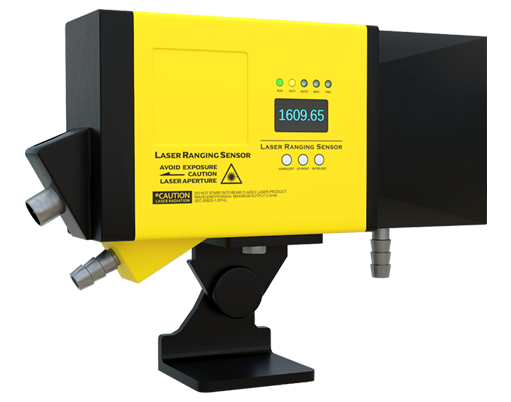
Integration into modern smart factories is seamless. These sensors typically come with advanced software suites featuring powerful algorithms for pattern matching, blob analysis, and optical character recognition (OCR). They output rich data that feeds directly into Manufacturing Execution Systems (MES) or supervisory control systems, enabling real-time process adjustments and predictive maintenance, thus moving towards zero-defect manufacturing.
Despite the higher initial cost compared to some alternatives, the return on investment is compelling. The reduction in waste, the prevention of costly recalls, and the increase in production throughput deliver a rapid payback period. As the demand for miniaturization and quality intensifies across global supply chains, blue laser vision sensors are transitioning from a specialized tool to a mainstream industrial necessity. They represent not just an incremental improvement, but a paradigm shift in how machines "see" and interact with the physical world, setting a new standard for precision, speed, and reliability in automated vision tasks.