In modern industrial automation, proximity switch sensors have become indispensable components that enable contactless detection and control. These electronic devices detect the presence or absence of objects within their sensing range without any physical contact, offering reliability and longevity that mechanical switches cannot match. The fundamental principle behind proximity sensors involves generating an electromagnetic field or beam that reacts when a target object enters its range, triggering an output signal.
Several primary technologies dominate the proximity sensor landscape. Inductive proximity sensors are widely used for detecting metallic objects. They contain a coil that generates a high-frequency electromagnetic field. When a metal target enters this field, eddy currents are induced in the metal, causing a change in the sensor's oscillation amplitude. This change is detected by the sensor's circuitry, which then switches the output. These sensors excel in harsh industrial environments with dust, oil, or moisture, as their sensing faces can be sealed completely.
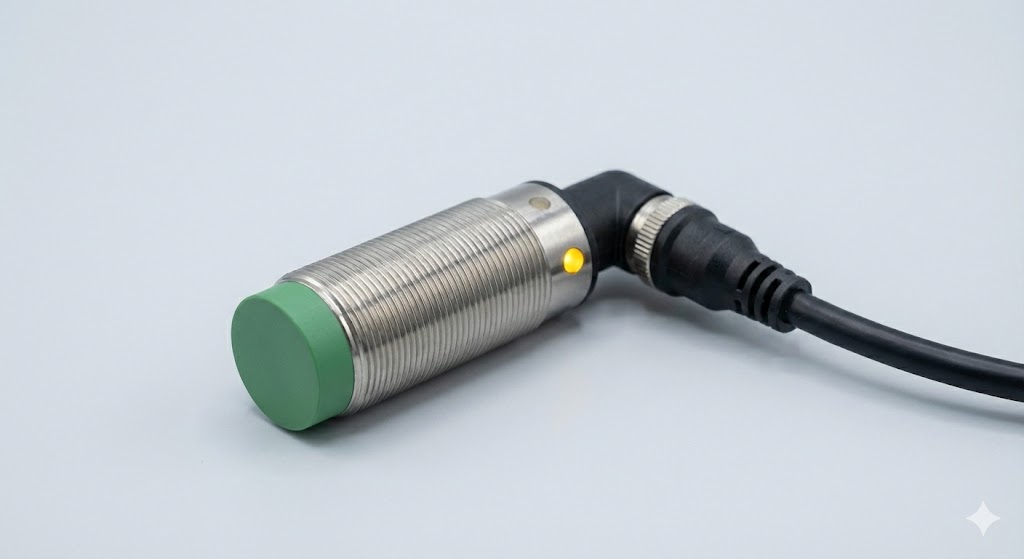
Capacitive proximity sensors operate on a different principle, capable of detecting both metallic and non-metallic materials including liquids, plastics, wood, and paper. They function by generating an electrostatic field. When any material with a dielectric constant different from air enters this field, it changes the sensor's capacitance, triggering detection. This versatility makes them ideal for applications like liquid level detection, material handling of non-metals, and presence verification of various substances.
Ultrasonic proximity sensors employ sound waves beyond human hearing range. They emit ultrasonic pulses and measure the time taken for echoes to return after hitting an object. By calculating this time-of-flight, they determine the presence and distance of targets. These sensors work effectively with virtually any material that reflects sound waves and perform well in challenging environments with dust, fog, or varying lighting conditions that might confuse optical sensors.
Magnetic proximity sensors, often called reed switches or Hall effect sensors, detect permanent magnets. Reed switches contain two ferromagnetic blades sealed in a glass tube that make contact when exposed to a magnetic field. Hall effect sensors produce a voltage proportional to magnetic field strength. Both types are commonly used for position sensing in cylinders, door and cover monitoring, and speed detection in rotating equipment.
Photoelectric sensors represent another major category, using light beams for detection. They consist of a light emitter (usually LED) and receiver. When an object interrupts or reflects the light beam, the receiver detects this change and triggers the output. Through-beam sensors have separate emitter and receiver units, offering the longest sensing ranges. Retro-reflective sensors use a reflector to bounce light back to a combined emitter/receiver unit. Diffuse sensors detect objects by the light they reflect directly back to the receiver.
The selection of appropriate proximity sensors depends on multiple factors. Target material composition significantly influences whether inductive, capacitive, or other technologies should be employed. Sensing distance requirements vary by application, with some sensors offering ranges from millimeters to several meters. Environmental conditions like temperature extremes, chemical exposure, or washdown requirements dictate housing materials and ingress protection ratings. Output configuration choices include NPN, PNP, analog, or IO-Link digital outputs compatible with different control systems.
Industrial applications for proximity switches are extensive. In manufacturing, they provide precise position feedback for robotic arms, detect parts on conveyor systems, and monitor tool presence in machining centers. Automotive assembly lines utilize thousands of proximity sensors for sequencing operations and quality verification. Packaging machinery relies on them for product counting, fill level control, and label detection. Material handling systems use proximity sensors to track pallet positions, control gate operations, and prevent collisions.
Installation and maintenance considerations significantly impact sensor performance and longevity. Proper mounting ensures consistent detection while avoiding metal-to-metal contact that could affect inductive sensors. Adequate clearance between sensors prevents mutual interference. Regular cleaning of sensing faces maintains optimal performance, particularly for optical and capacitive sensors. Environmental protection measures, such as using appropriate NEMA or IP-rated housings, extend sensor life in demanding applications.
Recent advancements in proximity sensor technology include miniaturization allowing installation in increasingly compact machinery, improved resistance to electromagnetic interference for reliable operation near variable frequency drives and welding equipment, and enhanced intelligence through integrated diagnostics and communication protocols like IO-Link that provide detailed operational data to control systems. Smart sensors can now monitor their own performance, detect contamination or misalignment, and communicate maintenance needs before failures occur.
The evolution of Industry 4.0 and IoT integration has further expanded proximity sensor capabilities. Networked sensors contribute to predictive maintenance strategies by providing continuous performance data. Wireless versions eliminate wiring challenges in rotating or moving applications. Energy-efficient designs reduce overall system power consumption. Hybrid sensors combining multiple technologies in single units offer versatile detection capabilities for complex applications.
Proximity switch sensors continue to evolve, offering increasingly sophisticated solutions for industrial automation challenges. Their non-contact operation eliminates mechanical wear, providing millions of reliable operations. As manufacturing becomes more automated and data-driven, these sensors will play an even more critical role in ensuring efficiency, safety, and quality across countless industrial processes. Understanding