In the world of industrial automation, consumer electronics, and safety systems, proximity sensors are the silent sentinels. They detect the presence or absence of an object without any physical contact. Understanding the working principle of these ubiquitous devices is key to appreciating their role in modern technology. At its core, a proximity sensor converts information about the presence of a nearby target into an electrical signal. This process hinges on the disturbance of an electromagnetic field, sound wave, or light beam, depending on the specific type of sensor.
The most common categories are inductive, capacitive, ultrasonic, and photoelectric sensors. Each operates on a distinct physical principle. Inductive proximity sensors are the workhorses of metal detection. They contain a coil wound around a ferrite core connected to an oscillator. When an alternating current passes through this coil, it generates a high-frequency oscillating electromagnetic field at the active face of the sensor. When a metallic object enters this field, eddy currents are induced on the surface of the target. These eddy currents draw energy from the sensor's oscillator circuit, causing a reduction in the amplitude of oscillation. An evaluation circuit within the sensor monitors this amplitude change. Once the amplitude drop exceeds a predefined threshold, the circuit triggers a solid-state switch, changing the sensor's output state. This principle makes inductive sensors ideal for harsh industrial environments, as they are unaffected by dust, oil, or moisture, but they only detect conductive metals.

For non-metallic targets like wood, plastic, glass, or liquids, capacitive proximity sensors come into play. Their working principle is similar to that of a simple capacitor. The sensor's active surface acts as one plate of a capacitor, and the target object acts as the other plate, with the air gap serving as the dielectric. The sensor generates an electrostatic field. When a material with a different dielectric constant than air enters this field, it causes a measurable change in the capacitance of the system. An internal circuit detects this change in capacitance and switches the output accordingly. Because most materials have a dielectric constant higher than air, capacitive sensors can detect almost any solid or liquid. They are often used for level detection, material handling, and touch-sensitive interfaces.
Ultrasonic proximity sensors operate on a principle akin to sonar or radar. They emit high-frequency sound waves (typically beyond human hearing, around 200 kHz) from a piezoelectric transducer. These sound waves travel through the air until they encounter an object. The waves are then reflected back toward the sensor. A receiver, often the same transducer operating in listening mode, picks up the echo. A timing circuit measures the time interval between the emission of the pulse and the reception of its echo. Since the speed of sound in air is known, the sensor's electronics can calculate the distance to the object using the formula: Distance = (Speed of Sound × Time of Flight) / 2. This time-of-flight principle allows for precise distance measurement and detection of objects regardless of their color, transparency, or material composition, though temperature and air turbulence can affect accuracy.
Photoelectric sensors rely on light, typically from an LED or laser diode. They consist of a light emitter and a receiver. The fundamental principle involves projecting a light beam and detecting changes in the received light intensity. There are three main operational modes. The through-beam mode uses separate emitter and receiver units facing each other; detection occurs when an object interrupts the beam. The retro-reflective mode uses a single unit and a reflector; the object breaks the beam reflected back to the receiver. The diffuse or proximity mode has both emitter and receiver in one housing. Here, the sensor detects light scattered or reflected directly off the target itself. The receiver triggers an output when the intensity of the reflected light crosses a set threshold. Photoelectric sensors are highly versatile and can detect small objects over long distances but can be fooled by highly reflective or absorbent surfaces and are sensitive to ambient light and dirty environments.
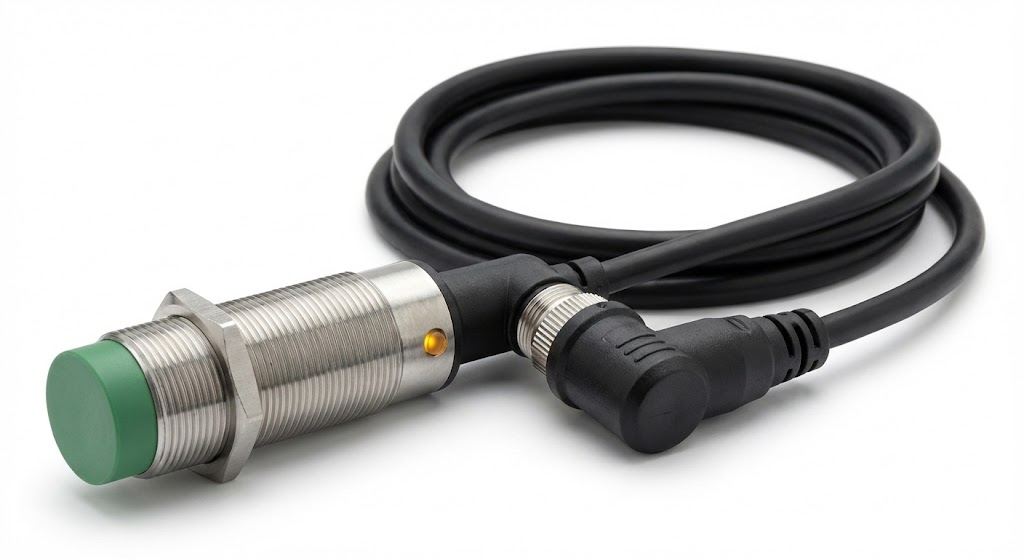
Regardless of the type, the final stage of the working principle is the output. Most modern proximity sensors provide a digital switching output, either as a transistor (NPN or PNP) for DC circuits or a solid-state relay for AC circuits. This output signal is then fed into a controller like a PLC, robot, or microcontroller to initiate an action—stopping a conveyor, counting parts, activating a safety door, or turning on a display.
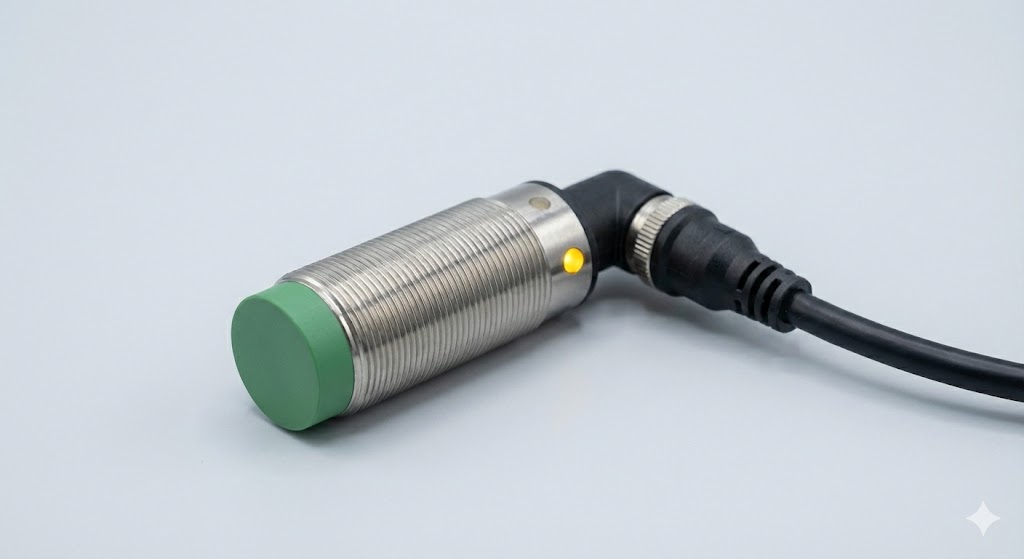
The choice of sensor depends on the application's specific requirements: target material, required sensing distance, environmental conditions, response speed, and cost. By harnessing fundamental principles of electromagnetism, capacitance, acoustics, and optics, proximity sensors enable precise, reliable, and contactless detection, forming an invisible yet critical layer of interaction between machines and the physical world.