Laser distance sensors have revolutionized precision measurement across numerous industrial sectors, offering unparalleled accuracy, speed, and reliability. These non-contact measurement devices operate on the principle of time-of-flight or phase-shift measurement, projecting a laser beam onto a target surface and calculating the distance based on the time it takes for the light to reflect back to the sensor. This technology enables real-time, high-resolution data acquisition critical for quality control, automation, and process optimization.
In manufacturing environments, laser distance sensors are indispensable for tasks such as thickness gauging, edge detection, and profile measurement. For instance, in the automotive industry, they ensure precise component alignment and gap measurement during assembly. In electronics manufacturing, they verify the coplanarity of surface-mount devices on printed circuit boards. The sensors' ability to perform measurements without physical contact eliminates the risk of damaging delicate surfaces and allows for inspection of hot, moving, or otherwise inaccessible objects.
The core components of a typical laser distance sensor include a laser diode, a receiver (often a position-sensitive device or CMOS array), and sophisticated signal processing electronics. Key performance parameters are measurement range, resolution, linearity, and response time. Modern sensors offer sub-micron resolution and sampling rates in the kilohertz range, making them suitable for dynamic applications. Environmental factors like ambient light, target surface properties (color, reflectivity, texture), and atmospheric conditions can influence performance. Therefore, selecting the correct sensor model involves careful consideration of the application's specific requirements. Many advanced sensors incorporate features like background light suppression, automatic exposure control, and integrated temperature compensation to ensure stable operation in challenging conditions.
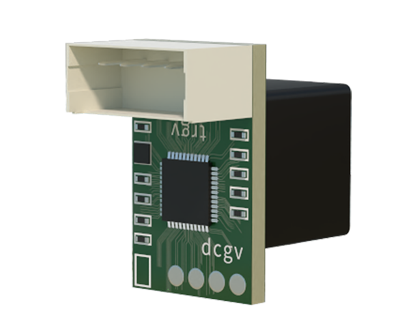
Integration into automated systems is streamlined through various analog and digital interfaces, such as 4-20 mA, 0-10 V, RS-232, RS-485, Ethernet, and industrial fieldbuses like PROFINET or EtherCAT. This connectivity allows for seamless data transmission to PLCs (Programmable Logic Controllers) or SCADA (Supervisory Control and Data Acquisition) systems, enabling closed-loop process control. For complex measurement tasks, such as 3D profiling, multiple sensors can be networked or used in conjunction with scanning mechanisms.
Beyond traditional manufacturing, applications are expanding into robotics for navigation and obstacle avoidance, logistics for warehouse inventory management and pallet dimensioning, and civil engineering for structural monitoring and deformation analysis. The advent of compact, cost-effective models has further democratized their use in smaller-scale automation and research & development projects.

When implementing a laser distance sensor, proper installation is paramount. Factors such as mounting stability, alignment, and minimizing vibration are crucial for achieving specified accuracy. Regular calibration against known standards is recommended to maintain long-term measurement integrity. As Industry 4.0 and smart factory concepts advance, these sensors are becoming integral data points within the Internet of Things (IoT) ecosystem, providing the granular measurement data necessary for predictive maintenance and data-driven optimization.
In conclusion, laser distance sensors represent a mature yet continuously evolving technology that addresses the growing demand for high-precision, non-contact measurement. Their versatility, robustness, and integration capabilities make them a cornerstone of modern industrial automation and quality assurance systems. Engineers and technicians must stay informed about technological advancements to fully leverage their potential for improving productivity, safety, and product quality across diverse applications.
