Infrared laser detection sensors represent a cornerstone technology in modern industrial automation and precision measurement. Operating on the principle of emitting a focused beam of infrared light and analyzing its reflection or interruption, these sensors provide non-contact, high-accuracy detection capabilities essential for a myriad of applications. The core components typically include a laser diode emitting light in the infrared spectrum (often in the 850nm to 1550nm range), a photodetector or receiver, and sophisticated signal processing circuitry. The infrared wavelength is chosen for its ability to be highly collimated—forming a tight, straight beam—and for its relative invisibility to the human eye, making it suitable for discreet operation in various environments.
The operational principle is elegantly straightforward yet powerful. The sensor emits a pulsed or continuous infrared laser beam towards a target. When the beam encounters an object, it is reflected back to the sensor's receiver. The onboard electronics then analyze the received signal. In a through-beam sensor setup, the receiver is separate from the emitter, and detection occurs when the object breaks the beam. In a retro-reflective setup, the beam bounces off a reflector back to a receiver housed with the emitter. The most complex and versatile is the diffuse reflective mode, where the sensor detects light scattered directly back from the target itself. Advanced models utilize time-of-flight (ToF) or phase-shift measurement techniques to calculate distance with remarkable precision, enabling them to function as laser distance sensors or proximity sensors.
The advantages of infrared laser sensors over other sensing technologies, such as ultrasonic or standard photoelectric sensors, are numerous. They offer exceptionally high resolution and accuracy, often down to the micrometer level. Their response time is extremely fast, capable of detecting objects or changes in distance within microseconds, which is critical for high-speed production lines. The focused beam minimizes interference from background objects or ambient light, especially when paired with narrow-band optical filters. Furthermore, they are largely unaffected by color, surface texture, or material transparency variations that often challenge standard photoelectric sensors, provided the material does not completely absorb infrared wavelengths.
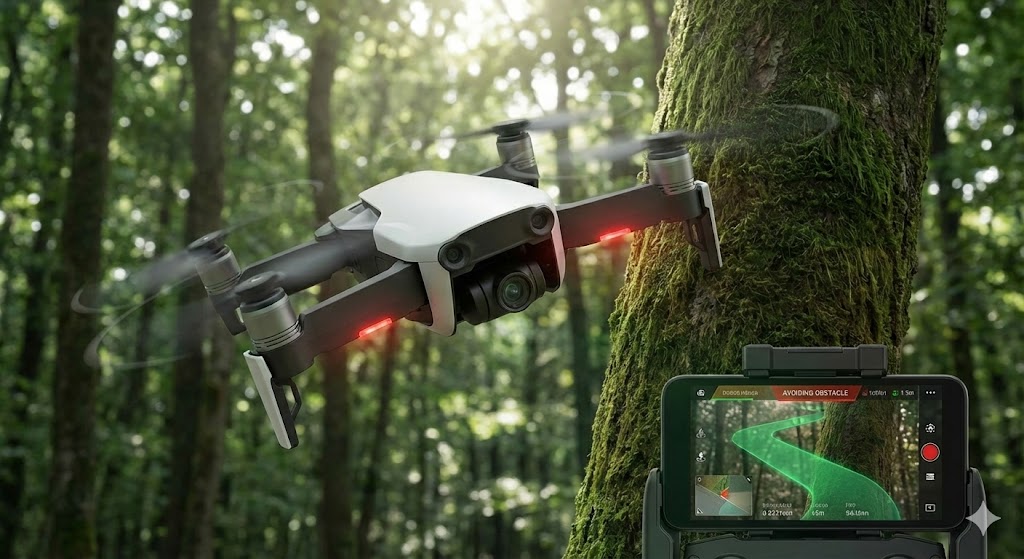
In industrial applications, infrared laser sensors are indispensable. They are deployed for precise object detection on conveyor belts, exact positioning of robotic arms, wafer alignment in semiconductor manufacturing, and fill-level monitoring in transparent containers. In the automotive industry, they guide robots for welding and assembly with pinpoint accuracy. They also form the basis of safety systems like laser scanners that create protective fields around hazardous machinery, instantly halting operation if a breach is detected. Beyond the factory floor, they are integral to autonomous guided vehicles (AGVs) for navigation and obstacle avoidance, and in logistics for dimensioning packages.
Recent technological advancements are pushing the boundaries of what these sensors can achieve. The integration of CMOS imaging sensors with laser projection has given rise to sophisticated profile sensors and 3D scanners capable of capturing complete surface contours. Innovations in blue laser technology, though not infrared, highlight a trend towards even finer spot sizes for ultra-precise tasks. Meanwhile, the miniaturization of components and the incorporation of Industrial Internet of Things (IIoT) capabilities are leading to smarter sensors. These intelligent sensors can self-monitor their lens cleanliness, calibrate automatically, predict maintenance needs, and communicate rich diagnostic data directly to control systems or the cloud via protocols like IO-Link and Ethernet-APL.
Looking ahead, the future of infrared laser detection sensors is intertwined with the evolution of Industry 4.0 and smart manufacturing. Expectations point toward even greater miniaturization, lower power consumption, and enhanced robustness for harsh environments. The fusion of laser measurement data with artificial intelligence and machine vision algorithms will unlock new functionalities, such as advanced quality inspection, where a sensor can not only detect an object's presence but also classify its type or identify microscopic defects. As networks become faster and more reliable, the role of these sensors will expand from simple binary detection nodes to integral components of a fully digitalized, adaptive, and predictive production ecosystem.
Selecting the right infrared laser sensor requires careful consideration of several parameters: the required sensing range and spot size, the resolution and repeatability needed, the response speed, the environmental conditions (temperature, dust, vibrations), and the required output interface. Proper installation is equally crucial; ensuring a stable mount, aligning the beam correctly, and mitigating potential optical interference from highly reflective surfaces or other infrared sources are key to optimal performance. With their unparalleled precision, speed, and reliability, infrared laser detection sensors will continue to be a fundamental enabling technology, driving efficiency, quality, and safety across countless industries for years to come.