Laser beam sensors represent a cornerstone technology in modern industrial automation, offering unparalleled precision, speed, and reliability for a vast array of detection and measurement tasks. Unlike traditional photoelectric sensors that use diffuse or retro-reflective principles, laser beam sensors emit a highly focused, coherent beam of light. This fundamental characteristic enables them to perform with exceptional accuracy over long distances and in challenging environmental conditions. The core operating principle involves the emission of a laser diode-generated beam towards a receiver or a reflective target. The sensor then detects changes in the received light's properties—such as intensity, phase, or time-of-flight—to determine the presence, absence, position, or profile of an object.
The advantages of laser technology in sensing are manifold. The extremely narrow beam divergence allows for precise detection of very small objects or edges, minimizing false triggers from background interference. This makes them ideal for applications like detecting fine wires, semiconductor wafers, or minute component placements. Furthermore, the high intensity of the laser beam provides excellent signal stability, enabling reliable operation even in the presence of ambient light, dust, or mild vapors. Many advanced models incorporate background suppression technology or use the time-of-flight principle for precise distance measurement, independent of the target's color, reflectivity, or surface texture.
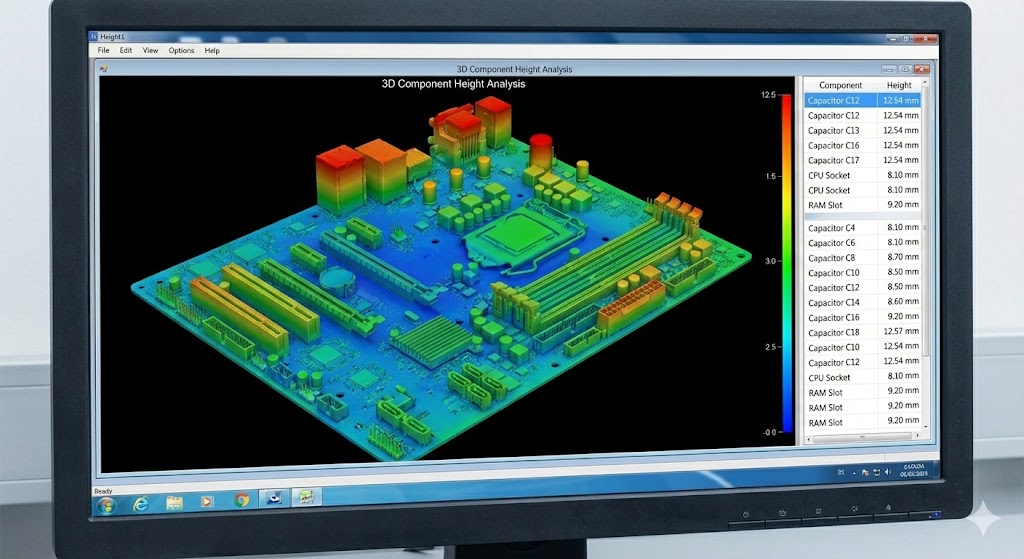
In practical industrial settings, laser beam sensors are deployed across numerous sectors. In packaging and material handling, they are used for precise object counting, fill-level control, and edge guiding for web materials. Automotive assembly lines rely on them for robot guidance, part verification, and weld seam tracking. The electronics industry utilizes their high resolution for wafer inspection, component alignment, and lead frame positioning. Additionally, laser sensors are critical in logistics for dimensioning packages and palletizing, and in metalworking for monitoring sheet position and controlling cutting tools.
Selecting the appropriate laser beam sensor requires careful consideration of several technical parameters. The first is the sensing mode: through-beam, retro-reflective, or diffuse-reflective. Through-beam models, with separate emitter and receiver units, offer the longest range and highest reliability for detection. Operating range and spot size are crucial; a smaller spot size allows for higher precision but may require more precise alignment. Response time, measured in milliseconds or microseconds, determines the sensor's capability for high-speed production lines. Environmental ratings, such as IP67 for dust and water ingress protection, and resistance to vibrations or temperature fluctuations, are vital for harsh industrial environments. Compatibility with industrial communication protocols (e.g., IO-Link, PROFINET, EtherNet/IP) is increasingly important for Industry 4.0 integration, allowing for parameter configuration and diagnostic data retrieval directly from the control system.
Installation and maintenance also demand attention. Proper alignment is critical, especially for through-beam sensors over long distances. Mounting hardware should ensure stability against vibration. While laser diodes have long lifetimes, periodic cleaning of lenses is necessary to maintain optimal performance. Modern sensors often feature built-in alignment aids like visible red laser beams or digital signal strength indicators to simplify setup.
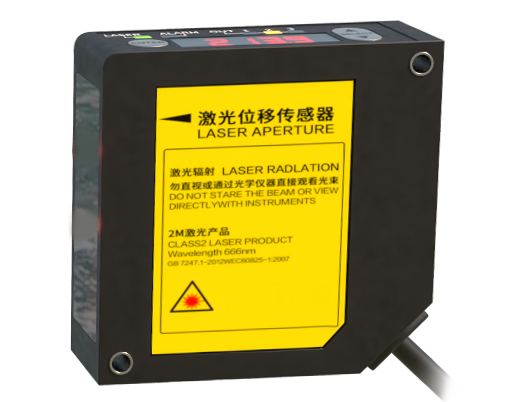
Looking ahead, the evolution of laser beam sensors is intertwined with trends in smart manufacturing. Miniaturization continues, enabling their integration into tighter spaces. Enhanced connectivity and data analytics capabilities are turning simple sensors into intelligent nodes on the network, providing predictive maintenance alerts and process optimization insights. Furthermore, the development of new laser wavelengths and sophisticated evaluation algorithms is expanding their usability on previously challenging surfaces, such as transparent glass or shiny metals.
In conclusion, laser beam sensors are indispensable tools for achieving high levels of automation, quality control, and efficiency. Their ability to deliver precise and reliable data under demanding conditions makes them a superior choice for countless detection and measurement challenges. By understanding their operating principles, key application areas, and critical selection criteria, engineers and system integrators can effectively leverage this powerful technology to optimize industrial processes and drive innovation in automation solutions.