In industrial automation and control systems, proximity switches are indispensable components for non-contact object detection. A critical, yet sometimes overlooked, aspect of their performance is the signal voltage. This parameter is fundamental to ensuring reliable communication between the sensor and the programmable logic controller (PLC) or other receiving devices. This article delves into the technical nuances of signal voltage in proximity switches, exploring its definition, influencing factors, measurement techniques, and troubleshooting implications.
At its core, the signal voltage of a proximity switch refers to the electrical potential present at its output terminal when the sensor is in its active state—that is, when a target object is within its specified sensing range. This is not the supply voltage (Vcc), but the voltage level the sensor "switches" to, signaling detection. For a standard DC 3-wire sensor, this is typically either a high-level voltage (close to Vcc) for a PNP (sourcing) type or a low-level voltage (close to 0V) for an NPN (sinking) type when a target is detected. The exact value of this signal voltage under load is crucial for compatibility.
Several key factors directly influence the actual signal voltage delivered. First and foremost is the internal design of the sensor's output stage, particularly the saturation voltage (Vce(sat) for transistors or Rds(on) for MOSFETs). A high-quality sensor minimizes this voltage drop. Secondly, the load current drawn by the connected device (e.g., a PLC input module) plays a significant role. As load current increases, the voltage drop across the sensor's output transistor also increases, potentially lowering the signal voltage below the minimum "ON" threshold required by the PLC, leading to failure. This is why datasheets specify a maximum load current. Third, the supply voltage stability is paramount. Fluctuations in the 24VDC supply will cause proportional fluctuations in the output signal voltage. Finally, cable resistance and quality of connections can introduce unexpected voltage drops, especially over long cable runs.
Measuring signal voltage accurately is a fundamental diagnostic skill. It requires a digital multimeter (DMM) set to DC voltage. The procedure involves powering the sensor with its rated voltage and introducing a target into its sensing field. The measurement is taken between the sensor's output wire (brown or black typically) and the common negative (blue). The reading should be compared against the sensor's datasheet specifications and the minimum "ON-state input voltage" of the receiving PLC. A reading significantly lower than the supply voltage (for a PNP) under a nominal load indicates a potential issue, such as an overloaded output stage or high circuit resistance.
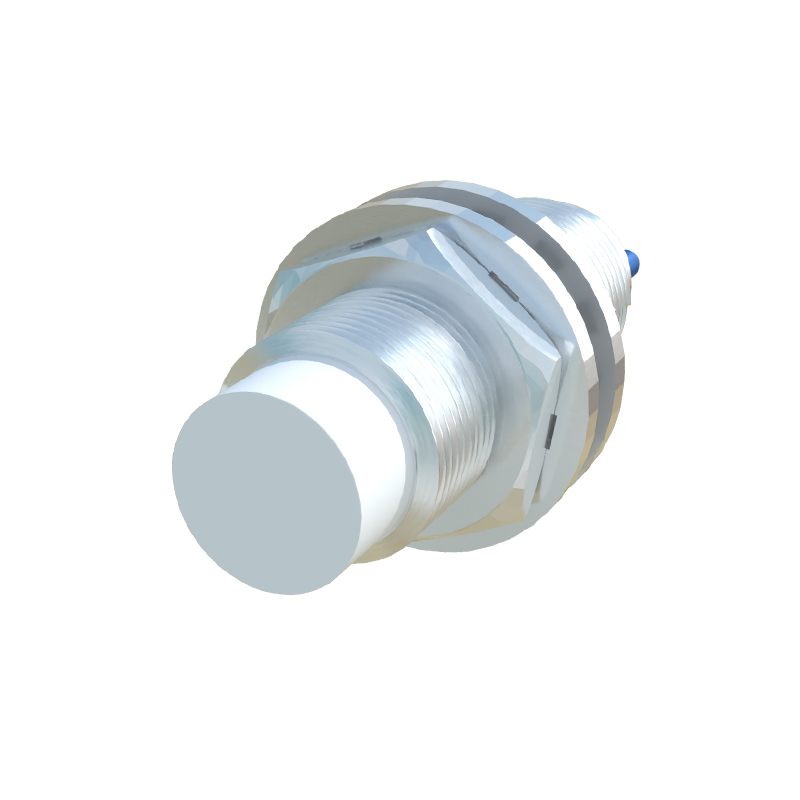
Understanding signal voltage is directly linked to effective troubleshooting. Common field problems like intermittent operation, failure to trigger, or "weak" signals often trace back to voltage issues. For instance, if a sensor seems to detect an object but the PLC does not register the input, measuring the signal voltage under load can reveal if it has dropped below the PLC's recognition level. This can be caused by selecting a sensor with an insufficient current rating for the PLC input's burden, excessive leakage current in parallel wiring, or degraded internal components. Ensuring the signal voltage remains within the required "logic high" band of the controller, with an adequate noise margin, is essential for immunity against electrical interference.
In conclusion, the signal voltage is not merely a static specification but a dynamic performance indicator of a proximity sensor within its operating circuit. Engineers must consider it as part of a system interaction, accounting for load, supply, and wiring. By prioritizing this parameter during selection, installation, and maintenance, one can significantly enhance system reliability, reduce downtime, and ensure robust communication in automated environments. Always consult the manufacturer's datasheets for precise voltage characteristics under defined load conditions.