Vibration measurement is a critical aspect of condition monitoring and predictive maintenance across numerous industries, from power generation to manufacturing. Traditional contact-based sensors, such as accelerometers, have long been the standard. However, the advent of laser displacement sensors has introduced a powerful, non-contact alternative that offers unique advantages for precise vibration analysis. This article delves into the principles, applications, and best practices of using laser sensors for vibration measurement, tailored for electrical and instrumentation engineers.
At its core, a laser vibration sensor operates on the principle of optical triangulation or laser interferometry. In a common configuration, a laser diode projects a focused beam onto the target surface. The reflected light is detected by a position-sensitive device (PSD) or a CMOS sensor. Any minute movement or vibration of the target alters the angle of the reflected beam, causing a shift in the light's position on the detector. This shift is electronically converted into a precise distance measurement. By sampling this distance at a very high rate—often in the kilohertz range—the sensor can capture a detailed waveform of the target's vibration, including its displacement, velocity, and through derivation, acceleration.
The benefits of this non-contact method are substantial. First, it eliminates mass loading, a phenomenon where the weight of a contact sensor alters the vibration characteristics of lightweight or delicate structures, such as turbine blades, thin panels, or electronic components. Second, it allows for measurement on surfaces that are extremely hot, electrically live, rotating, or otherwise inaccessible to physical probes. This is invaluable for monitoring motors, generators, bearings, and transformers in real-time without shutdown. Third, laser sensors provide exceptional resolution, capable of detecting sub-micron displacements, which is crucial for identifying incipient faults long before they lead to catastrophic failure.
For electrical engineers integrating these systems, understanding key specifications is paramount. The measuring range defines the minimum and maximum working distance from the sensor head to the target. The spot size, determined by the laser's wavelength and optics, affects spatial resolution; a smaller spot is ideal for measuring specific points on small components. Sampling frequency must be significantly higher than the vibration frequencies of interest to satisfy the Nyquist theorem and avoid aliasing. Linearity and repeatability errors define the sensor's accuracy. Furthermore, the choice between a red laser and a blue laser can be important; blue lasers have shorter wavelengths and are less susceptible to interference from ambient red light and often perform better on shiny or metallic surfaces.

A typical application scenario involves setting up a laser vibrometer for motor health assessment. The sensor is mounted on a stable bracket, aimed at a clean point on the motor housing or directly on the shaft (if accessible). The output, usually an analog voltage signal proportional to displacement, is fed into a data acquisition (DAQ) system or a spectrum analyzer. The time-domain waveform is then transformed into the frequency domain using a Fast Fourier Transform (FFT). The resulting spectrum reveals dominant vibration frequencies. Engineers can correlate these frequencies with known mechanical characteristics: unbalance typically appears at 1x rotational speed, misalignment at 2x, and bearing defects at specific high frequencies related to bearing geometry. By trending these spectral components over time, engineers can diagnose issues like looseness, resonance, or wear.
However, successful implementation requires attention to practical challenges. Surface preparation is often necessary; a matte, opaque surface provides optimal diffuse reflection. For highly reflective or transparent surfaces, applying a removable retro-reflective tape or a dulling spray can drastically improve signal quality. Environmental factors like air turbulence, dust, steam, or significant ambient light variation can scatter or distort the laser beam, requiring protective enclosures or optical filters. Proper alignment is critical; the laser beam must be perpendicular to the vibration direction to measure true amplitude. For multi-point measurement, scanning laser vibrometers that use moving mirrors to steer the beam offer a comprehensive solution, creating full-field vibration maps of structures.
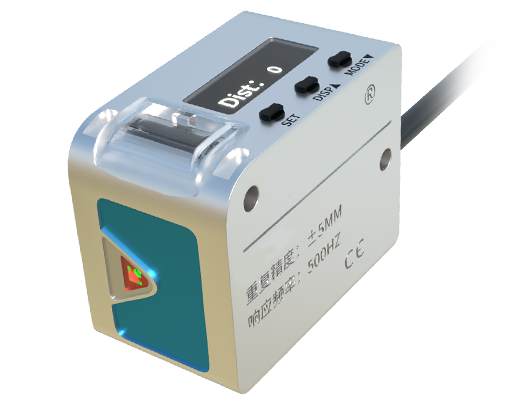
Integration into modern Industrial IoT (IIoT) frameworks is a growing trend. Modern laser sensors come with digital interfaces (EtherCAT, PROFINET, EtherNet/IP) or built-in analog-to-digital converters with Ethernet output. This allows vibration data to be streamed directly to cloud platforms or edge computing devices. Here, machine learning algorithms can analyze the data continuously, automatically detecting anomalous patterns and generating predictive maintenance alerts. This shifts maintenance from scheduled or reactive to truly condition-based, maximizing equipment uptime and lifespan.
In conclusion, laser sensor technology for vibration measurement represents a significant leap forward in precision metrology and asset management. For electrical engineers tasked with ensuring reliability and efficiency, mastering this tool opens new avenues for non-invasive diagnostics. By combining high-fidelity optical measurement with robust data analysis, it is possible to gain unprecedented insight into the dynamic behavior of machinery, paving the way for smarter, more resilient industrial operations. As sensor technology continues to advance, becoming more robust and cost-effective, its adoption is set to become even more widespread across the electrical and broader engineering landscape.