Laser Time-of-Flight (ToF) sensor integrated circuits (ICs) represent a significant advancement in distance measurement and 3D sensing technology. At their core, these sophisticated components operate on a straightforward principle: they emit a modulated laser pulse towards a target and precisely measure the time it takes for the reflected light to return to the sensor. This elapsed time, multiplied by the speed of light, provides an accurate calculation of the distance to the object. Unlike simpler proximity sensors or stereo vision systems, laser ToF sensors offer high precision, fast response times, and the ability to function effectively in varying lighting conditions, making them indispensable in modern electronic systems.
The architecture of a typical laser ToF sensor IC is a marvel of miniaturization and integration. It generally comprises several key subsystems. First, the laser driver circuit generates the precise, high-frequency modulated optical signal, often using Vertical-Cavity Surface-Emitting Lasers (VCSELs) for their efficiency and compact form factor. The emitted light travels to the target and back, where a specialized photodiode or a single-photon avalanche diode (SPAD) array captures the returning photons. The heart of the IC is the timing circuitry, which includes a Time-to-Digital Converter (TDC). The TDC's role is critical; it measures the nanosecond or even picosecond intervals between the emitted and received pulses with extreme accuracy. Advanced digital signal processing (DSP) blocks then filter noise, compensate for ambient light, and convert the raw timing data into reliable distance measurements. All these functions are integrated into a single chip, enabling compact, low-power, and cost-effective sensor modules.
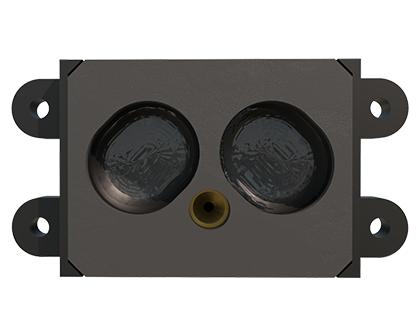
The applications for laser ToF sensor ICs are vast and rapidly expanding. In consumer electronics, they are the enabling technology for facial recognition systems in smartphones and tablets, providing secure and fast authentication. In robotics and drones, these sensors are crucial for obstacle avoidance, navigation, and environment mapping (SLAM - Simultaneous Localization and Mapping). The automotive industry leverages them for advanced driver-assistance systems (ADAS), including automatic emergency braking and adaptive cruise control, forming a foundational layer for future autonomous vehicles. Furthermore, in industrial automation, laser ToF sensors facilitate precise level sensing, bin picking, and robotic guidance, enhancing efficiency and safety on factory floors. Emerging uses also include augmented/virtual reality (AR/VR) for gesture recognition and immersive interaction, as well as smart home devices for presence detection and appliance control.
Designing and implementing systems with laser ToF ICs presents specific engineering considerations. Optical design is paramount; the lens quality, field of view, and filtering must be optimized for the target application to ensure signal integrity. Power management is another critical area, as the laser driver and high-speed circuitry can be power-hungry, especially in battery-operated devices. Engineers must also contend with interference challenges, such as sunlight saturation or cross-talk between multiple sensors operating in close proximity. Modern ToF ICs incorporate various techniques to mitigate these issues, including multi-frequency modulation, ambient light subtraction, and sophisticated algorithms. System integration involves careful PCB layout to minimize parasitic effects that could degrade high-speed signals and effective thermal management for the laser component.
Looking ahead, the future of laser ToF sensor ICs is geared towards higher performance, greater integration, and lower cost. We are witnessing a trend towards higher resolution SPAD arrays, enabling not just distance measurement but full 3D point cloud generation with megapixel resolution. The integration of artificial intelligence and machine learning accelerators directly onto the sensor chip is on the horizon, allowing for edge-based processing of depth data for immediate object classification and scene understanding. Furthermore, the development of silicon photonics promises to further miniaturize these systems by integrating optical waveguides and other components directly onto the silicon die. As the technology matures and economies of scale take effect, laser ToF sensors will become ubiquitous, moving beyond premium devices into a broader range of applications, from logistics and healthcare to everyday IoT devices, fundamentally changing how machines perceive and interact with the physical world.