In the realm of industrial automation and control systems, the precision of proximity sensors is a critical parameter that directly impacts the efficiency, reliability, and safety of operations. Precision, in this context, refers to the sensor's ability to consistently and accurately detect the presence, absence, or position of a target object within its specified sensing range. It encompasses repeatability, resolution, and hysteresis, forming the cornerstone of high-performance sensing solutions.
The foundation of a proximity sensor's precision lies in its underlying technology. Inductive sensors, designed for detecting metallic objects, achieve high precision through advanced coil designs and oscillator circuits. Their precision is often quantified by repeatability, which can reach remarkable levels such as ±0.5% of the sensing distance or even better under stable environmental conditions. For instance, a sensor with a 10mm range might offer a repeatability of ±0.05mm. This is paramount in applications like robotic arm positioning or CNC machine tooling, where minute deviations can lead to product defects.
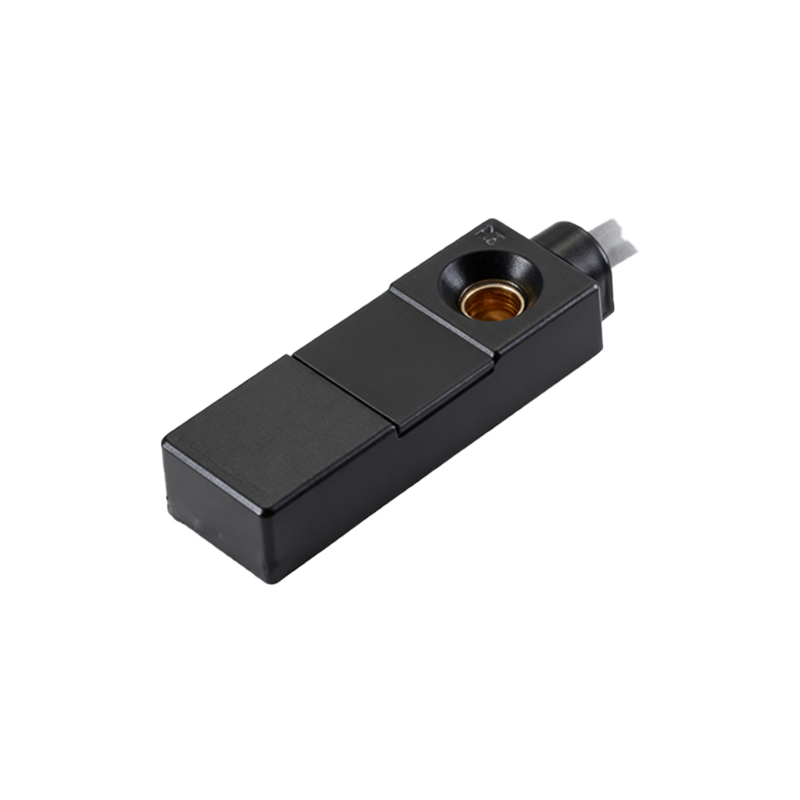
Capacitive sensors, used for detecting both metallic and non-metallic materials, achieve precision by meticulously measuring changes in capacitance. Their precision is highly dependent on the dielectric constant of the target material and environmental factors like humidity. Shielding techniques and sophisticated signal processing algorithms are employed to minimize stray capacitance effects, enhancing repeatability and stability. In packaging lines detecting plastic or glass bottles, the precision of capacitive sensors ensures accurate counting and sorting without false triggers.
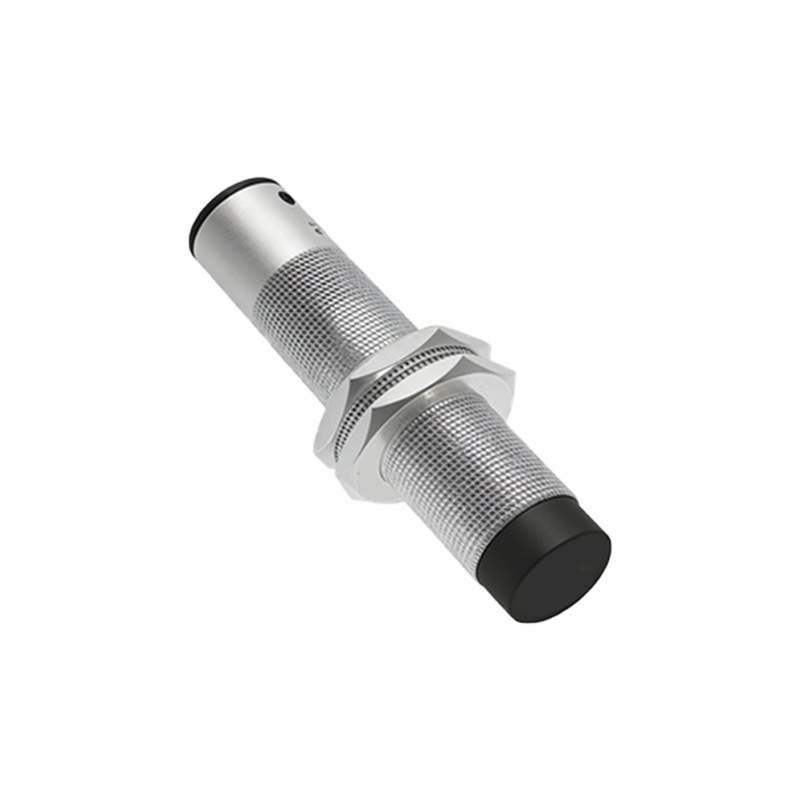
Magnetic sensors, including reed switches and Hall-effect sensors, offer exceptional precision in detecting magnetic fields. Hall-effect sensors, in particular, provide precise switching points with minimal hysteresis. Their precision is vital in applications requiring exact angular or linear position feedback, such as in brushless DC motor commutation or valve position sensing in fluid control systems.
Several key factors influence and can potentially degrade the precision of a proximity sensor. Temperature fluctuations are a primary concern, as they can alter the electrical properties of components and the sensing field. High-quality sensors incorporate temperature compensation circuits to mitigate this drift. Electrical noise from motors, drives, and power lines can interfere with sensor signals. Precision is maintained through robust housing designs, shielded cables, and filtering electronics that distinguish the true signal from noise.
The target object itself plays a significant role. For inductive sensors, the size, shape, and material composition (e.g., different grades of steel) of the target affect the effective sensing point. Manufacturers specify standard targets (usually mild steel) for calibration. Using a non-standard target requires careful consideration and may involve derating the nominal sensing distance, impacting precision. Similarly, the approach direction (axial or lateral) can influence the switching point consistency.
Installation practices are non-negotiable for achieving stated precision. Mounting the sensor flush or with adequate clearance from surrounding metal (as per specifications) prevents the shielding effect, which can drastically reduce the effective sensing range and cause unreliable operation. Ensuring a stable power supply within the sensor's rated voltage range is also crucial, as voltage dips or spikes can affect the output signal's timing and level.
To quantify and specify precision, engineers rely on datasheet parameters. Repeatability is the ability of the sensor to trigger at the same point repeatedly under identical conditions, expressed as a percentage of the sensing distance. Hysteresis is the difference between the switch-on point (as the target approaches) and the switch-off point (as it recedes). A defined hysteresis prevents output oscillation when a target is at the threshold, enhancing stability. Resolution refers to the smallest change in target position the sensor can detect, more relevant for analog output sensors providing continuous distance measurement.
In high-precision applications like semiconductor manufacturing, coordinate measuring machines (CMMs), or precision assembly, analog-output proximity sensors are often employed. These sensors provide a continuous voltage or current signal proportional to the distance to the target. Their precision is defined by linearity error (deviation from an ideal straight-line response) and temperature drift of the output signal. Advanced models offer linearity errors as low as ±0.5% of full scale, enabling micron-level positioning feedback when integrated with appropriate controllers.
In conclusion, the precision of a proximity sensor is not a single number but a system characteristic resulting from sophisticated design, careful component selection, and adherence to application-specific conditions. Achieving optimal precision requires a holistic approach: selecting the correct sensor technology for the target material, understanding and controlling environmental variables, following meticulous installation guidelines, and interpreting datasheet specifications accurately. As Industry 4.0 and smart manufacturing demand ever-greater data accuracy and process control, the pursuit of higher sensor precision remains a continuous driver of innovation in the field of industrial sensing, ensuring machines see and react to their environment with unwavering accuracy.