In the world of industrial automation and precision measurement, sensors are the fundamental components that bridge the physical and digital realms. Among the diverse sensor families, photoelectric and laser sensors often appear in similar contexts, leading to a common and understandable question: Is a laser sensor a type of photoelectric sensor? The short answer is yes, but with important technical distinctions that define their specific capabilities and optimal use cases. To fully grasp this relationship, we must delve into the underlying principles of photoelectric sensing and the specialized role of laser light within this domain.
At its core, a photoelectric sensor is a device that uses light to detect the presence, absence, or distance of an object. The basic operational principle involves a light emitter (source) and a receiver. The emitter projects a beam of light, and the receiver detects changes in this light beam caused by the target object. These changes could be the interruption of the beam (through-beam mode), the reflection of the beam from the object (retro-reflective or diffuse reflective mode), or a change in the time it takes for the light to return (time-of-flight for distance measurement). The light source in traditional photoelectric sensors is typically a Light Emitting Diode (LED), which can emit visible red, green, or infrared light.

This is where the laser sensor enters the picture. A laser sensor is fundamentally a photoelectric sensor that employs a laser diode as its light source instead of a standard LED. A laser (Light Amplification by Stimulated Emission of Radiation) produces a highly coherent, monochromatic, and focused beam of light. This fundamental difference in the light source translates into significant performance advantages. The laser's coherent nature means the light waves are in phase, allowing the beam to remain narrow and concentrated over very long distances with minimal divergence. This results in several key benefits: exceptional sensing range, high precision in spot size and position detection, and superior performance in detecting small objects or applying precise edge detection.
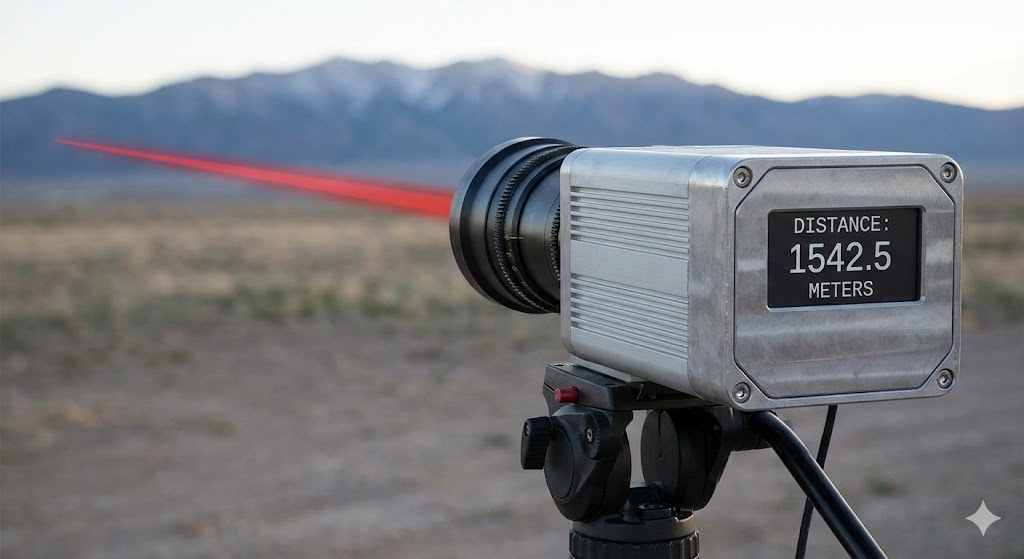
Therefore, while all laser sensors operate on the photoelectric principle, not all photoelectric sensors are laser sensors. The choice between a standard LED-based photoelectric sensor and a laser-based sensor hinges on the application's specific requirements. Standard LED photoelectric sensors are incredibly versatile, cost-effective, and perfectly suited for a vast array of general-purpose applications. They are the workhorses for detecting objects on conveyor belts, counting items, and ensuring proper positioning in packaging machinery. Their beams are often visible, aiding in setup and alignment.
Laser sensors, however, are the specialists called upon when the task demands higher performance. Their applications are prominent in scenarios requiring precision. For example, in semiconductor manufacturing, a laser sensor can accurately detect the minute position of a wafer. In logistics, they are used for precise height measurement in automated storage and retrieval systems. Laser triangulation sensors, a specific subtype, provide high-resolution distance and thickness measurements by analyzing the position of the reflected laser spot on a sensor. Furthermore, the focused beam allows laser sensors to perform reliably in environments with high ambient light or where the target object has low reflectivity, conditions that might challenge a standard LED sensor.
Another critical consideration is safety. Laser sensors are classified based on their output power and potential to cause eye damage. Most laser sensors used in industrial automation are Class 1, Class 2, or Class 3R, which are considered safe under normal operating conditions but still require proper labeling and cautious handling, unlike standard LED sensors which generally pose no such risk.
In conclusion, categorizing a laser sensor as a photoelectric sensor is technically accurate, as it adheres to the fundamental model of emitting light and detecting its interaction with an object. However, it represents a high-performance subset within that category, distinguished by its use of laser light. The decision for an engineer or system integrator is not "either/or" but rather a strategic selection based on the application's demands for range, precision, spot size, and environmental robustness. Understanding this hierarchical relationship—with photoelectric sensing as the overarching technology and laser-based sensing as a potent, specialized implementation—is crucial for selecting the right tool to ensure reliability, accuracy, and efficiency in any automated system.