In industrial automation and control systems, proximity sensors play a critical role in detecting the presence or absence of objects without physical contact. Among various types, material-specific proximity sensors are designed to respond optimally to particular materials, such as metals (ferrous or non-ferrous), plastics, or liquids. Selecting the correct sensor for a given material is essential to ensure reliability, accuracy, and longevity in demanding environments. This article provides a comprehensive guide to identifying and choosing the right material-specific proximity sensor based on key technical parameters and application needs.
First, understand the fundamental operating principles. Inductive proximity sensors are exclusively for detecting metallic objects. They generate an electromagnetic field and react to eddy currents induced in metals. Ferrous metals (like iron or steel) typically yield the longest sensing ranges, while non-ferrous metals (such as aluminum or copper) may require reduced ranges due to lower permeability. Capacitive proximity sensors, on the other hand, can detect both metallic and non-metallic materials, including plastics, glass, wood, and liquids. They function by measuring changes in capacitance caused by the target material's dielectric properties. For instance, materials with higher dielectric constants (like water or metals) are easier to detect than low-dielectric substances (like dry wood or certain polymers).
Key specifications must be evaluated to match the sensor to the material. Sensing distance, often specified as nominal or effective range, varies with material type. Inductive sensors list sensing ranges for standard steel; for non-ferrous metals, a correction factor (usually 0.3 to 0.9 times the rated range) applies. Capacitive sensors may require adjustment via potentiometers to tune sensitivity for different dielectrics. Frequency response is another consideration: high-speed applications demand sensors with fast switching frequencies, but note that sensing range can decrease at higher frequencies. Environmental factors like temperature, humidity, and exposure to chemicals can affect material properties and sensor performance. For example, capacitive sensors might false-trigger in humid conditions if not properly shielded.
Material composition and surface characteristics directly influence sensor selection. For metallic targets, consider factors like material thickness, alloy composition, and surface coatings. Thin or small metallic parts may necessitate reduced sensing distances or specialized sensor designs. Non-metallic materials require attention to dielectric constant, density, and moisture content. A capacitive sensor suitable for detecting PVC may not perform well with polyethylene without sensitivity adjustments. Additionally, target shape and size matter: flat, large surfaces are ideal, while irregular or curved objects might require sensors with broader sensing fields or multiple mounting angles.
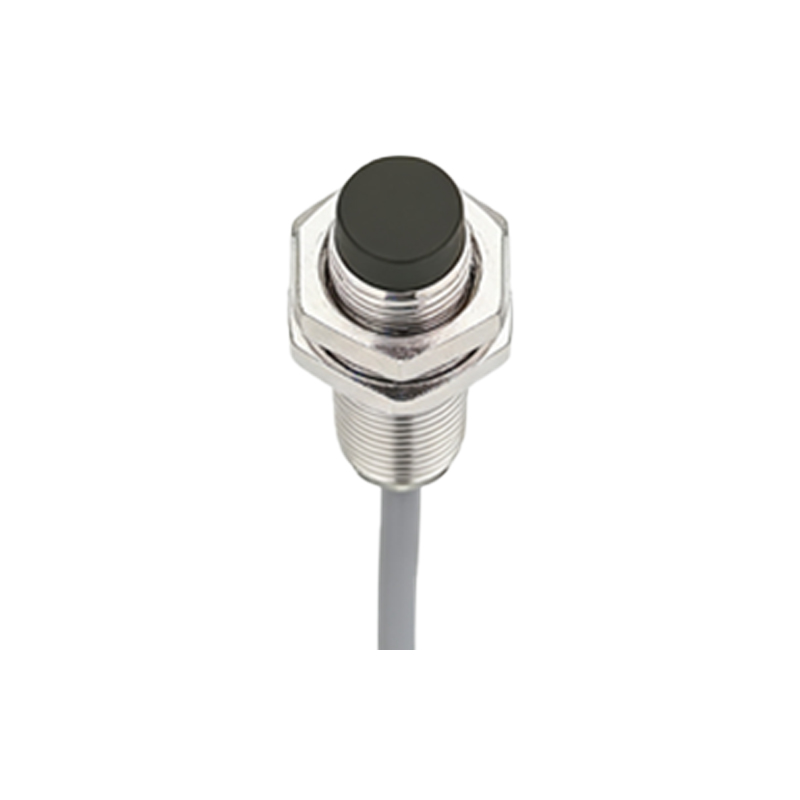
Installation and calibration practices are crucial for optimal performance. Ensure the sensor is mounted securely without misalignment. For inductive sensors, maintain adequate clearance from surrounding metals to avoid shielding effects. Capacitive sensors should be isolated from unintended background influences, such as conveyor belts or containers, by using shielded versions or adjusting sensitivity thresholds. Regular testing with actual material samples under operating conditions helps verify reliability. Many modern sensors feature LED indicators or diagnostic outputs to assist in setup and troubleshooting.
Advancements in sensor technology have introduced hybrid and intelligent models that simplify material identification. Some sensors incorporate multi-parameter detection capabilities, allowing them to distinguish between material types based on conductivity or dielectric responses. IO-Link enabled sensors can transmit material-specific data to control systems, enabling adaptive automation. When in doubt, consult manufacturer datasheets, which provide detailed material-specific performance curves and application notes. Always prioritize sensors from reputable brands that comply with international standards (e.g., IEC 60947-5-2) for safety and interoperability.
In summary, correctly identifying a material-specific proximity sensor involves analyzing the target material's physical and electrical properties, understanding sensor operating principles, and considering environmental and application constraints. By methodically evaluating these factors, engineers can enhance system efficiency, reduce downtime, and achieve precise automation outcomes.