In the high-stakes world of precision manufacturing, the mold is the foundational heart of production. Its accuracy dictates the quality, consistency, and efficiency of the final product. As industries from automotive to consumer electronics demand ever-tighter tolerances and faster cycle times, traditional inspection and monitoring methods have reached their limits. Enter the laser sensor—a non-contact measurement technology that is fundamentally reshaping mold manufacturing, maintenance, and quality control. This article delves into the operational principles, key applications, and tangible benefits of integrating laser sensors into mold technology.
At its core, a laser sensor for mold applications operates on triangulation or time-of-flight principles. A laser diode projects a focused beam of light onto the target surface—be it a mold cavity, a core pin, or a finished part. The reflected light is captured by a high-resolution receiver, typically a position-sensitive detector (PSD) or a CMOS/CCD array. By calculating the angle or the time delay of the reflected beam, the sensor's onboard processor determines the exact distance to the target with micron-level resolution. This non-contact nature is paramount; it eliminates the risk of surface damage from physical probes and allows for measurements on hot, soft, or delicate surfaces directly on the production line.
The applications within the mold lifecycle are extensive and transformative. During the initial machining and engraving phase, laser displacement sensors perform in-process verification. They scan complex 3D contours and deep cavities in real-time, comparing the machined surface against the original CAD model. This allows for immediate correction, drastically reducing scrap and rework before the mold is even completed. For injection molds, laser sensors are indispensable for monitoring critical parameters like parting line alignment, ejector pin movement, and core slide position during the molding cycle itself. Minute deviations, invisible to the human eye, can lead to flash, short shots, or dimensional inaccuracies. Continuous laser monitoring provides a live data stream, enabling predictive maintenance. By tracking the gradual wear of a mold surface over thousands of cycles, maintenance can be scheduled proactively, preventing unplanned downtime and catastrophic failure.
Furthermore, laser sensors excel in post-production quality assurance. Instead of relying on periodic sampling with coordinate measuring machines (CMMs), which requires stopping production and removing parts, inline laser scanners can inspect 100% of ejected parts. They measure critical dimensions, warpage, and surface defects at production speed, ensuring every component meets specification. This shift from statistical process control to comprehensive 100% inspection is a game-changer for industries with zero-defect policies, such as medical device manufacturing.
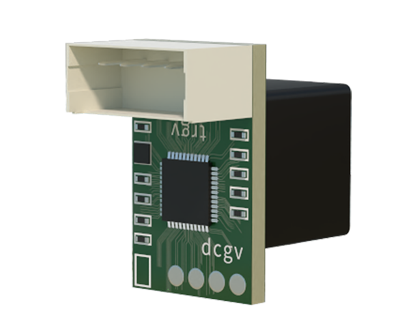
The benefits of adopting laser sensor technology for molds are quantifiable and compelling. The most significant is the dramatic improvement in Overall Equipment Effectiveness (OEE). By minimizing setup times, eliminating trial-and-error adjustments, and preventing defect production, laser sensors maximize productive output. They also extend mold life by enabling condition-based maintenance, protecting a substantial capital investment. From a quality perspective, they ensure unparalleled consistency, reducing part-to-part variation and enhancing brand reputation. Finally, the wealth of process data collected enables true Industry 4.0 integration, facilitating data-driven optimization and closed-loop process control.
In conclusion, laser sensors are no longer a niche accessory but a critical component of modern, competitive mold operations. They bridge the gap between digital design and physical production, ensuring that the precision encoded in a CAD file is faithfully and reliably reproduced in every cycle. As sensor technology advances, becoming more robust, compact, and intelligent, its integration will become the standard, defining the future of precision molding. For engineers and production managers, leveraging this technology is not merely an upgrade—it is a strategic imperative for achieving excellence in an increasingly demanding manufacturing landscape.