Proximity sensors are widely used in industrial automation for detecting the presence or absence of objects without physical contact. Among the various types, inductive proximity sensors are particularly common due to their robustness and reliability in harsh environments. However, a frequent question arises in engineering circles: Can standard inductive proximity sensors effectively detect aluminum? The answer is nuanced and requires an understanding of sensor technology and material properties.
Inductive proximity sensors operate on the principle of electromagnetic induction. They generate an oscillating electromagnetic field from a coil. When a metallic object enters this field, eddy currents are induced on the surface of the object. These eddy currents cause a change in the oscillation amplitude or frequency within the sensor, which is then detected, triggering an output signal. The effectiveness of this detection depends heavily on the target material's electrical conductivity and magnetic permeability.
Ferrous metals, such as iron and steel, are highly detectable because they possess both good electrical conductivity and high magnetic permeability. This combination results in strong eddy current generation and significant field distortion, allowing for long sensing ranges. Aluminum, however, presents a different challenge. It is a non-ferrous metal with high electrical conductivity but very low magnetic permeability (it is essentially non-magnetic).
Standard inductive sensors are typically optimized for ferrous metals. When aimed at aluminum, their effective sensing range is significantly reduced. The reduction factor can range from 40% to 60% of the rated sensing distance for steel. For instance, a sensor with a 10mm nominal range for steel might only detect a solid aluminum block at 4mm to 6mm. This is because the low magnetic permeability of aluminum results in weaker eddy current effects compared to ferrous targets.
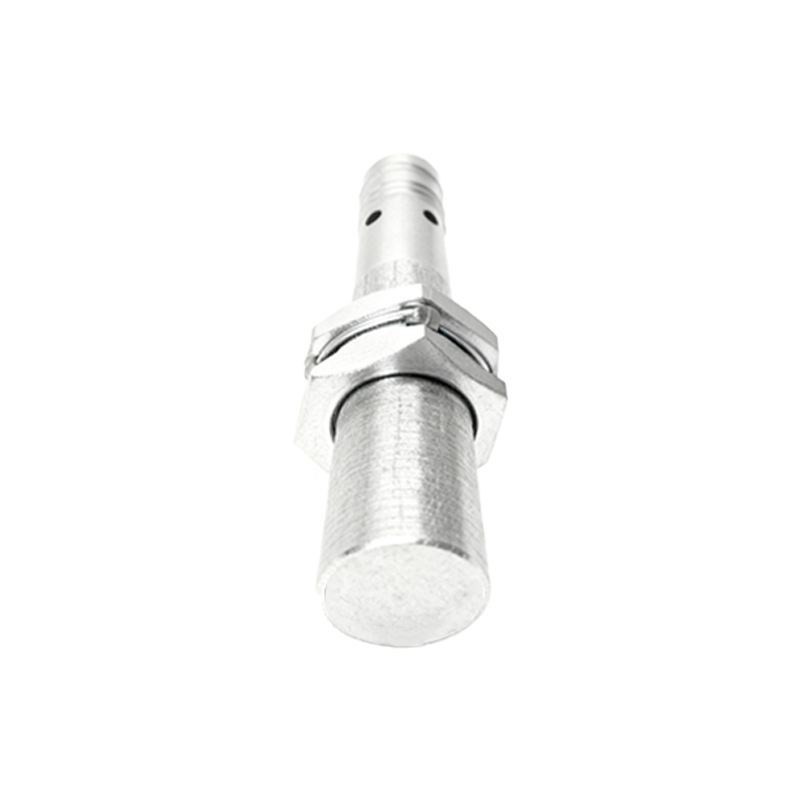
Nevertheless, aluminum is detectable. Several strategies can enhance detection reliability. First, selecting sensors specifically designed or adjusted for non-ferrous metals is crucial. Some manufacturers offer inductive sensors with a "factor 1" characteristic, meaning their sensing range is nearly identical for both steel and aluminum. These sensors often operate at higher frequencies to better interact with the conductive properties of non-ferrous metals.
Second, system design considerations are vital. Increasing the size of the aluminum target can improve detection. A larger surface area allows for greater eddy current formation. The sensor should be positioned as close as possible to the expected target position, accounting for the reduced range. Furthermore, the alloy composition and surface condition of the aluminum matter. Pure aluminum (1000 series) is more conductive and easier to detect than some alloys (like 5000 or 6000 series), which have lower conductivity. Anodized coatings are non-conductive and will prevent detection unless the coating is very thin or the sensor is specially calibrated.
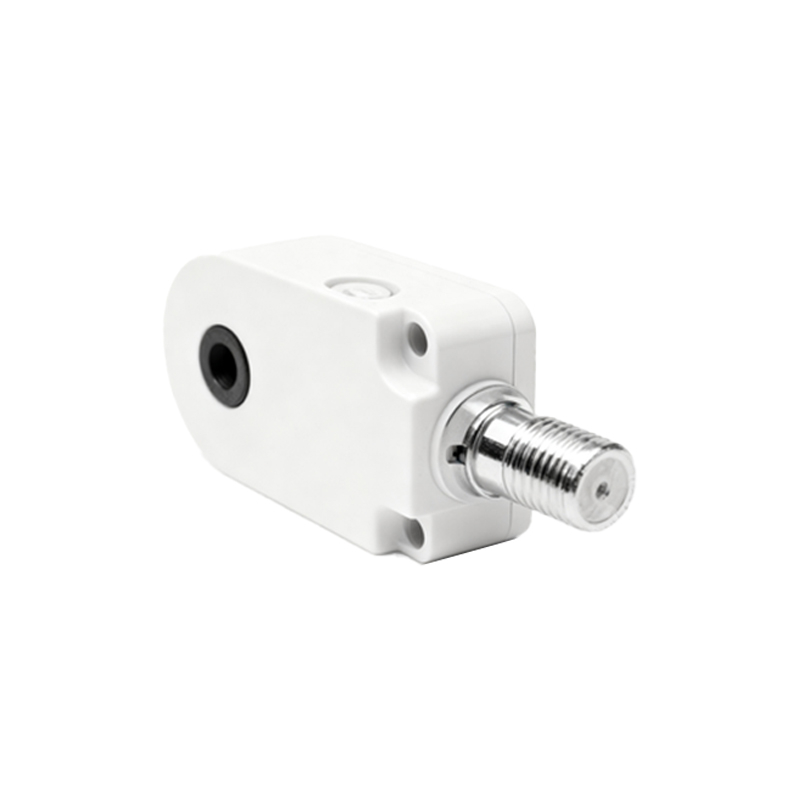
Third, alternative sensor technologies can be considered where inductive sensors fall short. Capacitive proximity sensors can detect both metallic and non-metallic materials, including aluminum, by sensing changes in capacitance. However, they are also sensitive to moisture, dust, and other environmental factors, which may limit their use. Ultrasonic sensors are another option, measuring the time-of-flight of sound waves, and are unaffected by the material's metallic properties, though they may have slower response times.
In practical applications, such as aluminum can manufacturing, CNC machine tooling, or automotive assembly lines, successful detection of aluminum components is routine. It requires careful sensor selection, precise installation, and often, testing with the actual target material under real operating conditions. Engineers must consult sensor datasheets for correction factors specific to aluminum and perform thorough on-site validation.
In conclusion, standard inductive proximity sensors can detect aluminum, but with a substantially reduced sensing range compared to steel. For reliable operation in aluminum detection tasks, specifying sensors optimized for non-ferrous metals, adjusting mechanical layouts, and considering alternative sensing principles are essential engineering practices. Understanding these technical subtleties ensures robust and fault-free automation system design.