Proximity sensors are indispensable components in modern industrial automation, offering non-contact detection of objects within a specified range. Customizing these sensors to meet specific application requirements involves a deep understanding of their operational principles, environmental factors, and performance parameters. This article delves into the core principles behind tailoring proximity sensors, ensuring optimal functionality across diverse industrial settings.
The foundation of customization lies in selecting the appropriate sensing technology. Inductive proximity sensors, for instance, are ideal for detecting metallic objects. They operate by generating an electromagnetic field; when a metal target enters this field, eddy currents are induced, altering the sensor's oscillation amplitude and triggering detection. For non-metallic materials, capacitive sensors are preferred, as they respond to changes in capacitance caused by the presence of any object, regardless of material composition. Photoelectric sensors, utilizing light beams, offer long-range detection but require consideration of ambient light interference. Each technology has distinct advantages, and the choice depends on factors like target material, detection distance, and environmental conditions.
Environmental adaptability is a critical aspect of customization. Industrial environments often expose sensors to extreme temperatures, humidity, dust, or corrosive substances. Customized housings made from materials such as stainless steel or specialized polymers can enhance durability. For instance, in food processing or pharmaceutical industries, sensors may require IP69K-rated enclosures to withstand high-pressure washdowns. Additionally, shielding against electromagnetic interference (EMI) is essential in areas with heavy machinery or high-frequency equipment to prevent false triggers. Engineers must assess the operational environment to specify protective features, ensuring reliable performance without frequent maintenance.
Detection range and sensitivity adjustments are pivotal in customization. Standard proximity sensors have predefined sensing distances, but many applications demand precise control. By modifying coil designs in inductive sensors or adjusting oscillator circuits, the sensing range can be extended or reduced. Sensitivity tuning allows sensors to ignore background objects or detect minute changes, such as thin foils or small components on assembly lines. In automated packaging, for example, sensors might be customized to detect transparent films without misreading conveyor belts, requiring fine-tuned sensitivity thresholds.
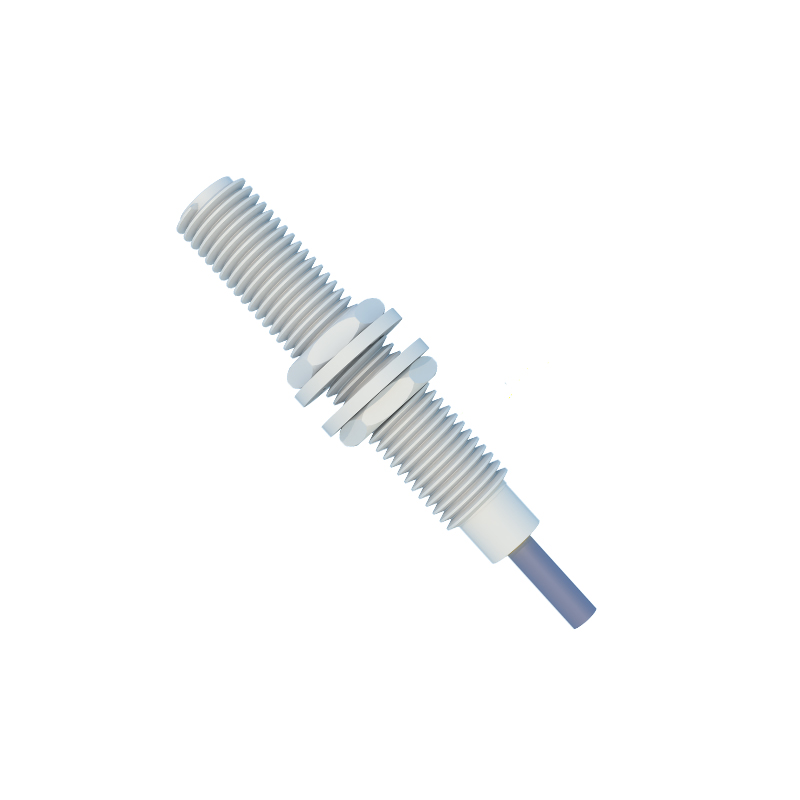
Output configuration and integration capabilities also drive customization. Proximity sensors typically provide digital outputs (e.g., NPN or PNP transistors) or analog signals (e.g., 4-20 mA or 0-10 V). Customizing output types ensures compatibility with programmable logic controllers (PLCs) or other control systems. In complex automation setups, sensors may need multiple outputs or communication protocols like IO-Link for real-time data exchange. For instance, in automotive manufacturing, customized sensors with IO-Link can transmit diagnostic information, enabling predictive maintenance and reducing downtime.
Power supply considerations are often overlooked but vital. Industrial systems may operate on varying voltage levels (e.g., 12V DC, 24V DC, or 110V AC). Customized sensors can be designed to match specific power requirements, incorporating voltage regulators or surge protection to prevent damage from fluctuations. In battery-powered applications, low-power designs extend operational life, emphasizing energy-efficient components.
Finally, compliance with industry standards, such as IEC 60947-5-2 for proximity sensors, ensures safety and interoperability. Customization must adhere to these regulations while addressing unique application needs. For example, in hazardous areas with explosive atmospheres, sensors require ATEX or IECEx certifications, involving explosion-proof enclosures and intrinsic safety barriers.
In summary, customizing proximity sensors involves a holistic approach, balancing technology selection, environmental resilience, performance tuning, and system integration. By applying these principles, engineers can develop sensors that enhance efficiency, reliability, and safety in industrial automation, from robotics and material handling to quality control and beyond. As industries evolve toward smart manufacturing, the demand for tailored sensor solutions will continue to grow, driven by the need for precision and adaptability in dynamic operational landscapes.