In the realm of industrial automation and electrical control systems, proximity switches, often referred to as proximity sensors, stand as fundamental components. These non-contact sensing devices are pivotal for detecting the presence or absence of an object within a defined sensing range without any physical contact. This article delves into the operational principles, types, applications, and key selection criteria for these indispensable sensors, providing a thorough guide for electrical engineering professionals.
At its core, a proximity switch operates by emitting an electromagnetic field or a beam of electromagnetic radiation (like infrared light). It then looks for changes in the field or return signal. The object being detected, often termed the target, influences the sensor's own electromagnetic field. This interaction is converted into an electrical signal by the sensor's internal circuitry, which subsequently triggers a solid-state output switch. This output can be used to control machinery, count objects, signal positioning, or initiate safety protocols. The primary advantage of this non-contact method is the elimination of mechanical wear and tear, leading to exceptional reliability, long operational life, and high-speed response times.
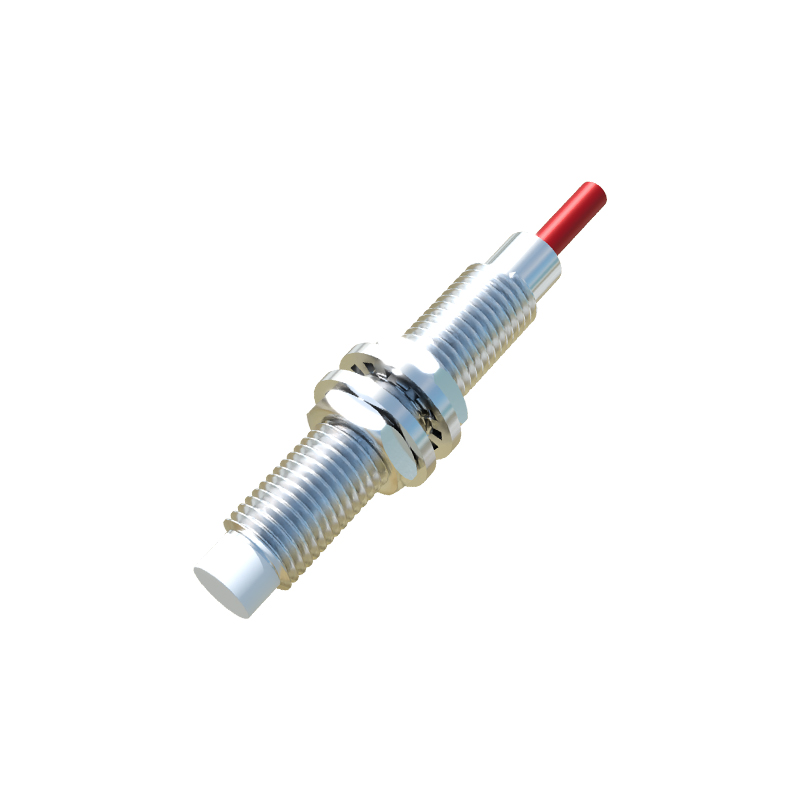
Proximity switches are broadly categorized based on their sensing technology. The most prevalent types include:
1. Inductive Proximity Sensors: These sensors detect metallic objects, primarily ferrous metals like iron and steel, but some variants can also sense non-ferrous metals. They generate an oscillating electromagnetic field from a coil. When a conductive metal enters this field, it induces eddy currents on the metal's surface, which dampens the oscillation. The sensor detects this damping and switches its output. They are robust, resistant to environmental contaminants like dust and oil, and are ideal for harsh industrial environments.
2. Capacitive Proximity Sensors: These sensors can detect both metallic and non-metallic materials, including liquids, powders, plastics, and wood. They function by generating an electrostatic field. When any object with a dielectric constant different from air enters this field, it alters the sensor's capacitance, triggering the output switch. This makes them versatile for applications like liquid level detection, material handling, and detecting non-metallic containers.
3. Photoelectric Sensors: While sometimes considered a separate category, they function as proximity switches. They consist of a light emitter (usually LED) and a receiver. They detect objects by interpreting changes in the transmitted light beam. Common modes include through-beam (object breaks a beam between separate emitter and receiver), retro-reflective (object breaks a beam reflected back to the receiver), and diffuse (sensor detects light reflected off the object itself). They offer very long sensing ranges and can detect virtually any material.
4. Ultrasonic Proximity Sensors: These sensors use sound waves beyond the human hearing range. They measure the time taken for an emitted ultrasonic pulse to bounce back from a target object. They are excellent for detecting objects of any material, shape, or color, and are particularly useful for distance measurement, level sensing of bulk materials, and in environments with heavy dust or fog where optical sensors may fail.
The applications of proximity switches are vast and integral to modern manufacturing and processing. They are ubiquitous on assembly lines for part detection and positioning, in robotic systems for end-effector guidance, in packaging machinery for product counting, in automotive manufacturing for robotic welding and part verification, and in material handling for pallet detection. Safety applications include monitoring guard door positions on machinery to prevent operation when open.
Selecting the appropriate proximity switch requires careful consideration of several parameters:
Target Material: The object's composition (metal, plastic, liquid) dictates the sensor type (inductive, capacitive, etc.).
Sensing Distance: The required nominal operating distance from the sensor face to the target. It is crucial to consider the manufacturer's specified "rated operating distance" and account for factors like target size and material.
Output Configuration: Typically, sensors provide a digital ON/OFF signal. Choices include NPN (sinking) or PNP (sourcing) transistor outputs, and sometimes analog (4-20 mA or 0-10V) outputs for distance-proportional signals.
Electrical Specifications: Supply voltage (e.g., 10-30V DC), current rating, and switching frequency (how fast it can detect objects).
Environmental Conditions: The sensor must withstand the operating environment, including temperature extremes, presence of chemicals, moisture (IP rating), and mechanical vibrations or shocks.
Physical Size and Mounting: The sensor housing (cylindrical, rectangular) must fit the installation space, and flush or non-flush mounting options for inductive sensors affect the effective sensing range.
In conclusion, proximity switches are the silent sentinels of automation. A deep understanding of their working principles, varieties, and application nuances is essential for any electrical engineer designing, maintaining, or troubleshooting modern control