In the realm of industrial automation, precision and reliability are non-negotiable. The SH-108 proximity sensor stands as a testament to engineering designed to meet these rigorous demands. This inductive proximity sensor, a robust non-contact detection solution, is engineered for the harsh realities of factory floors, machining centers, and automated assembly lines. Its core function is to detect the presence or absence of metallic objects without physical contact, thereby eliminating mechanical wear and enabling high-speed, repetitive operations.
The SH-108 typically operates on a standard DC voltage range, commonly 10-30V DC, ensuring compatibility with most industrial control systems. Its sensing distance, a critical parameter, is precisely calibrated, offering a nominal range suitable for detecting ferrous and non-ferrous metals, though with a defined reduction factor for non-ferrous materials like aluminum or copper. The housing is constructed from nickel-plated brass or stainless steel, providing exceptional resistance to oils, coolants, and particulate matter. This IP67 or higher ingress protection rating guarantees reliable performance in environments with exposure to washdowns or dust.
Electrically, the SH-108 is often available in both NPN (sinking) and PNP (sourcing) output configurations, with a 3-wire connection scheme. This flexibility allows for seamless integration into diverse PLC (Programmable Logic Controller) and relay-based systems. The output state—normally open (NO) or normally closed (NC)—can be selected based on the control logic requirement. A key performance indicator is its switching frequency, which defines how rapidly the sensor can respond to passing targets. The SH-108 is designed for high-frequency applications, ensuring no missed counts in fast-paced production or packaging lines. Furthermore, it incorporates built-in protection against short-circuit, reverse polarity, and surge voltages, significantly enhancing its operational lifespan and system safety.
Installation and alignment are straightforward due to its cylindrical M12, M18, or M30 threaded barrel design, allowing for easy mounting in standard sensor brackets. The LED status indicator provides immediate visual feedback on power and output activation, crucial for quick diagnostics and setup. When applying the SH-108, engineers must consider the sensing face characteristics. The sensor's effective field is not a perfect cylinder; it has a defined sensing profile. For optimal performance, ensuring the target object approaches the active face directly and is within the specified nominal sensing distance (Sn) is paramount. Factors like target material, size, and temperature can influence the actual sensing range, and these are detailed in the manufacturer's datasheet.
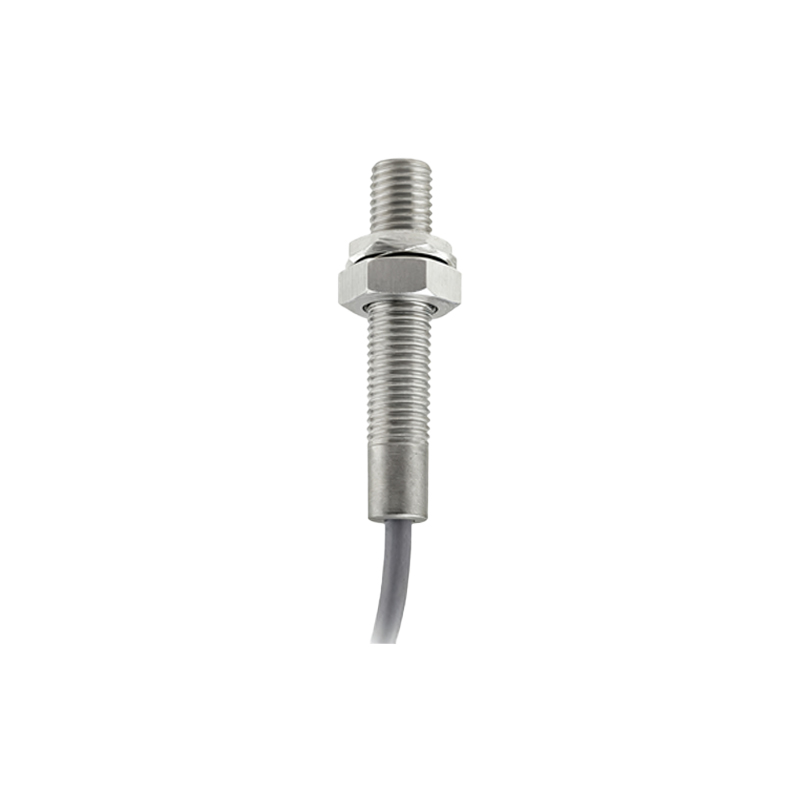
A primary application arena for the SH-108 is in position verification. For instance, confirming a metal workpiece is correctly seated in a fixture before a machining cycle begins, or detecting the presence of a piston in a hydraulic cylinder. It is also extensively used in object counting on conveyor belts, where it tallies metal parts or containers with metallic elements. In rotary systems, it can serve as a zero-point or speed detection sensor by sensing a protrusion on a rotating shaft. Its robustness makes it ideal for harsh environments like welding cells, where it can detect metal components while being shielded from spatter.
Compared to capacitive or ultrasonic sensors, the inductive SH-108 offers unparalleled consistency and immunity to environmental factors like ambient light, sound, or most non-metallic contaminants. Its limitation, of course, is its exclusive response to metallic targets. For engineers specifying this sensor, a thorough review of the environmental conditions—including temperature extremes, exposure to chemicals, and potential electromagnetic interference—is essential. Regular maintenance involves simply checking the physical integrity of the housing and ensuring the sensing face remains clean from metallic swarf buildup, which could cause a false triggering.
In conclusion, the SH-108 proximity sensor embodies a mature, highly reliable technology that remains a cornerstone of modern industrial sensing. Its design prioritizes durability, electrical robustness, and application versatility. By understanding its technical specifications, output characteristics, and correct installation practices, automation engineers can leverage the SH-108 to build more reliable, efficient, and fault-tolerant control systems, thereby enhancing overall equipment effectiveness (OEE) and reducing unscheduled downtime.