In the realm of industrial automation and machinery, the reliable detection of objects without physical contact is paramount. Among the diverse array of sensing technologies, flat proximity sensor switches stand out for their unique form factor and robust performance. These sensors, characterized by their low-profile, rectangular or square housing, are engineered to deliver precise detection in space-constrained applications where traditional cylindrical sensors are impractical.
The fundamental operating principle of most flat proximity sensors is based on electromagnetic induction. Inside the flat housing, a coil is energized with a high-frequency alternating current, generating an oscillating electromagnetic field at the sensing face. When a metallic target enters this field, eddy currents are induced on the target's surface. This causes a change in the oscillation amplitude within the sensor's coil, which is detected by the internal circuitry. The circuit then triggers a solid-state switch, changing the output state. For detecting non-metallic objects, capacitive flat sensors are employed, which sense changes in capacitance caused by the target material. The flat design allows for a wider and more uniform sensing field directly in front of the face, compared to the conical field of a cylindrical sensor, enabling more consistent detection of targets that may not be perfectly aligned.
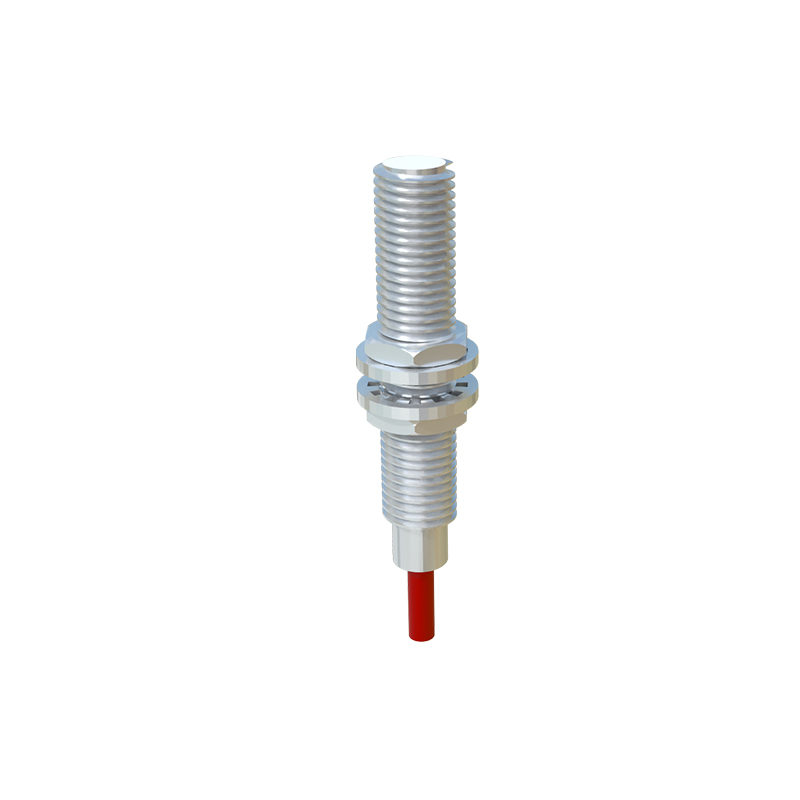
The advantages of choosing a flat proximity sensor are numerous. Their primary benefit is the minimal installation depth required. This makes them ideal for mounting directly onto machine frames, conveyor side rails, or within robotic grippers where space behind the mounting surface is severely limited. The flat sensing face also reduces the risk of mechanical damage from passing objects or accidental impacts, as there are no protruding parts. Furthermore, their design often allows for flush or non-flush mounting with similar performance characteristics, providing flexibility in application design. Many models feature built-in LED status indicators and short-circuit, overload, and reverse polarity protection, enhancing reliability in harsh industrial environments.
Applications for flat proximity sensors are widespread across industries. In material handling, they are used for end-of-stroke detection on linear actuators, pallet presence sensing on conveyors, and precise positioning in automated storage and retrieval systems. The packaging industry utilizes them to detect the presence of labels, cartons, or foil seals on production lines. Within automotive assembly, these sensors monitor component positioning in welding jigs and clamping mechanisms. Their resilience also makes them suitable for machine tooling, where they provide tool position feedback or act as safety interlocks on guards.
Selecting the right flat proximity sensor requires careful consideration of several key parameters. First, the sensing distance, or nominal range, must be specified. It is typically shorter than that of a cylindrical sensor of comparable electronics but is sufficient for most close-range detection tasks. The target material is critical; inductive sensors detect ferrous and non-ferrous metals at different effective ranges, while capacitive sensors are needed for plastics, wood, or liquids. The housing material, usually nickel-plated brass, stainless steel, or PBT plastic, must be chosen based on the environmental conditions, including exposure to coolants, oils, or washdown procedures. Electrical characteristics are equally important: the operating voltage (commonly 10-30V DC or 20-250V AC), output type (PNP/NPN, NO/NC), and current rating must match the control system's requirements. Connection methods, such as pre-wired cables or quick-disconnect connectors, also influence installation and maintenance ease.
Installation and commissioning are straightforward but demand attention to detail. The sensor must be mounted securely to prevent vibration-induced false signals. It is crucial to ensure that no surrounding metal (the "mounting base") intrudes into the sensor's lateral sensing zone, as this can diminish the effective sensing range. Adequate clearance between multiple sensors is necessary to prevent mutual interference. For optimal performance, the target should approach the sensing face perpendicularly and cover as much of the active area as possible.
In conclusion, flat proximity sensor switches are indispensable components in modern industrial design, offering a compact, durable, and reliable solution for non-contact object detection. Their specialized form factor solves spatial challenges that other sensors cannot, enabling smarter, more streamlined machinery. By understanding their operating principles, advantages, and key selection criteria, engineers and technicians can effectively integrate these sensors to enhance automation system precision, safety, and efficiency. As automation trends continue toward miniaturization and higher density, the role of the flat proximity sensor will only become more prominent.