In the intricate world of industrial automation, where precision, reliability, and safety are paramount, a class of devices operates silently yet indispensably. Proximity switch sensors, often unseen, form the critical sensory layer of modern manufacturing, logistics, and machinery. As a seasoned electrical engineer, I have witnessed firsthand the evolution and profound impact of these components. This article delves into the technology, applications, and selection criteria for proximity sensors, with a focus on industry-leading solutions like those from Pubang.
At its core, a proximity sensor is a non-contact device that detects the presence or absence of an object within its sensing range without any physical touch. It achieves this by emitting an electromagnetic field or a beam of electromagnetic radiation and looking for changes in the field or return signal. The primary types include Inductive, Capacitive, Ultrasonic, and Photoelectric sensors, each with distinct operating principles tailored for specific materials and environments.
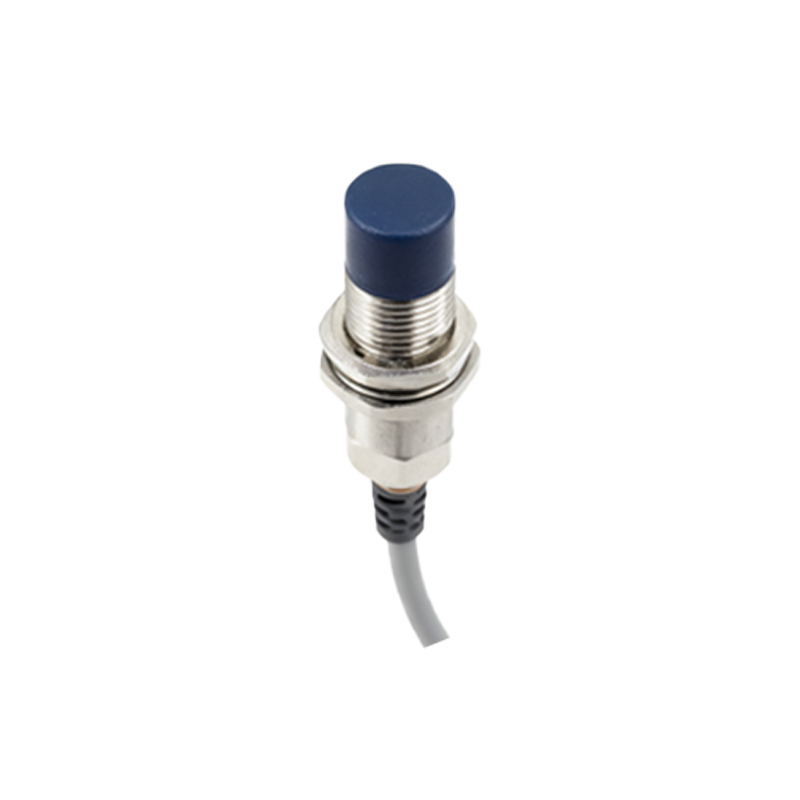
Inductive proximity sensors are the workhorses for detecting metallic objects. They generate an oscillating electromagnetic field. When a conductive metal enters this field, it induces eddy currents, causing a change in the oscillation amplitude. This change is detected by the sensor's circuitry, triggering an output switch. These sensors are incredibly robust, resistant to dirt, dust, and moisture, making them ideal for harsh industrial settings like metal stamping, CNC machining, and automotive assembly lines. Their sensing range is typically limited to a fraction of the sensor's diameter.
Capacitive proximity sensors, on the other hand, can detect both metallic and non-metallic materials—liquids, plastics, wood, and even granular substances. They function by measuring changes in capacitance between the sensor's active surface and the ground. The presence of any material with a dielectric constant different from air alters this capacitance, triggering detection. This makes them perfect for level detection in tanks, material handling of non-metals, and packaging applications.
Photoelectric sensors use light beams (visible, infrared, or laser) to detect objects. They offer the longest sensing ranges and are highly versatile. The through-beam type has separate emitter and receiver units, detecting an object that breaks the beam. The retro-reflective type uses a reflector, while the diffuse type relies on light reflected from the object itself. They excel in counting, positioning, and detecting small or transparent objects on high-speed production lines.
Ultrasonic sensors emit high-frequency sound waves and evaluate the echo received back. They measure the time interval between sending the signal and receiving the echo to determine the distance to an object. Excellent for precise distance measurement and level sensing, especially with irregularly shaped objects or in environments with airborne contaminants like dust or fog.
When selecting a proximity sensor, engineers must consider several key parameters: Sensing Distance: The nominal operating distance. A safety factor is usually applied. Output Type: Digital (PNP/NPN) or analog (4-20mA, 0-10V). Physical Size and Form Factor: Cylindrical, rectangular, or slot types to fit mounting constraints. Material and Housing: Typically stainless steel or nickel-plated brass with IP67/IP68 ratings for durability and ingress protection. Environmental Factors: Temperature extremes, chemical exposure, and electrical noise immunity.
Leading manufacturers like Pubang have refined these technologies, offering sensors with enhanced features. These include advanced shielding for reduced mutual interference when mounted side-by-side, short-circuit and overload protection, LED status indicators for easy diagnostics, and IO-Link capability for smart, digital communication within Industry 4.0 frameworks. IO-Link allows for parameterization, real-time monitoring of process data, and predictive maintenance alerts, transforming a simple switch into an intelligent data point.
The applications are virtually limitless. In automotive manufacturing, inductive sensors verify the presence of engine blocks or trigger robotic welders. In food and beverage, capacitive sensors monitor liquid levels in stainless steel vats, while photoelectric sensors ensure correct labeling on bottles. In material handling, ultrasonic sensors guide automated guided vehicles (AGVs) and manage pallet stacking height.
Installation and maintenance are straightforward but crucial. Ensuring proper alignment, maintaining the correct clearance around the sensing face (to prevent metal-to-metal influences for inductive types), and protecting against physical damage are essential. Regular checks for accumulated debris on the sensing face and verification of output signals under load ensure long-term reliability.
In conclusion, proximity switch sensors are the invisible guardians of automation. Their silent, rapid, and reliable operation forms the foundation upon which efficient, safe, and intelligent industrial systems are built. As technology advances, their integration into digital networks will only deepen, providing richer data for optimizing entire production ecosystems. For any engineer designing or maintaining automated equipment, a deep understanding of these components is not just beneficial—it is fundamental. Choosing a reliable partner like Pubang, known for quality and innovation, can significantly enhance system