In the realm of industrial automation, precise motor control is paramount for efficiency, safety, and reliability. One critical component enabling this precision is the DC proximity sensor. These non-contact sensing devices play a fundamental role in monitoring position, speed, and direction of motors, thereby facilitating sophisticated control schemes in various applications, from conveyor systems to robotic arms.
DC proximity sensors operate by generating an electromagnetic field. When a metallic target, such as a motor shaft key or a gear tooth, enters this field, it induces eddy currents within the sensor. This interaction alters the oscillation amplitude of the sensor's internal LC tank circuit. The sensor's electronics detect this change and produce a clean, digital DC output signal—typically a switching action from a high to low state or vice-versa. This solid-state output is ideal for interfacing directly with programmable logic controllers (PLCs), motor drives, or other control circuitry without the need for additional signal conditioning.
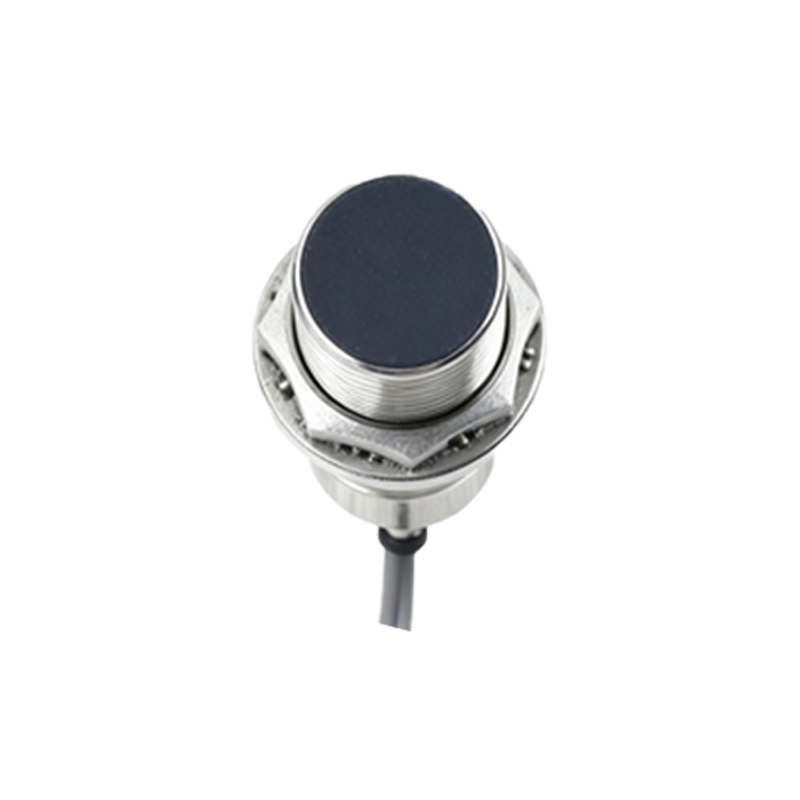
The integration of DC sensors into motor control systems offers distinct advantages. Firstly, their non-contact nature eliminates mechanical wear, ensuring long-term operational stability and reducing maintenance needs. Unlike mechanical limit switches, they are not subject to physical degradation from repeated actuation. Secondly, DC-powered sensors (commonly 12-24V DC) are inherently compatible with standard industrial control voltages, simplifying wiring and power supply design. Their fast response times, often in the microsecond range, allow for real-time feedback critical for high-speed applications or precise positioning tasks. For instance, in a servo motor system, a DC inductive proximity sensor can provide exact index or home position detection, enabling the controller to accurately calibrate and repeat complex motion profiles.
Several key configurations are employed. In rotary motor applications, sensors are often paired with a target wheel mounted on the motor shaft. By counting pulses as gear teeth or slots pass the sensor, the system can calculate rotational speed (RPM) and monitor for stalling or slippage. For linear motion, such as in linear actuators, sensors can detect the presence of a moving carriage at specific points, initiating sequence changes or providing end-of-travel limits. The choice of sensor—shielded (flush-mountable) or unshielded—depends on the installation environment and required sensing distance.
Design considerations are crucial for optimal performance. Sensor selection must account for factors like the target material (ferrous metals like iron and steel provide the longest sensing ranges), the required sensing distance, environmental conditions (temperature, humidity, and presence of contaminants like oil or coolant), and electrical noise immunity. Proper mounting is essential to avoid false triggers from adjacent metallic structures. Furthermore, the output type (NPN sinking or PNP sourcing) must match the input configuration of the connected controller to ensure correct logic interpretation.
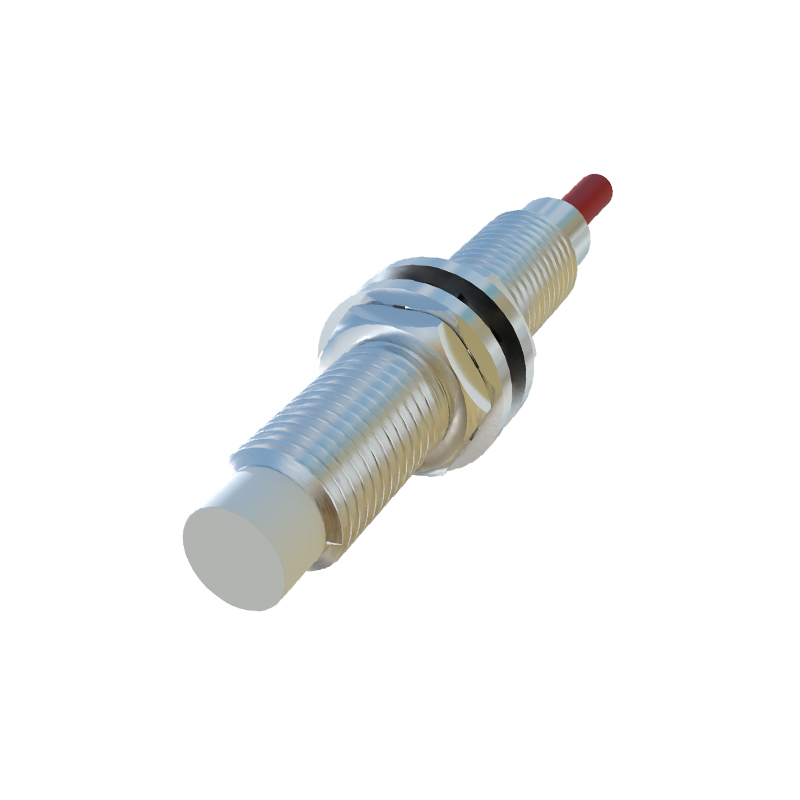
Advanced motor control strategies leverage the feedback from multiple DC proximity sensors. In a coordinated multi-axis system, sensors ensure synchronized movement. For safety, they can form part of a motor lockout or interlock system, preventing operation if a guard door is open or a component is out of position. Diagnostic capabilities are also enhanced; a sudden absence of expected pulses can trigger an alarm for predictive maintenance, signaling potential motor bearing failure or drive belt damage before a catastrophic shutdown occurs.
In conclusion, DC proximity sensors are indispensable for modern motor control. They provide the reliable, high-speed switching feedback necessary for automation systems to achieve precision, efficiency, and intelligence. As motor control demands grow more complex, the evolution of these sensors—with features like longer ranges, higher temperature ratings, and IO-Link digital communication—will continue to push the boundaries of what is possible in industrial automation. Engineers must thoroughly understand their principles and applications to design robust and future-proof control systems.