In the realm of industrial automation, capacitive proximity sensors stand as pivotal components for non-contact detection, material handling, and process control. Their ability to sense a wide range of materials—metals, plastics, liquids, powders, and even biological substances—through changes in capacitance makes them exceptionally versatile. When operational speed is a critical parameter, selecting the right type of capacitive sensor becomes paramount. This article delves into the primary varieties of capacitive proximity sensors engineered for high-speed applications, examining their operating principles, key performance characteristics, and optimal use cases.
The fundamental principle behind all capacitive sensors is the detection of a change in capacitance between the sensor's active face (the sensing electrode) and a target object. This forms a capacitor where the sensor face and the target act as plates, with the intervening air as the dielectric. As a target approaches, the capacitance increases. A high-frequency oscillator circuit within the sensor monitors this capacitance. When the change exceeds a preset threshold (the sensing distance), it triggers an output signal. For high-speed operations, the sensor's response time—the delay between the target entering the sensing field and the output switching—is the most crucial specification. Modern high-speed variants achieve response times as low as 50 microseconds, enabling detection at rates exceeding several thousand operations per second.
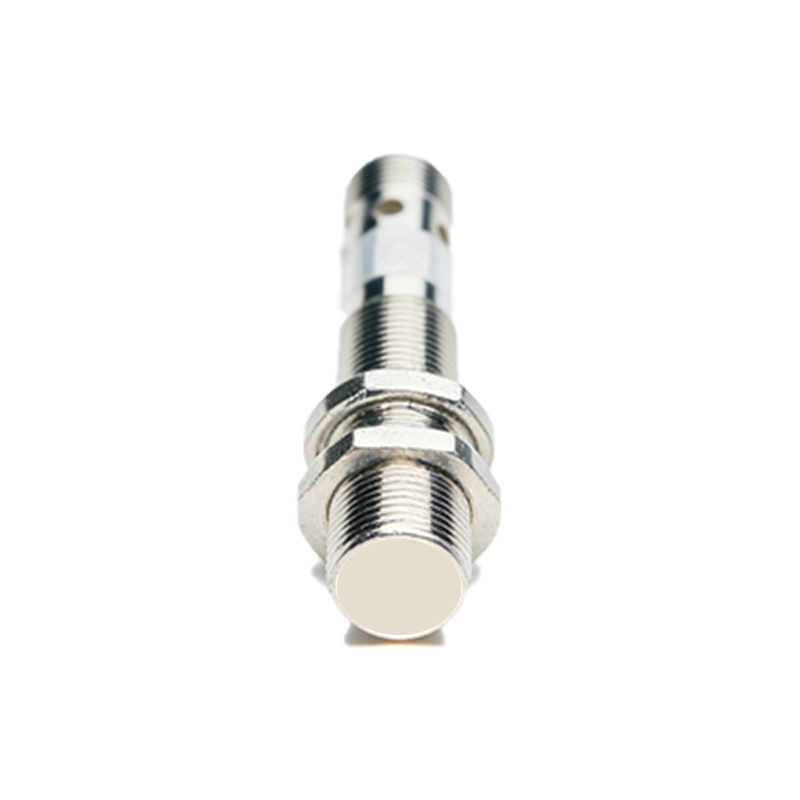
Several distinct varieties are optimized for speed and demanding environments. Standard Cylindrical High-Speed Sensors are the workhorses, featuring robust metallic or polymer housings. Their key to speed lies in advanced ASIC (Application-Specific Integrated Circuit) designs that process capacitance changes with minimal latency. They are commonly used in packaging machinery for detecting fast-moving bottles or cans on conveyor lines, where their typical sensing ranges from 2mm to 25mm are sufficient. Miniature and Subminiature Sensors represent a critical category for space-constrained, high-speed applications. With diameters as small as 4mm, these sensors can be integrated into robotic grippers, small assembly modules, or electronic component feeders. Their reduced sensing range is compensated by ultra-fast electronics, allowing for precise detection of tiny components moving at high velocities.
Flat-Pack and Rectangular Sensors offer a larger sensing area in a low-profile design. Their wide, flat active face is ideal for detecting thin materials like foils, sheets, or wafers moving at high speed, ensuring consistent detection even with minor target position variations. Analog Output Sensors, while not purely binary switches, are essential for high-speed measurement and control. They provide a continuous current or voltage output proportional to the distance to the target. In high-speed applications, such as monitoring roll diameter in winding machines or controlling gap distance in rapid dispensing systems, their high-resolution and fast signal update rates (in the kilohertz range) provide real-time feedback for dynamic control loops.
Specialized High-Speed Variants include sensors with enhanced immunity to electromagnetic interference (EMI), crucial for operation near variable-frequency drives or welding equipment. Food-Grade and Washdown Sensors with smooth housings and high IP ratings (e.g., IP69K) are designed for high-speed bottling or packaging lines in the food and pharmaceutical industries, where rapid cleaning cycles are mandatory. Their circuitry is optimized to ignore moisture and foam buildup, preventing false triggers during high-speed operation.
Key performance metrics for selecting a high-speed capacitive sensor extend beyond response time. Switching Frequency defines how many on/off cycles per second the sensor can reliably handle, directly determining the maximum object pass rate. Hysteresis, the difference between the switch-on and switch-off points, is vital for stable operation at high speeds, preventing output chatter as a target vibrates or moves rapidly at the edge of the sensing field. Temperature stability ensures consistent sensing distance and response time despite thermal fluctuations in fast-cycling machinery.
In practice, successful implementation requires careful consideration. The dielectric constant of the target material significantly affects the sensing range; materials with high constants (like water) are detected from farther away than low-constant materials (like certain plastics). For high-speed counting or positioning, sensors with teach-in functionality allow quick calibration to the specific target. Mounting is also critical; flush-mounted sensors (shielded) have a reduced range but are immune to surrounding metal, while non-flush (unshielded) sensors offer longer ranges but require careful installation to avoid interference from the mounting bracket.
The evolution of capacitive proximity sensors continues to push the boundaries of speed and intelligence. Integration with IO-Link and other digital communication protocols enables not only high-speed switching but also real-time parameter adjustment and diagnostic data transmission, paving the way for predictive maintenance in ultra-fast production environments. By understanding the specific varieties and their capabilities, engineers can effectively leverage these sensors to enhance the speed, reliability, and flexibility of modern automated systems.