In the realm of industrial automation and electronic control systems, proximity sensors stand as fundamental components, enabling machines to "sense" the presence or absence of nearby objects without any physical contact. But what exactly is a proximity sensor? At its core, a proximity sensor is a device that detects the presence of an object within a specified range and converts this information into an electrical signal. This non-contact detection capability is its defining characteristic, making it invaluable in environments where reliability, speed, and durability are paramount.
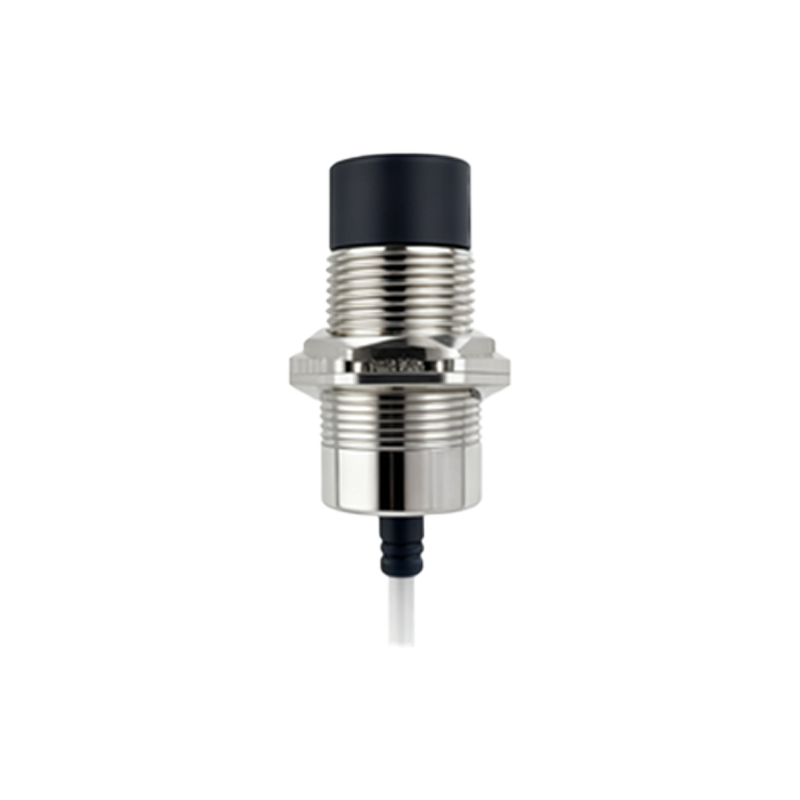
The working principle of a proximity sensor varies significantly depending on its type. The most common categories include inductive, capacitive, ultrasonic, and photoelectric sensors. Inductive proximity sensors are perhaps the most widely used in industrial settings. They generate an electromagnetic field and detect changes in this field caused by the presence of a metallic target. When a conductive metal object enters the sensor's detection zone, it induces eddy currents in the object, which in turn dampens the oscillation amplitude of the sensor's internal LC oscillator circuit. This change is processed by the sensor's circuitry to trigger a solid-state output switch. These sensors are ideal for detecting metals, such as steel, aluminum, or copper, and are commonly found in machine tools, automotive assembly lines, and material handling systems.
Capacitive proximity sensors operate on a different principle. They can detect both metallic and non-metallic objects, including liquids, powders, plastics, and wood. These sensors generate an electrostatic field. When any object with a dielectric constant different from air enters this field, it alters the capacitance of the sensor's circuit. This change in capacitance is measured, and when it exceeds a preset threshold, the sensor activates its output. This makes capacitive sensors versatile for applications like liquid level detection, material handling of non-metals, and presence detection of packaged goods.
Ultrasonic proximity sensors use sound waves beyond the human hearing range. They emit high-frequency ultrasonic pulses and measure the time it takes for the echo to return after bouncing off a target object. By calculating this time-of-flight, the sensor can determine the distance to the object. These sensors are excellent for detecting objects of various materials, shapes, and colors, and they perform well in challenging environments with dust, smoke, or ambient light interference. Typical applications include distance measurement, bin level monitoring, and collision avoidance in automated guided vehicles (AGVs).
Photoelectric sensors, another major category, utilize a light beam—often infrared, visible red, or laser. They consist of an emitter and a receiver. The presence of an object is detected by either interrupting the beam (through-beam mode), reflecting the beam back to the receiver (retro-reflective mode), or reflecting the beam off the object itself (diffuse reflective mode). They offer long sensing ranges and high precision, suitable for detecting small objects, transparent materials, and in high-speed counting applications on conveyor belts.
The selection of a proximity sensor depends on numerous factors: the material of the target object, the required sensing distance, environmental conditions (temperature, humidity, contaminants), response speed, output type (NPN/PNP, NO/NC), and electrical requirements. Engineers must carefully evaluate these parameters to ensure reliable operation within a control system.
The advantages of using proximity sensors are substantial. Their non-contact nature eliminates mechanical wear and tear, leading to exceptionally long service life and minimal maintenance. They provide high-speed, repeatable operation crucial for modern high-cycle manufacturing. Being solid-state devices, they are resistant to vibration and shock. Furthermore, they are not influenced by surface conditions like color or texture in the case of inductive types, ensuring consistent performance.
In conclusion, a proximity sensor is far more than a simple switch. It is a sophisticated electronic device that provides the essential "eyes" for automated machinery. From ensuring precise positioning in robotic arms to safeguarding operators with safety interlocks, and from counting products on a fast-moving line to detecting fill levels in tanks, proximity sensors are the silent, reliable workhorses of modern industry. Understanding their principles, types, and applications is key for any professional involved in designing, maintaining, or optimizing automated systems.