Proximity sensors are indispensable components in modern industrial automation, robotics, and safety systems, providing non-contact detection of objects within a defined range. However, despite their widespread application, these sensors are inherently susceptible to various errors that can compromise system accuracy, reliability, and efficiency. A comprehensive understanding of these error sources is crucial for engineers and technicians to implement effective mitigation strategies.
One primary source of error stems from environmental factors. Temperature fluctuations can significantly alter the electrical characteristics of sensor components, particularly in inductive and capacitive types, leading to drift in the sensing range or threshold. For instance, in inductive sensors, the permeability of the core material and the conductivity of the target can change with temperature, causing inconsistent detection distances. Similarly, capacitive sensors may experience shifts in dielectric constant due to humidity or contamination on the sensing face. Electromagnetic interference (EMI) from nearby motors, power lines, or communication devices can induce noise in the sensor signal, resulting in false triggering or missed detections. Proper shielding, filtering circuits, and maintaining a safe distance from noise sources are essential countermeasures.
The target object itself introduces another layer of potential error. Factors such as material composition, size, shape, and surface condition directly influence sensor performance. Inductive sensors, designed primarily for metals, exhibit varying detection distances depending on the target's material type (e.g., steel, aluminum, copper) due to differences in electrical conductivity and magnetic permeability. For non-metallic targets, capacitive or ultrasonic sensors are more appropriate, but they too face challenges. The size and shape of the target must meet the sensor's specified effective sensing area; a target smaller than this area may not be detected reliably, or the detection point may shift. Surface conditions like reflectivity (for optical sensors) or roughness can also scatter or absorb signals, reducing effective range. Engineers must carefully select sensor technology based on the specific application and target properties, often referring to manufacturer datasheets which provide correction factors for different materials.
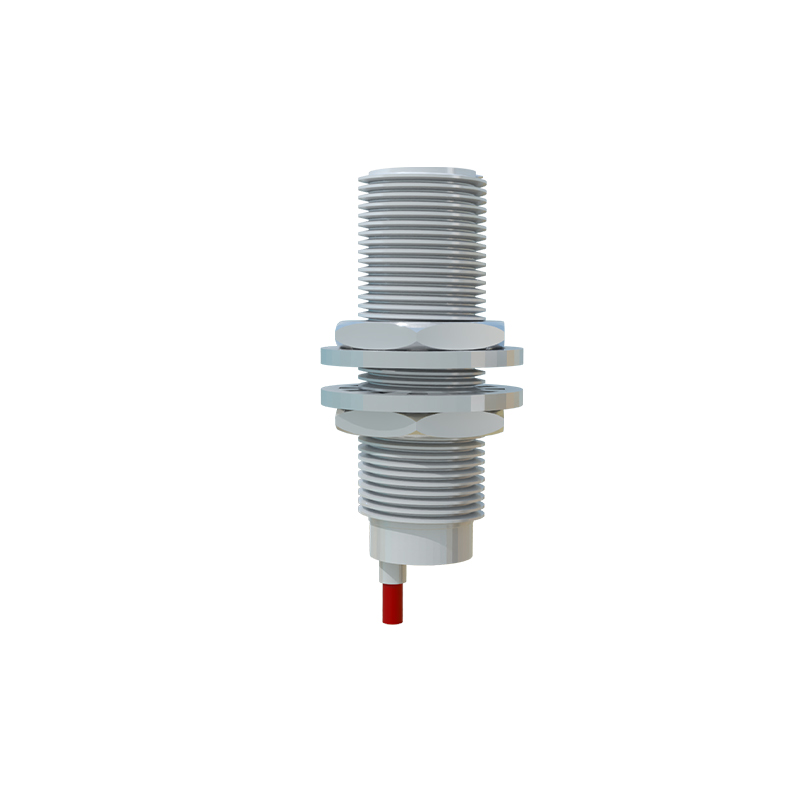
Installation and alignment errors are frequently overlooked yet critical. Mechanical misalignment between the sensor and the expected target path can cause inconsistent detection. For example, if an inductive sensor is mounted at an angle rather than perpendicular to the target surface, the effective air gap changes, altering the sensing distance. Vibration in the machinery can exacerbate this, leading to intermittent operation. Ensuring rigid mounting, correct orientation, and protection from physical shock is vital. Additionally, the presence of other objects in the sensing field—background or side objects—can interfere. Ultrasonic and capacitive sensors are particularly prone to detecting unintended objects nearby. Using sensors with built-in background suppression or adjusting the sensing range and hysteresis settings can help isolate the desired target.
Sensor aging and component tolerance also contribute to long-term errors. Over time, electronic components may degrade, and mechanical parts can wear, leading to a gradual shift in output characteristics. Regular calibration and maintenance, as outlined in operational manuals, are necessary to sustain accuracy. Furthermore, inherent manufacturing tolerances mean that two sensors of the same model might have slight variations in switching points or linearity. For high-precision applications, individual calibration or selecting sensors with tighter tolerance specifications is advisable.
Signal processing and interface issues represent the final common error category. The sensor's output signal (analog or digital) must be correctly interpreted by the controller. Noise introduced in cabling, ground loops, or improper load matching can distort the signal. Using twisted-pair cables, separate conduits for power and signal lines, and ensuring proper grounding techniques are fundamental practices. For analog sensors, the resolution of the analog-to-digital converter in the controller can limit measurement precision. Understanding the sensor's response time is also critical; a sensor too slow for a high-speed application will introduce latency errors.
In conclusion, minimizing errors in proximity sensors requires a holistic approach that spans selection, installation, environmental management, and ongoing maintenance. By systematically addressing each potential error source—environmental interference, target properties, mechanical setup, sensor inherent limitations, and electrical integration—engineers can significantly enhance system performance. Continuous education on emerging sensor technologies and adherence to best practices remain key to leveraging the full potential of proximity sensing in increasingly complex and demanding industrial environments.