In the rapidly evolving landscape of industrial automation, construction, and robotics, the demand for precise, reliable, and cost-effective measurement solutions has never been greater. Laser distance sensors, once considered premium tools reserved for high-budget projects, have seen a significant democratization. The emergence of affordable laser distance sensors is reshaping how professionals approach distance measurement, offering a compelling balance between performance and price. This article delves into the technology behind these sensors, their key applications, and the critical factors to consider when integrating them into cost-sensitive operations.
At their core, laser distance sensors operate on the principle of time-of-flight (ToF) or phase-shift measurement. A laser diode emits a focused beam of light towards a target. The sensor then measures the time it takes for the reflected light to return to a detector. By calculating this interval and knowing the constant speed of light, the sensor determines the distance with high accuracy. Advancements in semiconductor manufacturing, optical component design, and signal processing algorithms have driven down the production costs of these core components, making the technology accessible. Modern affordable models often utilize Class 2 laser products, which are eye-safe under normal operating conditions, further reducing safety-related costs.
The performance spectrum of budget-friendly laser distance sensors is impressively broad. Typical specifications for these units include measurement ranges from a few centimeters up to 30-50 meters, with accuracies in the range of ±1.5 mm to ±3 mm. While they may not match the sub-millimeter precision or extreme ranges of their high-end counterparts, this level of performance is more than sufficient for a vast array of tasks. Key parameters to evaluate include not just range and accuracy, but also measurement speed (often in the Hz range), laser spot size, environmental ratings (like IP65 or IP67 for dust and water resistance), and the robustness of the housing against vibrations and shocks.
The applications for these sensors are diverse and growing. In warehouse logistics and inventory management, they are mounted on automated guided vehicles (AGVs) for navigation and obstacle detection, or on fixed stations to measure pallet heights and optimize storage space. On construction sites, contractors use handheld or mounted versions for quick area and volume calculations, layout work, and checking alignments, replacing traditional tape measures with digital speed and reduced error. In basic industrial automation, they serve as presence detectors, control fill levels in bins, or provide positioning feedback for simple linear actuators. The DIY and maker communities have also embraced these sensors for robotics, drone altitude control, and smart home projects, thanks to their compatibility with common platforms like Arduino and Raspberry Pi via serial, analog, or I2C interfaces.
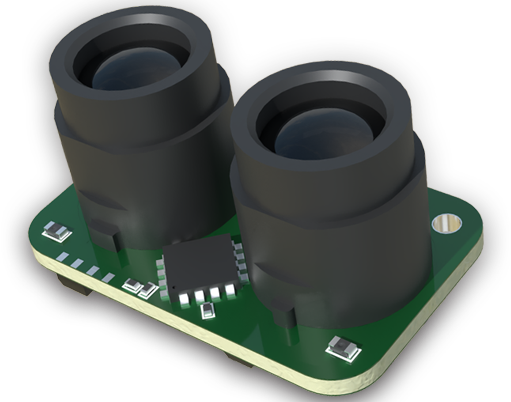
However, selecting a low-cost laser distance sensor requires careful consideration of the operational environment. Factors such as target surface color, texture, and reflectivity can significantly impact performance. Dark, matte, or highly transparent surfaces may absorb or scatter the laser beam, leading to measurement errors or a complete loss of signal. Many affordable sensors now incorporate algorithms to compensate for varying surface conditions, but understanding these limitations is crucial. Ambient light, particularly direct sunlight, can also interfere with the sensor's detector. Models with optical filters and modulated laser signals offer better performance in bright environments. Furthermore, the choice between a visible red laser dot (easier for aiming) and an invisible infrared laser (less distracting and less affected by some ambient light) depends on the specific use case.

Integration and output options are another vital aspect. Most affordable sensors provide simple digital (RS232, RS485) or analog (4-20mA, 0-10V) outputs, making them easy to connect to Programmable Logic Controllers (PLCs), data loggers, or simple microcontrollers. The availability of software development kits (SDKs) or clear communication protocols can greatly simplify system integration. Reliability and long-term stability are areas where cost-cutting can sometimes be evident. It is essential to review product specifications for mean time between failures (MTBF) and to consider the manufacturer's reputation for quality control and technical support.
In conclusion, the market for affordable laser distance sensors represents a powerful enabler for efficiency and automation across multiple sectors. By understanding the underlying technology, clearly defining application requirements, and acknowledging environmental constraints, engineers and project managers can successfully leverage these tools to achieve accurate measurements without straining the budget. The ongoing innovation in this segment promises even greater capabilities at lower price points, further blurring the line between economy and high performance in the world of precision sensing.