In the rapidly evolving landscape of industrial automation and precision measurement, laser distance sensors have emerged as a cornerstone technology. Among the leading manufacturers contributing to this field, Qianjiang has established a formidable reputation for producing high-performance, reliable laser distance sensors tailored for demanding industrial environments. This article delves into the core technology, key advantages, and diverse applications of Qianjiang laser distance sensors, highlighting why they are a preferred choice for engineers and system integrators worldwide.
At its heart, a Qianjiang laser distance sensor operates on the principle of time-of-flight (ToF) or phase-shift measurement. A laser diode emits a focused beam of light towards a target. The sensor's sophisticated photodetector then captures the reflected light. By precisely calculating the time delay between emission and reception, or by analyzing the phase shift of the modulated laser beam, the sensor determines the distance to the target with exceptional accuracy. This non-contact measurement method is fundamental to its success, eliminating wear and tear and enabling measurements on fragile, hot, or moving objects where physical contact is impossible or undesirable.
Qianjiang engineers these sensors with a relentless focus on robustness and precision. Key performance characteristics typically include measurement ranges spanning from a few centimeters to several hundred meters, with resolutions down to the sub-millimeter level. High sampling rates allow for real-time monitoring of dynamic processes. A critical differentiator is their performance in challenging conditions. Advanced models feature robust housing rated at IP67 or higher, providing resistance against dust, water jets, and mechanical impact. Furthermore, integrated algorithms compensate for environmental variables such as changing ambient light or the color and surface texture of the target material, ensuring stable and repeatable readings.

The versatility of Qianjiang laser distance sensors unlocks a vast array of applications across multiple sectors. In industrial automation, they are indispensable for precise positioning and guidance of robotic arms, conveyor belt monitoring, and controlling fill levels in tanks or silos. The logistics and warehousing industry leverages them for pallet dimensioning, vehicle guidance in automated storage and retrieval systems (AS/RS), and inventory profiling. In the construction and civil engineering fields, these sensors facilitate tasks like crane hook positioning, deformation monitoring of structures, and earthwork volume calculation. Even in the agricultural sector, applications are growing, including guidance for autonomous harvesters and monitoring crop growth.
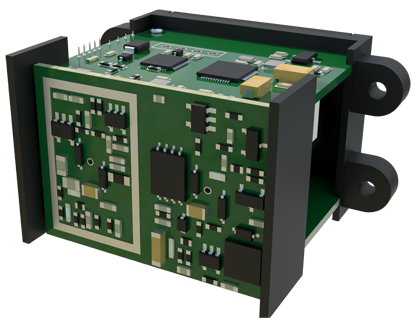
Selecting the right Qianjiang sensor requires careful consideration of several parameters. The required measurement range and accuracy are paramount. The operating environment dictates the necessary ingress protection (IP) rating and temperature tolerance. The reflectivity and nature of the target surface—be it highly reflective, dark, transparent, or uneven—must be matched with a sensor model capable of handling it. Interface options, such as analog outputs (4-20 mA, 0-10 V), digital interfaces (RS-232, RS-485, Ethernet), or industrial fieldbus protocols (PROFIBUS, EtherCAT), are chosen based on the existing control system architecture.
Installation and commissioning are designed for efficiency. Proper alignment is crucial, and many Qianjiang sensors come with intuitive configuration software or teach-in functions via push buttons to set measurement windows and output scaling. Regular maintenance is minimal, primarily involving keeping the laser window clean to ensure optimal performance. Adherence to laser safety classifications (typically Class 2) is standard, ensuring safe operation in industrial settings without the need for special protective measures.
Looking ahead, the trajectory for Qianjiang and laser sensing technology points toward even greater integration with Industry 4.0 frameworks. Future developments may include enhanced connectivity for IoT platforms, more sophisticated onboard data processing and edge computing capabilities, and the fusion of distance measurement with other sensor data like 2D profiling or vision. These advancements will further solidify the role of these precise measurement tools in building smarter, more efficient, and autonomous industrial systems.
In conclusion, Qianjiang laser distance sensors represent a synthesis of precision engineering, environmental resilience, and application-focused design. Their ability to deliver accurate, non-contact distance measurements under tough conditions makes them a critical component in modern industrial processes. For engineers seeking reliable measurement solutions to enhance automation, ensure quality, and improve operational safety, Qianjiang offers a compelling portfolio of sensors backed by proven performance and technological excellence.