In the landscape of industrial process control and environmental monitoring, the measurement of oxygen concentration is a critical parameter across numerous applications. From ensuring safety in confined spaces to optimizing combustion efficiency and maintaining product quality in pharmaceutical manufacturing, accurate oxygen analysis is non-negotiable. Traditional electrochemical and zirconia-based sensors have served these needs for decades. However, the advent of Laser Oxygen Sensors, utilizing Tunable Diode Laser Absorption Spectroscopy (TDLAS) technology, represents a significant leap forward, offering unparalleled advantages in precision, reliability, and maintenance requirements.
The core principle behind a laser oxygen sensor is remarkably elegant yet powerful. It exploits the specific absorption characteristics of oxygen molecules when exposed to light at a precise wavelength. A tunable diode laser emits a beam of light that is tuned to an absorption line unique to the oxygen (O2) molecule. This laser beam is directed across the gas sample path—either in an extractive sample cell or via in-situ measurement across a duct or stack. A detector on the opposite side measures the intensity of the light that passes through. According to the Beer-Lambert law, the degree of light absorption is directly proportional to the concentration of oxygen molecules present in the path. By meticulously analyzing the attenuated light signal, the sensor's processor calculates the exact oxygen concentration with high accuracy.
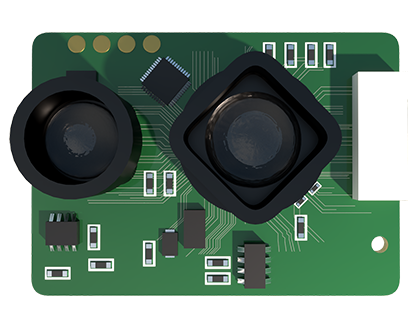
The operational benefits of this technology are transformative, particularly in harsh industrial environments. One of the most compelling advantages is the non-contact measurement capability. In in-situ configurations, the laser beam is projected across a process stream, and the measurement is taken without any part of the sensor directly contacting the aggressive or high-temperature gas. This eliminates sensor poisoning, corrosion, and erosion—common failure modes for probes that must be inserted into the flow. Consequently, laser oxygen sensors exhibit exceptional long-term stability and drastically reduced maintenance needs. There are no consumable parts like electrolytes or filaments that require regular replacement, leading to lower total cost of ownership despite a higher initial investment.
Furthermore, the speed and selectivity of TDLAS are superior. The response time is extremely fast, often in the range of seconds, enabling real-time process control for dynamic applications such as optimizing burner fuel-air ratios in boilers, furnaces, or gas turbines. This rapid adjustment enhances combustion efficiency, reduces fuel costs, and minimizes emissions of pollutants like nitrogen oxides (NOx) and carbon monoxide (CO). The laser's inherent selectivity to the oxygen absorption line means the measurement is virtually immune to cross-interference from other gases present in the sample, such as water vapor, carbon dioxide, or background gases. This ensures highly reliable and specific readings, which is crucial for safety monitoring in areas where inerting is used or for controlling controlled atmosphere storage.
Applications for laser oxygen sensors are vast and growing. In the energy sector, they are indispensable for combustion control in power plants and for monitoring oxygen levels in flue gases for emissions reporting and process optimization. In the chemical and petrochemical industries, they safeguard processes where oxygen ingress could lead to explosive atmospheres or product degradation. Aerospace and metal heat treatment industries rely on them for precise atmosphere control in furnaces. Additionally, their robustness makes them ideal for demanding environments like cement kilns, waste incinerators, and steel production.
Despite their advantages, implementing laser oxygen sensors requires careful consideration. Proper optical alignment is crucial, especially for in-situ installations, as misalignment can lead to signal loss. The presence of heavy particulate dust or fog can sometimes scatter the laser beam, potentially necessitating periodic cleaning of optical windows or the use of purging systems. However, for most challenging applications where accuracy, low maintenance, and reliability are paramount, these challenges are manageable and far outweighed by the benefits.
In conclusion, laser oxygen sensors, powered by TDLAS technology, are redefining the standards for gas analysis in industrial settings. By offering a maintenance-light, highly accurate, and interference-free solution, they provide the critical data needed to enhance operational safety, improve process efficiency, ensure regulatory compliance, and reduce environmental impact. As industries continue to push for greater automation, efficiency, and sustainability, the role of the laser oxygen sensor as a key enabling technology will only become more pronounced and essential.